
At night, I can see right through your sheer curtains when your lights are on. The fabric becomes a backlit screen that reveals your silhouette, your movements, and even the rough layout of your furniture.
I may not catch facial features or small details, but I can tell when you’re walking past the window or stretching on the couch. The lighter your sheers and the brighter your room, the more visible you are.
Stand closer, and your body shape is clear; step back, and you appear as a ghostly blur. Darker, denser weaves help somewhat, but they don’t eliminate the issue entirely.
There are effective strategies to enhance your privacy.
What You Actually See Through Sheer Curtains at Night
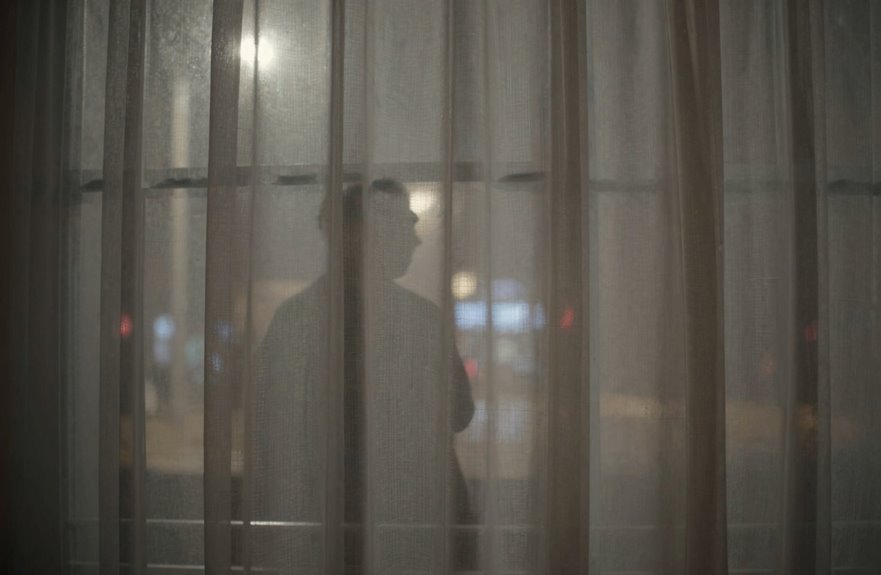
Why do sheer curtains appear so different after dark? I’ve noticed that shift from a light, airy feel to an exposed space once I turn on the lights. The transparency of sheer curtains that feels breezy in daylight turns into a clear view into my living room at night.
Weave density determines how much neighbors can see. My loose, floaty sheers are nearly transparent after sunset, providing minimal night-time privacy. Tighter weaves or semi-sheer fabrics significantly reduce visibility by blocking light transmission and softening silhouettes.
I’ve experimented with layering by adding heavier drapes that I draw after dusk. Privacy film can also help. I’ve found that darker or denser options outperform my old white panels when the lights are on inside. Everyone deserves spaces where they feel at home, unseen while still connected to the outside world.
How Daytime Privacy Turns Into Nighttime Exposure
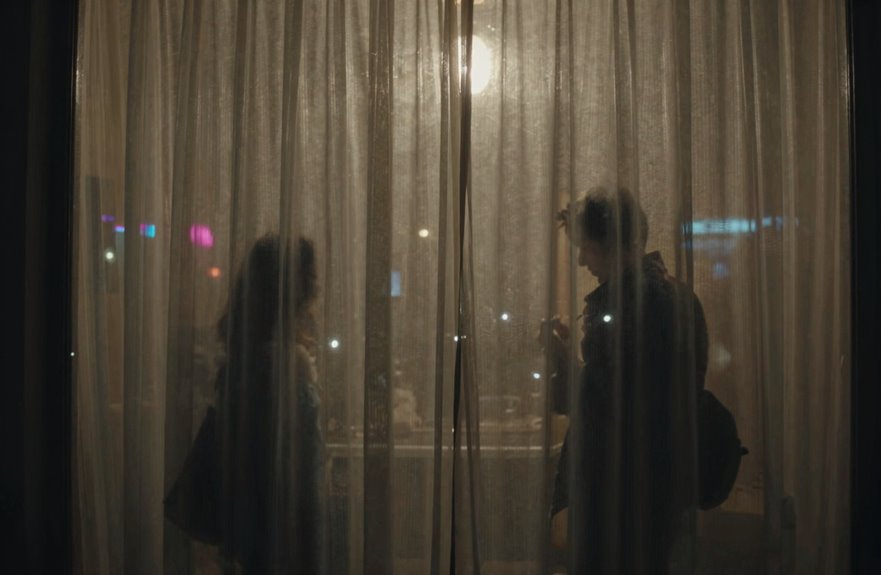
During the day, my sheer curtains filter sunlight while keeping prying eyes out. The weave that looks decorative in sunshine serves as a modesty screen when the world outside is brighter than my rooms. However, once I flip on the lamps, everything changes. The interior glow turns my sheers into backlit panels, and suddenly I’m the one on display.
I’ve asked questions about this in Home Design forums, and the answers always circle back to weave density. My loose, airy sheers become practically transparent after dark. Tighter weaves help, but only to a certain extent. Light-colored fabrics reveal my movements more than darker ones. I’ve learned to layer my window treatments: sheers for daytime softness and heavier drapes for evening privacy. This is the compromise made when desiring both light and a sense of security in our spaces.
What Outsiders Actually See: Movement, Silhouettes, and Detail
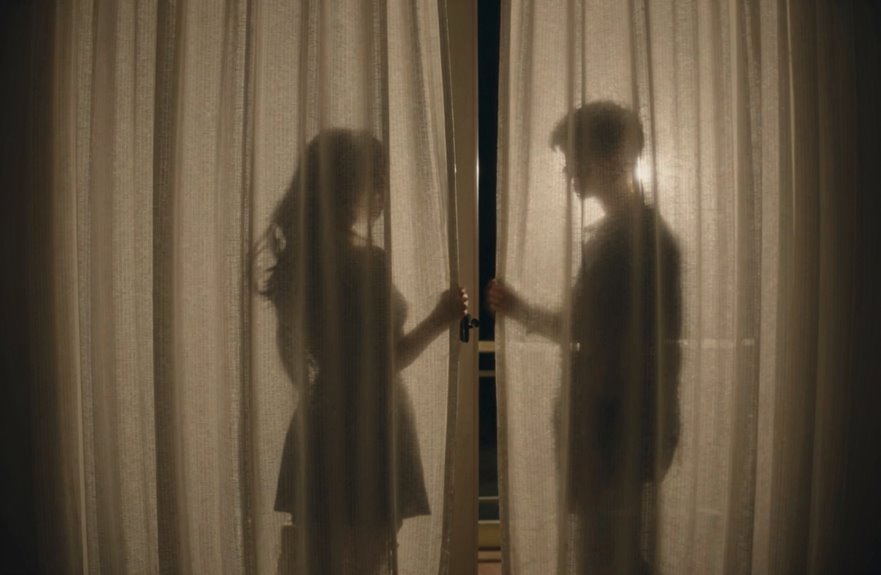
I want to break down exactly what outsiders can perceive through your sheers after dark. Silhouette visibility levels vary based on fabric density and lighting contrast. Lighter voiles can render body outlines nearly transparent, while denser weaves partially obscure them. Movement detection extends surprisingly far; any shift near the window catches the eye even when details remain indistinct. Detail recognition limits depend heavily on proximity; objects pressed against the glass appear much more defined than those deeper in the room.
Silhouette Visibility Levels
How clearly can someone outside see what’s happening inside? Let’s break this down so you know where you stand.
Your silhouette visibility depends heavily on your curtain choice. Lightweight, open-weave sheers can easily reveal your outline to anyone passing by when your lights are on. The backlighting creates a stark contrast, making your shape appear as a shadow against the fabric.
Denser weaves offer more protection, but you should not assume you are hidden. Semi-sheer options still allow movement and basic forms to be visible at night. This can be a surprise for many.
If you want true privacy without sacrificing aesthetics, layering is effective. Adding heavier drapes or privacy film behind your sheers can transform your silhouette into a faint suggestion of occupancy.
Movement Detection Range
Just how far can someone’s gaze penetrate your sheers once the sun goes down? I’ve learned that movement detection extends surprisingly far. Anyone passing by can track your general motions, your pacing, your reaching toward a lamp. Your silhouette shifts and dances against the fabric, indicating that you’re home, active, and present.
The weave density is crucial. I’ve swapped looser sheers for tighter voile and observed that my visible range diminishes. Layering helps as well; adding drapes or privacy film turns that exposed stage into something more secure.
Front-facing windows increase the risk. With exterior lighting illuminating your room, outsiders can catch even subtle gestures from across the street. We all seek a balance between welcoming light and maintaining privacy regarding our movements.
Detail Recognition Limits
What separates a visible silhouette from a recognizable face through sheer curtains at night is the weave and the light.
Here’s what outsiders actually see:
- Movement — your shifting shape catches their eye first, especially against bright backdrops.
- Silhouettes — body contours emerge when interior lights outshine the darkness outside.
- Furniture shapes — chairs and lamps create telltale shadows that map your space.
- Facial features — these remain hidden; the fabric density blurs details into anonymity.
Finer voile or ninon weaves reveal more than denser semi-sheers. When my windows face the street, I feel more exposed. Layering sheers with heavier drapes or privacy films allows light inside while maintaining obscurity outside, facilitating connection without vulnerability.
How Close Someone Needs to Stand to See Through Your Sheers
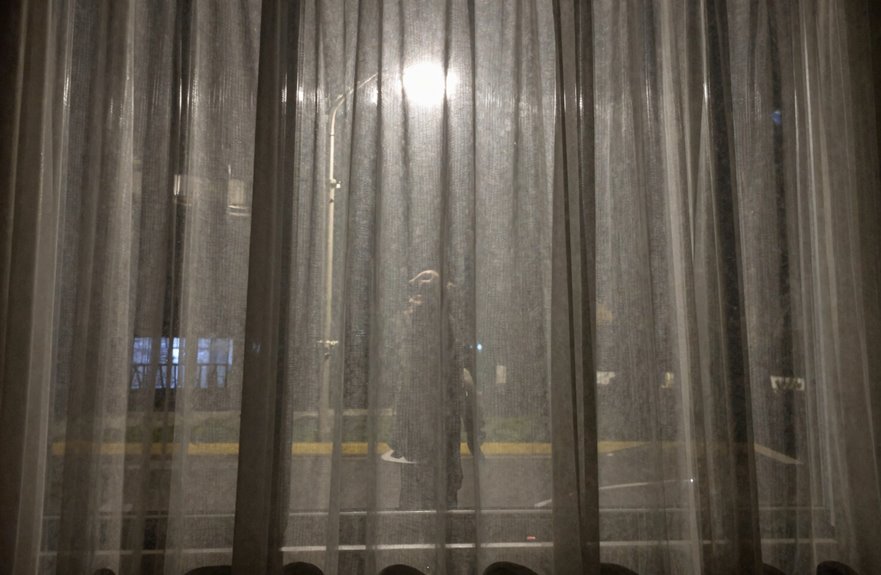
Whether you’re concerned about a nosy neighbor or a passerby on the street, proximity significantly impacts visibility through sheer curtains at night. When someone stands right at your window, they’ll clearly see your silhouette through lightweight weaves. Step back ten feet, and that same view becomes vague shadows.
I’ve tested this myself. From the sidewalk, I can barely make out movement behind my white sheers. However, anyone pressing their face to the glass will easily trace my outline.
The density of the weave also plays a crucial role. After swapping flimsy panels for semi-sheer fabrics, the difference at close range is apparent. To enhance privacy, I’ve learned to layer; heavier drapes on a second track allow me to control who sees what and when.
How Outside Lighting Affects Your Sheer Curtains’ Privacy
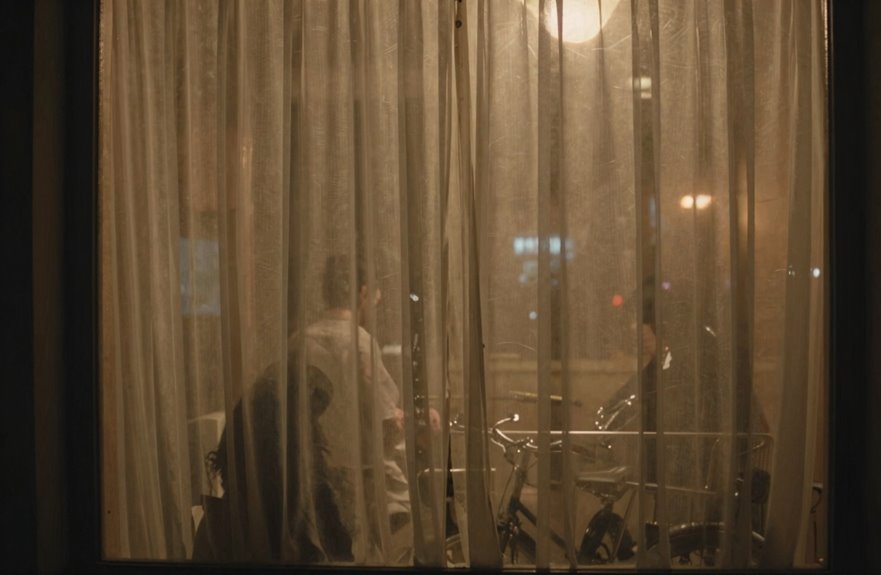
How dramatically does exterior lighting shift what outsiders can see through your sheers? It transforms everything. When your interior glows brighter than the darkness outside, you become the spotlight; silhouettes dance against the fabric for anyone passing by.
Here are some strategies to reclaim your space:
- Dim your interior lights after sunset to balance the contrast.
- Position lamps away from windows to avoid backlighting.
- Add exterior fixtures that illuminate your yard, reducing the brightness gap between inside and outside.
- Layer sheers with heavier drapes you can close when privacy is essential.
Everyone deserves a sense of sanctuary. With these adjustments, you can keep your windows open to the world while maintaining your privacy. You can enjoy being part of the neighborhood while also feeling secure in your own space.
Which Sheer Curtain Fabrics Hide the Most at Night
The tightness of a fabric’s weave significantly impacts privacy during the night. Darker colored sheers absorb light rather than transmitting it, which helps obscure my silhouette more effectively than white ones. When visibility is a concern, layering sheers with a heavier curtain provides a practical solution for achieving nighttime privacy.
Weave Density Impact
Why does one sheer curtain leave you feeling exposed after dark while another offers genuine concealment? It comes down to weave density—how tightly those threads interlock.
Here’s what I’ve discovered about finding that sense of sanctuary we all crave:
- Semi-sheer fabrics with denser weaves outperform open meshes every time.
- Voile betrays me at night under interior lights despite daytime modesty.
- Linen blends and tightly embroidered lace create the barrier that loose chiffons and organzas simply can’t.
- Layering systems, such as dual rollers or paired sheers, transform vulnerability into true privacy.
Even the tightest weaves cannot stop bright lights from casting silhouettes. That is why I always recommend combining dense weaves with outer drapes when complete nighttime seclusion is needed.
Dark Color Advantage
The color of your sheer curtain significantly impacts your privacy after dark. Darker sheers conceal interior activity more effectively than white or pale options. This is due to contrast; when light spills from lamps, dark fabrics absorb it rather than reflect it, making silhouettes less distinguishable from outside.
It’s important to choose a decent weave density, as even charcoal sheers can reveal movement under bright interior lighting. If you’re deciding between ivory and slate gray of similar weights, the deeper tone is the better choice. Dark sheers provide a greater barrier against curious eyes during your evening routines. While streetlights and passing cars may still create outlines, opting for darker options helps reduce visibility.
Layering Solutions Work
How much privacy can you actually expect from sheer curtains once the sun goes down? Even the best sheers become transparent when interior lights glow against dark glass. Layering can significantly enhance privacy.
Here are some effective strategies:
- Pair inner sheers with outer heavier drapes; close them at dusk for instant seclusion.
- Install a dual roller system to switch between sheer daylight and blackout night modes.
- Add a blackout liner behind voile or ninon panels to block visibility without sacrificing daytime softness.
- Choose linen blends or tighter chiffon weaves, as they are moderately more opaque than standard options.
You can maintain that airy, welcoming aesthetic while reclaiming your evening privacy. Achieving the right balance is essential.
Why Thread Count Matters for Sheer Curtain Privacy
When choosing sheer curtains, I often consider what determines how much privacy I’ll have once the sun goes down. I’ve learned that thread count is important because it reflects how tightly the fabric is woven.
Looser weaves allow more shapes and outlines to show through at night when my lights are on. This is why I check weave density before making a purchase. Semi-sheer options with tighter construction provide more coverage while still allowing some interior light to filter through.
Layering has been beneficial as well. Pairing sheer curtains with heavier drapes or installing a dual roller system allows me to adjust throughout the day. I can enjoy brightness when it’s sunny and achieve privacy after dark. It’s all about finding the right balance for my home and comfort.
Why White Sheer Curtains Become Backlit Screens After Dark
Imagine how your white sheer curtains change after sunset when you turn on a lamp. That soft glow you appreciate indoors now transforms your curtains into a glowing screen, revealing shadows and movements to anyone outside. It’s a notable shift: the same transparency that feels light and airy during the day becomes a privacy concern at night. Recognizing this light reversal effect is essential for deciding whether to layer your curtains or simply close the blinds.
Light Reversal Effect
Why do sheer curtains that feel airy and private during daylight transform once the sun sets? I’ve noticed this shift myself; the same fabric that shielded my morning coffee now exposes my evening routine to anyone passing by.
This change occurs because of the light reversal effect. During the day, sunlight overwhelms interior spaces, keeping your silhouette hidden. At night, the equation flips.
Here’s what creates this vulnerability:
- Interior lights outshine the darkness outside, backlighting the fabric.
- Bright rooms against black streets amplify the contrast.
- Your movements cast detectable shadows through even loose weaves.
- White sheers become translucent screens, revealing shapes while hiding details.
Weave density and fabric weight are important, but the brightness gap is the main factor. Layering helps, and understanding this reversal allows you to choose when to glow and when to guard your space.
Privacy Trade-Off
How does a single flip of a switch reveal what daylight kept hidden? I have stood outside my own window at night and watched my living room transform into a shadow puppet theater; every gesture, every silhouette broadcast through white sheers I chose for their airy softness. We crave that gentle daylight glow, yet we rarely consider how darkness turns our sanctuary into a display case.
| What We Want | What We Risk |
|---|---|
| Soft natural light | Exposed silhouettes after dark |
| Airy, open feeling | Neighbors seeing our movements |
| Simple, elegant look | Compromised nighttime privacy |
| Affordable solution | Needing additional layers |
I now layer opaque drapes or choose denser weaves. We do not have to choose between belonging to our space and protecting it.
When to Close Blackout Shades Behind Your Sheer Curtains
When should you draw those blackout shades? It largely depends on your evening routine and your need for privacy.
Here’s when I make the switch:
- The moment you flip on interior lights. Silhouettes become visible instantly, so I don’t wait.
- When you’re moving through rooms. Walking past windows exposes motion; I close them before I settle in.
- If your sheers are lightweight. Denser weaves help, but mine are sheer, so I layer up.
- Before sunset on front-facing windows. I use dual tracks to maintain daytime brightness while ensuring night privacy.
You’ll find your rhythm. I keep blackout shades behind my sheers specifically for this transition—bright days, protected evenings, and the assurance that nobody’s watching while you wind down.
How Privacy Film Compares to Sheer Curtains After Dark
I’ve spent years layering blackout shades behind my sheers to reclaim my evenings, but lately I’ve wondered if privacy film offers a simpler path. Unlike sheer curtains, which turn increasingly transparent when interior lights glow, privacy film maintains its opacity regardless of lighting conditions. I don’t need to remember timing or manage multiple layers.
Sheer curtains reveal silhouettes and movement after dark, with their weave density determining how much escapes outward. Privacy film eliminates that gamble entirely. I’ve noticed how exterior streetlights complicate sheer curtain effectiveness, while film remains constant. The trade-off is that film blocks the soft diffusion I love, replacing it with a more clinical appearance.
For those seeking effortless evening seclusion without constant vigilance, film provides a straightforward solution that layered sheers approximate through effort. I’m weighing convenience against atmosphere, and the choice is ultimately personal.
Why Bedrooms Need Stricter Sheer Curtain Rules Than Other Rooms
Where else do we strip down, linger in vulnerability, and expect complete sanctuary if not the bedroom? We deserve spaces that protect us.
The bedroom is where we strip down, linger in vulnerability, and expect complete sanctuary. We deserve spaces that protect us.
At night, sheer curtains can become more revealing than anticipated. Interior lighting shines through lightweight voile and chiffon, exposing shapes and movement to anyone outside. Our bedrooms need stricter rules because:
- We spend hours in states of undress here.
- We move slowly, making silhouettes easier to track.
- We expect sanctuary, not surveillance.
- We often forget to dim lights before approaching windows.
Even semi-sheer fabrics can reveal too much when lit from within. I layer sheers with heavier drapes and consider exterior shading. Your bedroom should feel like a private retreat, not a display.
How to Light Your Room So Sheer Curtains Don’t Expose You
I position lamps away from windows to reduce direct illumination on the sheer curtains, which prevents my silhouette from being visible outside. Balancing ambient light throughout the room, rather than clustering brightness near the glass, softens the contrast between the interior and exterior. These adjustments allow me to maintain visibility inside while ensuring my windows do not reveal too much to the neighborhood.
Strategic Lighting Placement
How can you keep sheer curtains from revealing your presence after dark? The placement of your lights is crucial.
Here’s what works for me:
- I keep lamps away from windows, positioning them toward interior walls instead.
- I choose opaque shades that cast light downward, not outward through the sheers.
- I dim my bulbs low enough to function without creating that telltale glow.
- I avoid overhead fixtures near the glass, since they broadcast my silhouette.
I’ve noticed my white sheers reflect everything, so I pair these tactics with dimmable options. When I pull my heavier drapes as backup, I feel comfortable. Our homes should provide a sense of security and privacy.
Ambient Light Balance
Why does a softly lit room feel safer than one blazing with overhead fixtures? I learned the hard way that harsh overhead lighting turns my sheers into a stage curtain for anyone outside. I layer lamps low and toward walls, creating gentle pools of light that allow me to see without broadcasting my silhouette.
I pair my sheers with heavier drapes that I draw after dark, or I use dual-stage shading when I want that airy feel combined with real cover. Denser weaves help during daylight, but at night, it’s about controlling what escapes. UV-blocking film on the glass is also effective. We all deserve spaces where we can be ourselves without feeling exposed to the street. Smart lighting choices help maintain the privacy of our sanctuary.
What Completely Fixes the Sheer Curtain Privacy Problem
What eliminates the sheer curtain privacy dilemma? It requires smart layering and material choices that work together.
- Choose denser weaves like linen-blend or layered sheers instead of flimsy voile.
- Pair sheers with heavier drapes or dual roller shades for adjustable coverage.
- Add privacy film or exterior shading to block outside eyes completely.
- Control your lighting by keeping it low and directed away from windows.
You are not alone in wanting that cozy glow without feeling exposed. These solutions allow you to feel secure in your space, without silhouettes on display or uncertainty about who might be watching. I layer mine with confidence now, and you can too.
How to Test Your Sheer Curtains’ Privacy Level From Outside
Wondering if your sheer curtains actually shield you from nighttime gazes? Here’s a simple test you can do. Wait until dark, turn on your brightest indoor lights, then step outside and look back in. You’ll quickly see the difference—lighter weaves like voile allow the world to see your silhouettes, while denser fabrics provide more coverage. I’ve tested this myself, standing in my driveway feeling exposed in my own living room. If you can make out shapes or movements clearly, your sheers aren’t effective after dusk. Testing your curtains helps you protect your privacy while still enjoying that soft, filtered daylight.
Which Layered Window Treatments Work Best for Bedrooms
Testing my sheer curtains from outside revealed a clear issue: I loved the daylight they filtered, but I needed real privacy after dark. I found my solution in layering, and I’m sharing what works for bedrooms like ours.
- Pair sheers with blackout shades. This allows daylight softness while blocking outside views at night.
- Add a privacy film beneath. It remains invisible during the day and provides protection after dark.
- Choose denser weaves like voile or linen blends. These options blur silhouettes better than wispy chiffon.
- Install interior blackout panels behind sheers. I can close them when the lights are on and open them for morning sun.
We’ve all experienced that exposed feeling. These layers enable me to relax, knowing my bedroom remains private.