
Picture windows flood your space with unobstructed views, while bay and bow windows expand your room outward. Casement windows crank open to catch breezes in tight spots, and floor-to-ceiling glass erases the boundary between inside and out. Window walls drench gatherings in sunlight, arched shapes add architectural drama, and specialty shapes turn walls into art. I pair fixed panes with operable sidelights for both light and air. Frame choices are important; vinyl is low-maintenance, wood brings warmth, and fiberglass handles extreme weather beautifully. Smart shading and thoughtful placement ensure comfort year-round. Attention to detail is crucial for achieving the desired effect.
How to Choose Living Room Windows: 4 Key Decisions
Where do I begin when selecting windows for my living room? I start by assessing what my space truly needs. Do I want fresh air, or am I seeking that ideal wash of light across my sofa? I compare operable styles with fixed options, understanding that each choice influences the room’s airflow and overall ambiance.
I consider bay or bow windows to create a reading nook that fosters connection; these spaces become gathering spots for friends and family. For modern homes, I prefer floor-to-ceiling designs with slim frames that blur the lines between indoor and outdoor spaces.
Energy efficiency is essential; Low-E coatings and SmartSun glass help maintain comfort without increasing utility bills. Finally, I evaluate light versus privacy with smart treatments like sheers and side-mounted drapery, ensuring my living room feels both open and personal.

Material: Thick plush bay window mat, made of soft crystal velvet fabric.

Workmanship, Built to Last: due to vacuum-compressed shipping, the filling may appear slightly uneven after unpacking; This is normal; Simply air it out, gently pat, rub, and knead the cushion to help restore its fluffy, even shape; Reinforced edge binding and tight stitching make this triangle floor pillow tough and durable; Resists wear, helps maintain shape, and keeps the filling in place

Designed for Extra Wide Seating Areas: this 42 x 18 inch bench cushion fits perfectly on entryway benches, bay window seats, and breakfast nook seating; Also works as a comfortable bench pillow or floor cushion for casual lounging, reading corners, or relaxed home spaces
Picture Windows for Maximum Light and Views
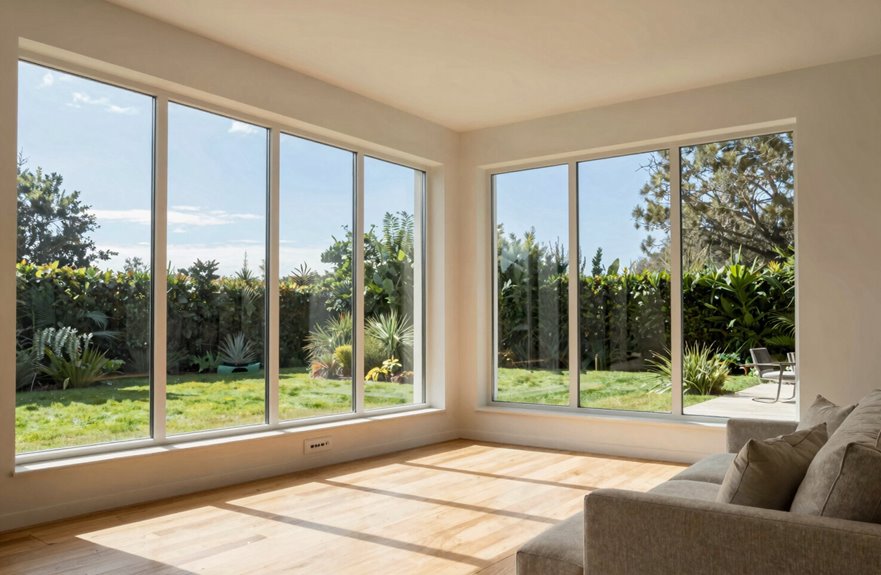
Picture windows utilize a fixed pane design to fill my living room with sunlight while providing unobstructed views of the outdoors. Since they don’t open, they are highly energy efficient; no gaps or moving parts mean less heat escapes in winter and less heat enters in summer. When planning my space, I will pair one with a casement or double-hung window nearby to maintain fresh air alongside that remarkable view.

Set Includes: 2 panels (each panel: 42 W x 63 L inch). The size option ‘42"W x 63"L (Pack of 2)’ means you will receive One Pack which contains Two Panels
Set Includes: 2 panels (each panel: 42 W x 90 L inch). The size option ‘42"W x 90"L (Pack of 2)’ means you will receive One Pack which contains Two Panels

Set Includes: 2 panels (each panel: 42 W x 84 L inch). The size option ‘42"W x 84"L (Pack of 2)’ means you will receive One Pack which contains Two Panels
Fixed Pane Design
Why settle for anything less than a wall of light? I choose fixed panes because they don’t open, and that trade-off floods my living room with maximum light and unobstructed views. You’ll feel like you’re outside without leaving your couch.
| Morning Light | Midday Glow | Evening Hue |
|---|---|---|
| Golden beams stretch across hardwood | Sun sits high, shadows disappear | Amber tones paint the glass |
| Coffee steams on the sill | Kids sprawl on the rug beneath | Wine glasses catch the last ray |
| Backyard birds claim the feeder | Garden colors pop in full bloom | Distant hills fade to silhouette |
| Fixed panes frame it all, silent and still | No cranks, no clutter, no break in the scene | Picture windows hold the day like a photograph |
| Small space breathes larger | Light owns every corner | We belong to this view |
I often pair picture windows with operable casements nearby. Fresh air is available when I want it, and pure light is always present.
Unobstructed Sightlines
How does a room completely open to the outdoors sound? I picture windows as the answer. They’re fixed panes that don’t open, yet they offer unobstructed sightlines that erase boundaries between your living room and the world outside.
This lightness transforms cramped spaces into airy retreats. Your backyard, garden, or horizon becomes living art—no frames, no divisions, just pure view. Small living rooms suddenly breathe and expand.
You won’t sacrifice practicality, either. Pairing picture windows with smaller operable units above or beside them allows for that openness while catching a breeze elsewhere. The classic Chicago window configuration—center picture flanked by casements—demonstrates this balance effectively.
Whatever your style, you’ll find finishes and materials that help your space feel uniquely yours.
Energy Efficiency
Picture windows not only bring the outdoors in; they also help keep your energy bills in check. Their fixed design creates tight seals that maintain conditioned air where it belongs. You can enjoy breathtaking unobstructed sightlines without sacrificing comfort.
Here are the key features that enhance our living spaces:
- Low-E coatings like SmartSun block harsh UV rays and protect your furniture from fading.
- Tight seals eliminate drafts that are often found in operable windows.
- Pairing options allow you to add casement or double-hung windows nearby for fresh air while preserving the panoramic view.
- Multiple product lines (100 Series, E-Series) ensure you find the perfect match.
Bay and Bow Windows: Extra Space and Classic Style
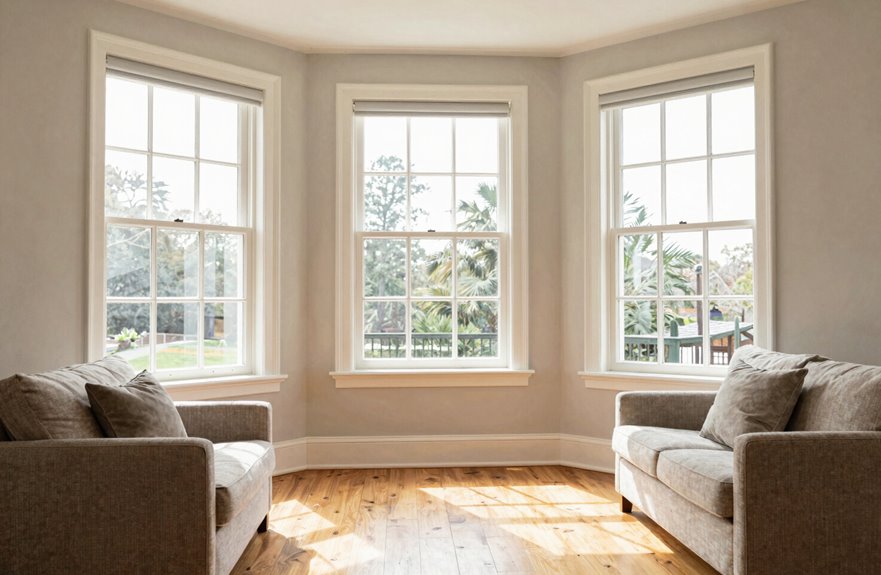
Where else in your living room can you gain extra square footage without knocking down walls? Bay windows extend outward, creating a cozy nook perfect for bench seating and leisurely Sundays with your favorite people.
| Feature | Bay Windows | Bow Windows |
|---|---|---|
| Shape | Angular projection | Curved, gentle arc |
| Panes | 3 windows | 4-6 windows |
| Space | Defined nook | Wider interior space |
| Style | Victorian, Tudor | Various classic styles |
These windows enhance your home’s architectural style while flooding the space with light. The central picture window flanked by operable side panels provides ventilation and that three-window-in-one effect many homeowners appreciate. Whether you opt for double-hung or casement side panes from the 400 Series or E-Series, you’re adding architectural depth both inside and out. The difference is noticeable; this is where memories are made.

Choosing Versatile Hanging Options Among: a. back tab hiding curtain rod; b.classic retro vintage style gathered rod pocket; c.designer modern farmhouse tailored pleated (not...
Casement Windows: Best Ventilation for Tight Spaces
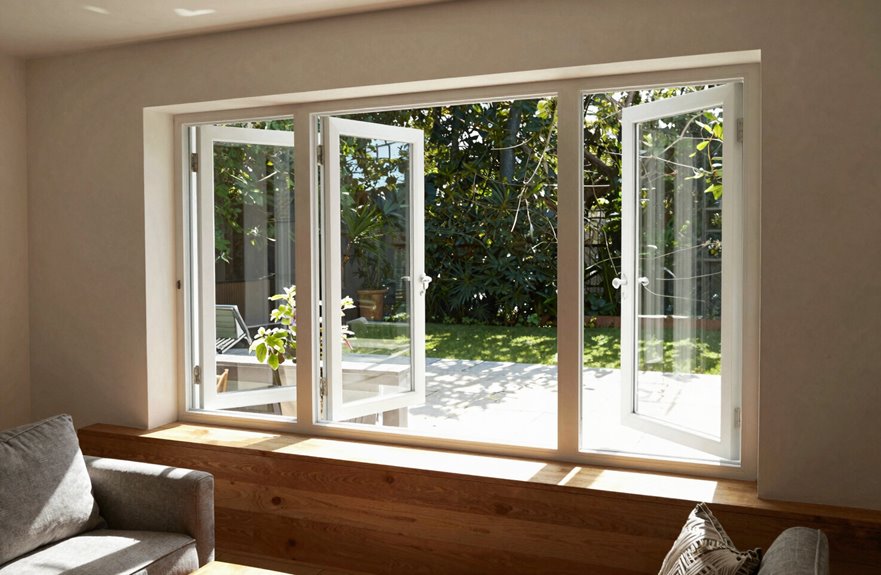
Why settle for stuffy air when you can catch a breeze where you need it? Casement windows transform awkward nooks into breathable retreats without sacrificing style.
Casement windows transform awkward nooks into breathable retreats without sacrificing style.
Here are the reasons they are perfect for our homes:
- Their crank handle opens the sash outward, allowing fresh air to flow directly into tight spaces where sliding windows cannot function.
- Clean lines blend with modern or transitional décor, avoiding clunky hardware.
- Taller glass surfaces flood narrow spots with natural light while providing ventilation.
- Low-E SmartSun coatings protect furnishings from UV damage while maintaining desired airflow.
Casement windows also eliminate interior clearance issues in hard-to-reach areas. Their energy-efficient seals allow for precise control over airflow. This approach maximizes every square foot, demonstrating that smart ventilation can enhance every corner of our living rooms.

This Picture Window frames outdoor scenery like a picture frame. Slim sight‑line maximizes unobstructed views and brings abundant natural light to your living space. Ideal for living room, dining room and great room

This Picture Window frames outdoor scenery like a picture frame. Slim sight‑line maximizes unobstructed views and brings abundant natural light to your living space. Ideal for living room, dining room and great room
This Picture Window frames outdoor scenery like a picture frame. Slim sight‑line maximizes unobstructed views and brings abundant natural light to your living space. Ideal for living room, dining room and great room
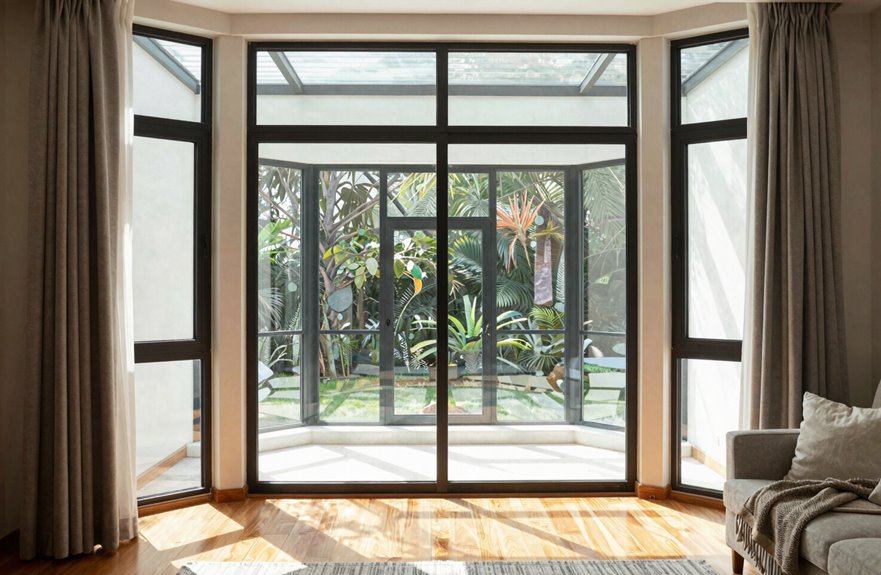
Floor-to-Ceiling Windows for Modern Indoor-Outdoor Flow
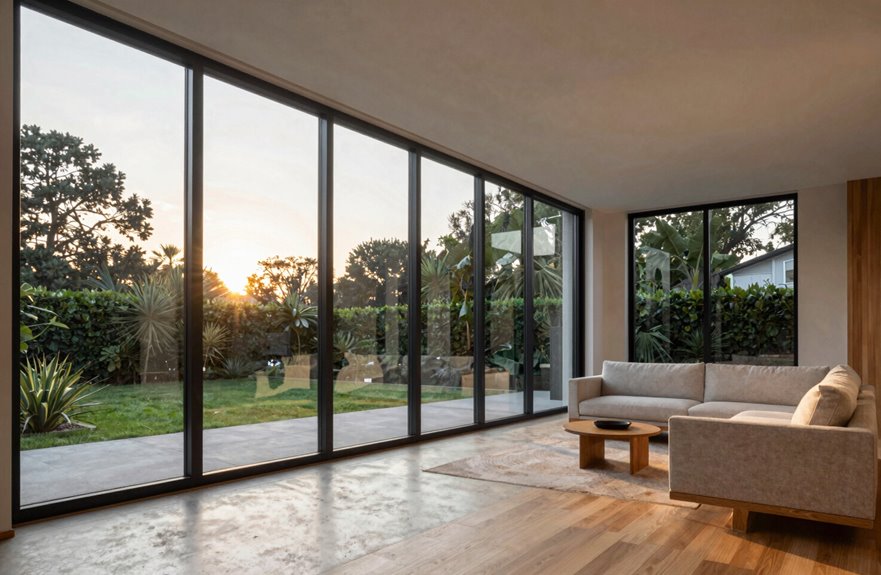
Casement windows solve tight-space problems beautifully; however, I often want to erase the boundary between my living room and the world outside entirely. Floor-to-ceiling windows provide that transformation.
These walls of glass create a bright, airy space and make a bold statement that enhances my experience of home. They facilitate seamless indoor-outdoor flow, particularly in modern, open-concept layouts where minimal design allows the view to take center stage. Slim black or metal frames offer a contemporary edge while maximizing natural light.
My living room feels larger and more connected, genuinely part of the landscape beyond my walls. Floor-to-ceiling curtains or minimalist treatments help maintain that uninterrupted glass look. This choice in windows fosters a deep connection with the environment outside my home.

【Transform Your Space】 Immerse your interior in the perfect ambiance with our Cordless Roman Blind. Crafted from exquisite woven fabric, these Roman Shades effortlessly blend casual elegance with the magic of room darkening, creating a serene atmosphere in any room

Made by and for Andersen Corporation

Package Detail: Your package includes 2 pink velvet curtain panels, each velvet panel drape measures 52 inch wide by 84 inch long and features 8 rust-proof 1.6 inch inner diameter grommets. Fits well with most standard curtain rods.
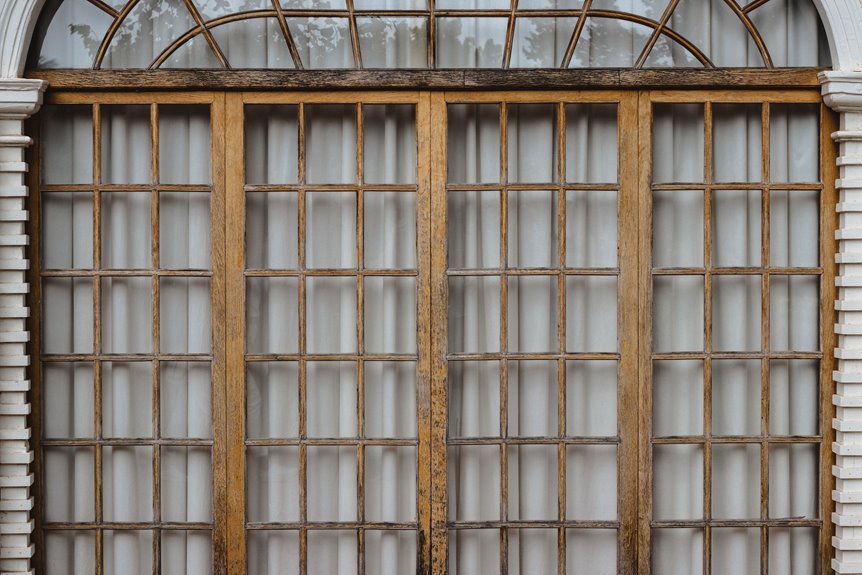
Arched and Specialty Windows for Dramatic Ceilings
How else could I draw the eye upward and celebrate the full height of my living room? Arched windows and specialty windows transform vertical space into pure drama. Here’s how they create a sense of belonging in rooms that deserve to feel grand.
Arched windows crown your living room with vertical drama, turning soaring walls into an invitation everyone wants to accept.
- I choose arches, circles, or triangles to craft architectural focal points that command attention.
- I pair specialty windows with vaulted ceilings and custom trim to amplify that “we’ve arrived” feeling.
- I stack arched windows above standard panes to exaggerate ceiling height without sacrificing privacy.
- I balance abundant natural light with legacy finishes that welcome everyone who enters.
These shapes anchor traditional and custom interiors alike, turning tall walls into shared experiences of awe. For grandeur that includes every guest, specialty windows are a reliable choice.
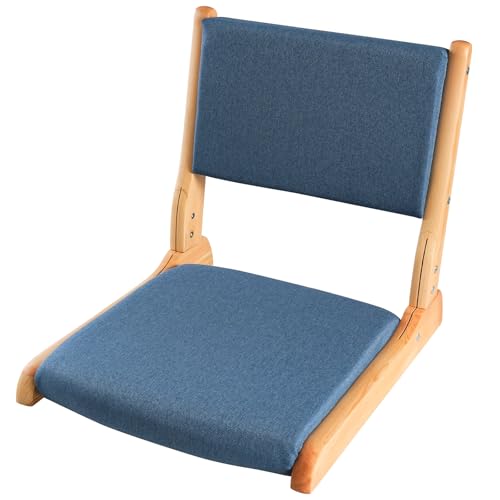
Back Support Floor Chair: The angled fixed backrest keeps your spine relaxed during long sits. Sized at 19.3 x 18.5 x 17.7 in (49 x 47 x 45 cm), it fits a full adult and works as a meditation spot, reading corner, or gaming nook in living rooms, bedrooms, and bay windows.

【Custom Size for a Tailored Fit】 Made-to-order to fit your exact window space. We offer customization for rectangular and square window sills. Simply click “Customize Now” and enter your dimensions for a seamless edge-to-edge fit and a clean, built-in look.

Fall Bench Cushion for Indoor Seating: the mustard yellow chenille velvet and button tufting bring a warm seasonal accent to entryway benches, bay windows and reading nooks; The thick memory foam creates a cozy seat for everyday lounging, reading and fall home updates
Window Walls and Joined Units for Sun-Filled Rooms
I appreciate how window walls fill my living room with natural light from every angle. By joining units with minimal framing, I’ve managed to eliminate the boundary between inside and outside completely. When planning these installations, I balance that openness with effective shading to maintain comfort throughout the year.
Set Includes: 2 panels (each panel: 52 W x 63 L inch). The size option ‘52"W x 63"L (Pack of 2)’ means you will receive One Pack which contains Two Panels
Set Includes: 2 panels (each panel: 42 W x 84 L inch). The size option ‘42"W x 84"L (Pack of 2)’ means you will receive One Pack which contains Two Panels
Set Includes: 2 panels (each panel: 52 W x 84 L inch). The size option ‘52"W x 84"L (Pack of 2)’ means you will receive One Pack which contains Two Panels
Maximizing Natural Light
Why settle for a dim living room when you can fill it with daylight? A warm, welcoming glow enhances every gathering.
Here’s how window walls and joined units can transform your space:
- Choose minimal framing. Slender frames between windows expand your glass area and allow natural light to penetrate deeper into the room.
- Embrace large glass panes. Continuous glazing enables daylight to travel further, reducing your reliance on lamps until evening.
- Heighten your placement. Stacking joined units higher preserves your privacy while allowing generous light across your living area.
- Mix fixed and operable styles. Pairing picture windows with casement sidelights provides sunshine and fresh air whenever needed.
Together, we will create a sun-filled space that feels like home.
Seamless Indoor-Outdoor Flow
Where better to dissolve the boundary between your living room and the world outside than with a sweeping wall of glass? Floor-to-ceiling windows and joined units create that seamless indoor-outdoor flow you’re craving, extending glass across entire walls to pool sunlight deep into your space.
Unlike bay and bow configurations that project outward, window walls stretch horizontally, erasing visual barriers between your sanctuary and the landscape beyond. Minimal framing is recommended to maximize glass area, allowing outdoor views to feel like they belong inside.
Stackable or sliding configurations open wide, inviting the exterior in. Efficiency is maintained with low-E coatings and tight seals for comfort. Plan your furniture to welcome light, align heights with your ceiling, and let your garden complement the glass. This design fosters a strong connection to the outdoors and enhances your sense of home.
Wood, Vinyl, or Fiberglass: Picking Your Frame Material
How do I choose between wood, vinyl, and fiberglass when each frame material offers distinct advantages? Let’s explore the options.
- Wood provides warmth and classic beauty with rich staining options, though it requires more upkeep.
- Vinyl is budget-friendly and ideal for busy lifestyles; it is low maintenance, moisture-resistant, and energy-efficient.
- Fiberglass offers strength and thermal performance that surpasses alternatives, maintaining dimensional stability in harsh climates.
- Product lines matter; E-Series and 100 Series significantly expand your material choices.
Your selection of frame material influences performance, cost, and the overall atmosphere of your living space. I consider my climate and design vision when making this choice. Which material aligns with your needs?
Window Treatments That Balance Privacy and Light
When balancing privacy and natural light in my living room, I focus on the window treatments as they control the light entering the space. Top-down shades work well for this; they allow for light adjustment while maintaining an open, spacious feel in gathering areas.
For those who prefer minimalism, sheer panels enhance natural light and provide a clean view. I hang drapery from ceiling to floor, pulling it wide to frame the window instead of covering it. This brightens the room and creates the illusion of height. White, floor-length curtains beautifully elongate the walls.
When privacy is a priority, I layer sheers with valances that do not obstruct openings. These window treatments create a sense of belonging in my space—providing protection while still allowing daylight to enter.
This Picture Window frames outdoor scenery like a picture frame. Slim sight‑line maximizes unobstructed views and brings abundant natural light to your living space. Ideal for living room, dining room and great room

Double-Pane insulated tempered clear glass octagon window for enhanced visual appeal Low-E glass and argon gas between the panes for improved energy efficiency

Double-Pane insulated tempered clear glass octagon window with grids for enhanced visual appeal Low-E glass and argon gas between the panes for improved energy efficiency
Living Room Window Placement: Street Views and Furniture Flow
I position street-facing picture or bay windows to enhance curb appeal while using high or oversized fixed panes for privacy. Casement combinations near seating maintain open sightlines, and I float sofas away from these windows to reduce glare and preserve views. Floor-to-ceiling street glass can make smaller living rooms feel larger, so I balance layout, light, and seclusion in one cohesive flow.

360° Silent Central Rotation: Our round window features an central axis rotation system that allows effortless 360° adjustment with just a light touch. The ball-bearing track ensures smooth silent rotation, and its balanced design keeps window stable at any angle, letting you control airflow and natural ventilation in restaurants, kitchens, or any space

All-Window Tight Seal: Designed for portable AC units, this air conditioner window seal kit clings tightly to window frames of all shapes, blocking warm air leaks to boost equipment efficiency and keep your space refreshingly cool all summer
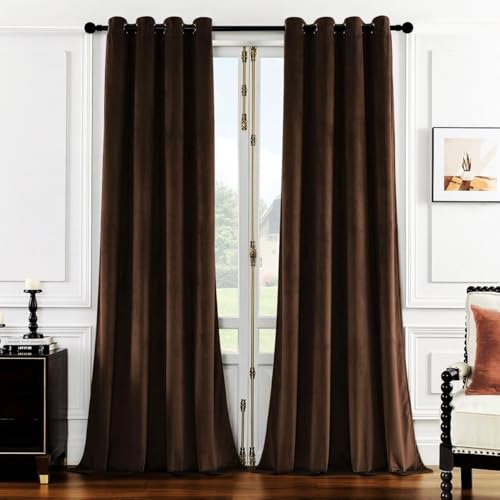
1Package Detail: Your package includes 2 brown velvet curtain panels, each velvet panel drape measures 52 inch wide by 84 inch long and features 8 rust-proof 1.6 inch inner diameter grommets. Fits well with most standard curtain rods.
Street-Facing Window Strategies
Why settle for a living room that merely exists when it could captivate? Street-facing windows transform ordinary spaces into neighborhood landmarks. Here’s how I make it work:
- I install picture windows or bay windows to command attention from the curb while pulling exterior beauty inside.
- I position each window to align with natural gathering spots, allowing connection to passing life without sacrificing comfort.
- I add bay windows where street exposure demands architectural character, creating cozy nooks that invite morning coffee with neighbors.
- I select Low-E coatings and sheer treatments, protecting furnishings from harsh UV while maintaining a welcoming presence to the street.
Together, we are designing rooms that foster a sense of belonging.
Furniture Layout Optimization
How do you keep a room from conflicting with itself? I position my windows and furniture layout so they work together. I place larger windows—such as picture, bay, or bow—where they won’t be overshadowed by bulky pieces, allowing natural light to come in while maintaining comfortable seating. I avoid placing tall furniture in front of central light sources; instead, I position sofas toward windows and leave three to four feet of space for easy movement. A reading bench fits nicely into a bay window nook, enhancing usable space without obstructing flow. I pair operable casement or double-hung windows with nearby seating to catch cross-breezes effortlessly. Mirrors on opposite walls reflect daylight deeper into the room without altering the main setup.
Privacy and Light Balance
Where privacy meets daylight, I strike a balance by placing my largest windows to maximize sunlight while maintaining my privacy. I understand that belonging starts at home, and my living room should embody both warmth and a sense of sanctuary.
Here’s how I achieve this:
- I position my sofa and chairs to face away from street views, using frosted glass when necessary.
- I add sheer curtains on casement windows near the road; they allow light in while obscuring outside visibility.
- I create bay window nooks with interior plants that act as cozy buffers from outside glances.
- I select top-down shades and neutral drapery as my preferred window treatments, ensuring minimal coverage with firm boundaries.
Together, these elements create spaces that invite daylight while preserving a safe retreat.