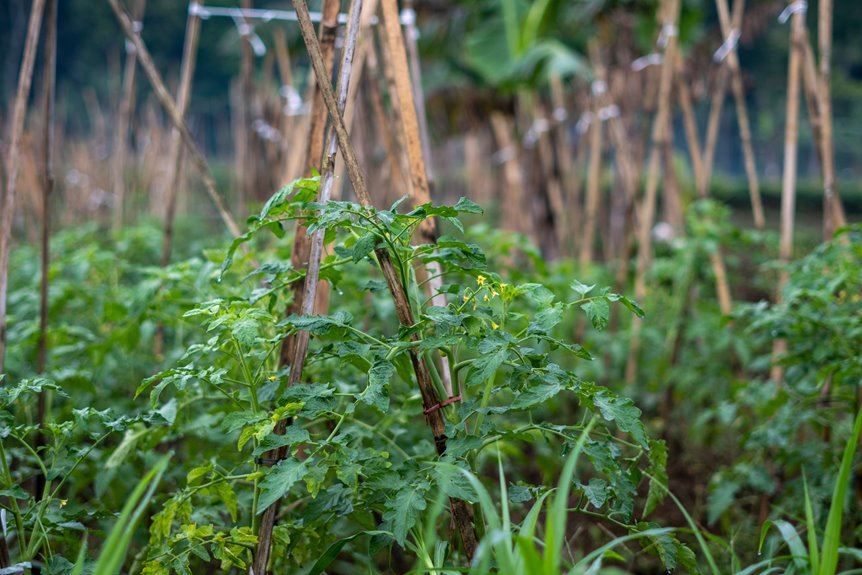
I choose stakes when I want dense plantings and don’t mind weekly tying. Cages are preferable for growing indeterminate varieties, reducing daily maintenance. Determinate varieties suit cages or short stakes, while indeterminate types require six-to-eight-foot stakes or sturdy trellises.
In tight gardens, stakes help maintain a narrow footprint. Windy climates necessitate reinforced cages with ground anchors or well-secured stakes.
Initially, stakes cost less, while quality cages are durable over the years. Stakes also allow for easier fruit picking.
Your setup should balance time, space, and climate, as these specifics significantly impact your gardening success.
Stakes or Cages? Start With How Much Training You’ll Do
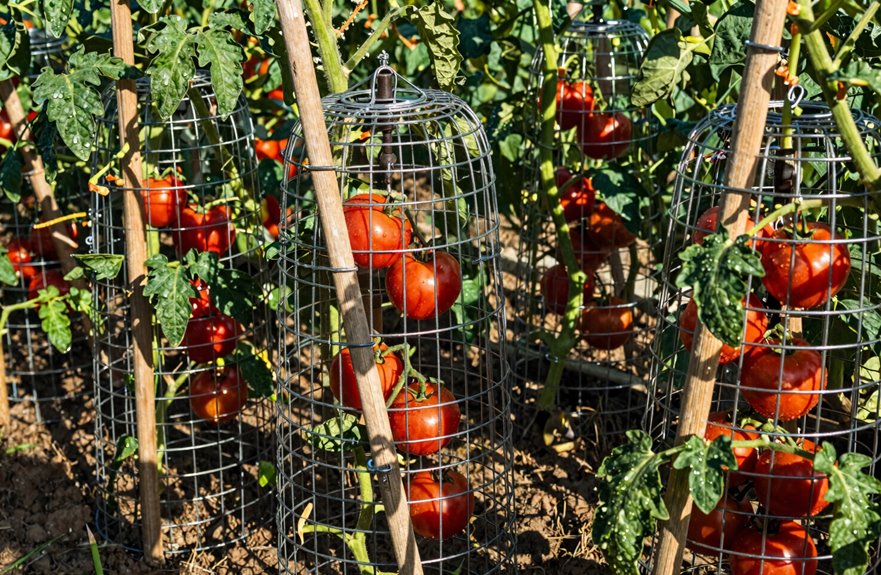
Before I decide between a cage or stake, I consider how much hands-on work I’m willing to invest throughout the season. Stakes require more training; I tie and guide weekly, especially with single-stem methods. However, this commitment provides cleaner access and better airflow.
Tomato cages offer a trade-off between daily effort and upfront setup. I position them early, which leads to less tying as the plants grow within the frame. The Florida Weave and similar twine systems allow me to balance stakes with moderate training intensity.
If I aim for maximum yield through dense, tall training, I will spend considerable hours weaving and pruning. For easier harvests with minimal fuss, sturdier five-foot cages are preferable. Finding the right balance between time and results is crucial, so choose what aligns with your gardening style.

【DIY Kit】 This kit contains 15 pcs plant stakes with 13.7" in length and 0.3" in diameter, 8 pcs connectors, 8 pcs rotatable clips, 8pcs pointed rubber cap, 8pcs top caps,25 pcstwist tie, Great for your garden DIY

DURABLE & RUSTPROOF: These metal garden stakes are made of hollow steel, which are sturdy&durable. Offer exceptional upright guidance and much-needed support for your garden. Jollybower steel garden stakes, coated with weather-resistant plastic, excel in UV and chemical resistance. They resist sunlight and rust, and outlast bamboo and wood stakes.

【Size】The garden stakes are 6 feet length,0.43 inch in diamete, each package contains 20 stakes.
Determinate or Indeterminate? Match Support to Plant Growth
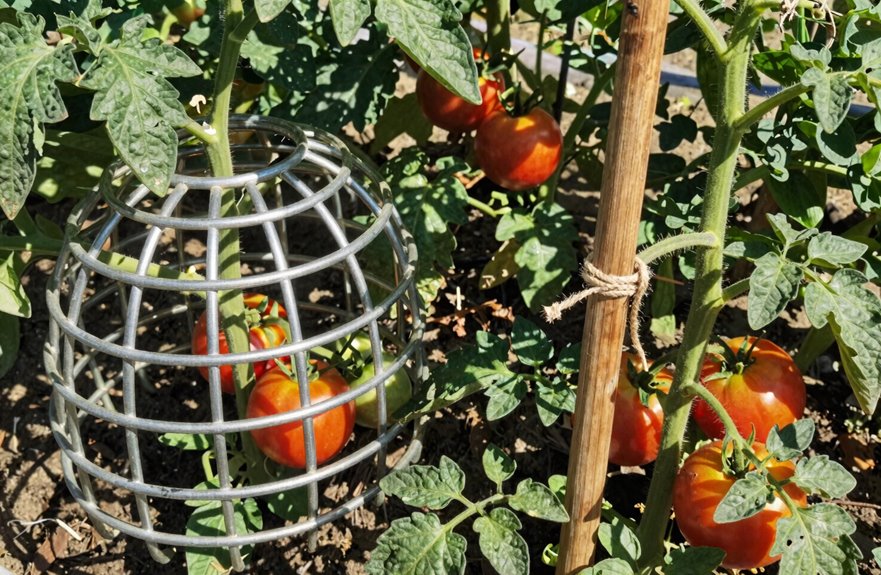
Once I’ve weighed how much time I’ll spend training, I look at what I’m actually growing. Determinate tomatoes stay compact and bushy, so I grab a cage or short stake to keep fruit clean and harvesting simple. These varieties stop growing at a certain height, making them forgiving for newer growers.
Indeterminate tomatoes continue to climb all season, requiring sturdier support systems and regular attention. I need six-to-eight-foot stakes or trellises, plus consistent tying and suckering to manage their continuous growth. Pruning is essential here; I’m directing energy upward rather than outward.
Matching your setup to your plant’s growth habit is important. Fellow gardeners understand that choosing between cages and stakes involves knowing whether you’re tending a contained bush or a vigorous vine that continues to grow until frost.

Self-Watering Convenience: Each planter has a built-in water reservoir that delivers consistent moisture to roots for up to a week, reducing frequent watering. Ideal for busy gardeners and vacations, it helps maintain healthy plants.

Upgraded Hexagon Connector-Upgraded connecting buckle & sturdy connecting pipe have stronger load-bearing capacity, which ensures that the tomato cage is not easy to break, the buckle will not fall off and can be reused indoors or outdoors. The plant support structure is made of sturdy metal and the surface is covered with a non-fading green plastic coating.

【New generation Plant Support Cage】Different from other tomato trellis, LOMNYIY tomato support cage have the newest plug-in connection, and unique double-layer metal tube built-in interface design to stay together tighter and more stable. And the poles are very hard with a metal core, yet are coated entirely in plastic to keep them from rusting, and the heat dissipation is good. It means strong durable performance can hold up in the wind with heavy tomato plants in them.
Small Garden? Stakes Fit Where Cages Spread
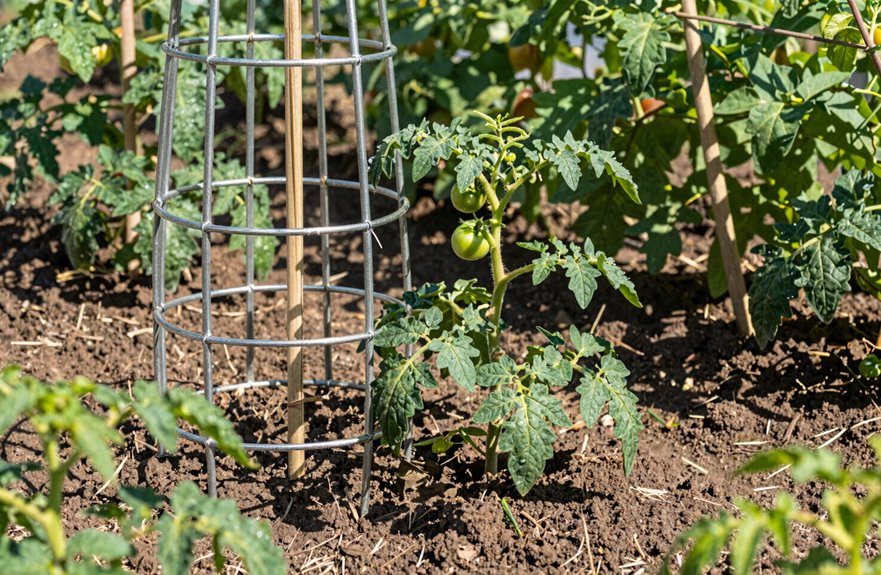
I understand you’re working with limited square footage. Stakes allow for closer plant spacing without sacrificing support. While cages spread outward and take up valuable bed space, a simple vertical stake occupies almost no footprint at all. This narrow profile opens up room for higher-density planting while keeping your tomatoes upright and productive.

🌱 【Adjustable Height】3-tier telescoping design (15"-45") for all growth stages

[Package Contents] You will receive 3 three-layers plant support cages, 3 grow bags and 1 use manual. The tomato cages are composed of 27 straight poles, 27 connecting rods and 18 connecting joints. These three complete sets will help you to train and support the upward growth of the plants.

Eco-friendly Cucumber Trellis are going to make your life a lot easier! Perfect to secure floppy plants to get the light they need.
Space-Saving Vertical Growth
Where space is tight, stakes are more effective than cages. Stakes promote true vertical growth, allowing me to plant tomatoes closer together without causing crowding. While cages spread three to four feet wide, my space-saving stakes occupy only a few inches of soil. This is crucial when fitting plants into a patio corner or a narrow bed alongside neighbors.
I use tall stakes with twine for my indeterminate varieties, training the vines upward instead of outward. The Florida Weave method keeps my row tidy and accessible. Yes, I tie and prune more often, but that effort pays off; my staked plants ripen earlier because energy is directed to fruit rather than dense foliage. For small-space gardeners, stakes fit well in cramped areas.
Narrow Footprint Advantage
How much room can you spare in a cramped garden? I’ve learned that stakes are the best choice when footprint matters. Unlike cages that spread 24–30 inches wide, stakes fit into tight corners without taking up precious ground. This space-saving approach allows me to pack more plants per square yard, turning my tiny plot into a productive haven for small-space growers.
- Stakes store flat and install quickly, eliminating the hassle of bulky wire.
- Cages occupy horizontal space I prefer to use for companion herbs.
- Tall stakes increase planting density in my limited beds.
- Container tomatoes thrive with single stakes, allowing roots to breathe freely.
- Narrow footprints keep my paths clear for tending and harvesting.
I choose stakes because they make the most of my garden’s limits, and they can do the same for yours.
Will Wind Destroy Your Setup? Climate-Proofing Choices
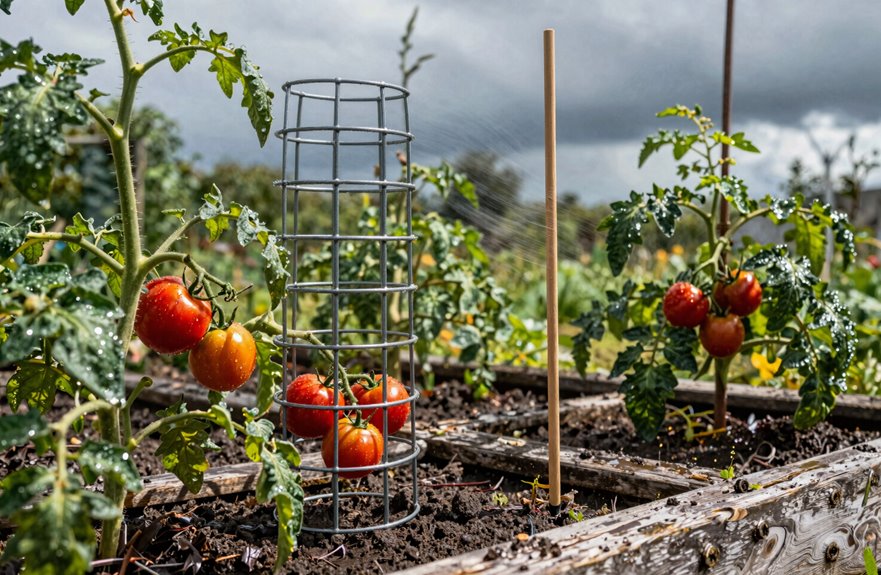
Why gamble with a flattened garden when a few smart choices can keep your tomatoes standing? Cage stability is crucial when storms roll through. Standard cages can topple easily, but there are effective solutions available.
For serious wind resistance, I rely on hog wire systems with t-posts and ground anchors. These setups withstand Minnesota-style gusts that would flatten lesser designs. When I use traditional cages, I secure them with stakes at the corners; this method is simple yet effective.
Taller cages with reinforced mesh (14–16 gauge) add strength, although they require sturdy installation. I weave and tie plants throughout the season to distribute wind load, preventing anything from catching and toppling. These methods help ensure that our gardens remain intact during fierce weather.
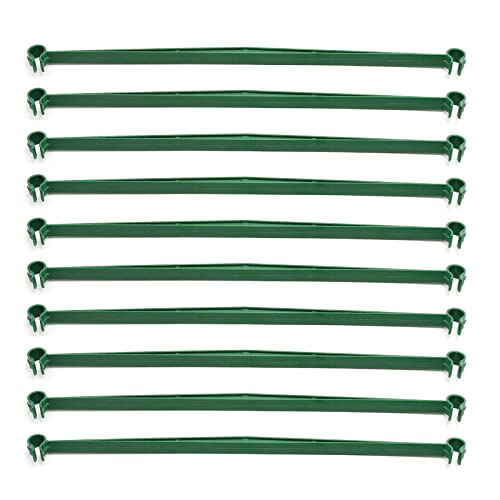
Expandable Stake Arms: Tomato cage connectors support clips are made of sturdy plastic material, strong and lightweight

Package includes 36 pcs tomato cage connectors. Length: 11.8 Inch with 2 Buckles. Specifically crafted for the 7/16" (11mm) plant stakes.

Adjustable Support for Climbing Plants: Crafted from high-quality, weather-resistant plastic, these expandable stake arms grow with your plants and keeps your vines of plants off of the ground and creats a neater garden.
Cheap Now or Built to Last? Cost vs. Durability
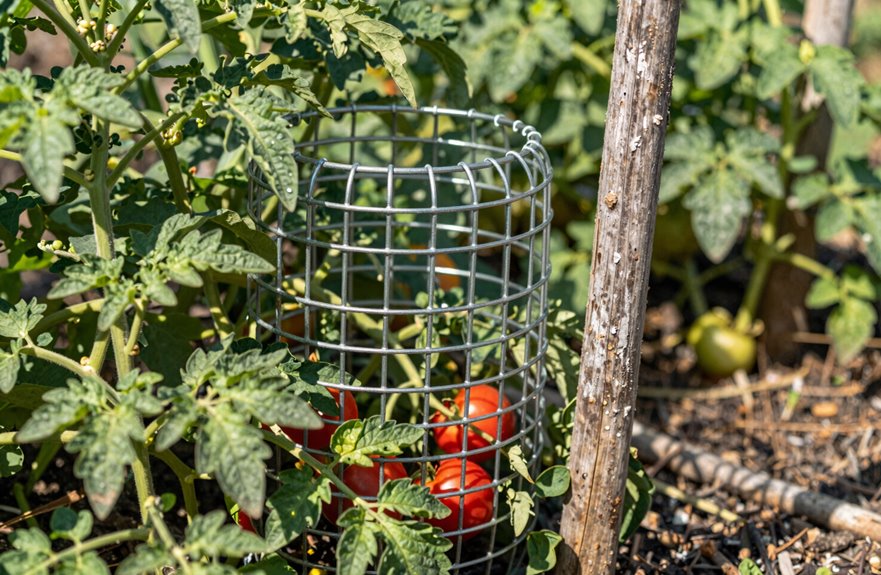
Wind resistance is important, but so is your budget, especially when choosing between a quick fix and a long-lasting solution. Skimping on durability often leads to needing replacements sooner than expected.
Here’s what my seasons have taught me:
- Stakes cost less upfront, but you’ll spend more time tying and pruning as plants struggle against gravity.
- Quality cages require a higher initial investment, yet concrete reinforcing wire or hog panels outlast cheaper options.
- Heavy-duty cages (5 feet tall, 24–30 inches) can double your yield per plant compared to stakes alone.
- Hog wire supports beefsteaks and heirlooms that would topple flimsy options.
- Weather resilience distinguishes metal cages that endure from nylon trellises that tear.
Investing in durable tools enhances your gardening experience over time.

Good for Trellising Tomatoes Climbing Plants: each roll contains 6150 feet (approx. 3.3 lbs) of strong white garden twine, ideal for supporting tomato plants, cucumbers, beans, and other vining crops; This durable garden twine is perfect for building sturdy Florida weave trellises or tying vines securely throughout the growing season

Sturdy Support - This heavy-duty twine is built to last, with a tensile strength of 59 lbs. This durable polypropylene twine can handle the weight of your heaviest fruits and vegetables throughout the growing season. It provides reliable support as a tomato string for your garden.
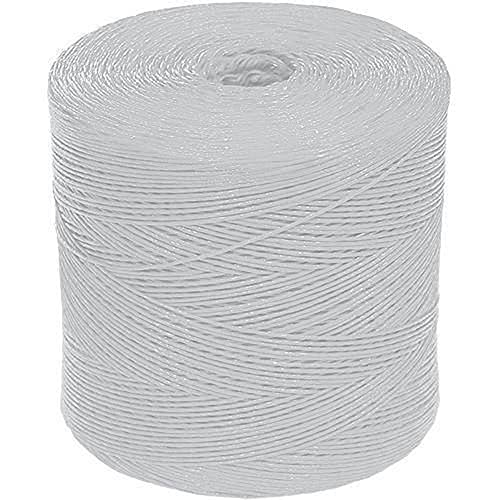
6,300 ft Tomato Twine
Can You Reach the Fruit? Harvest Access Compared
Where does the real work of harvesting happen—among tangled branches or along open rows? My choice shapes every morning spent gathering fruit.
Cages offer stability and quick setup, but I often find myself reaching through wire to grab tomatoes hiding deep inside. That dense growth demands occasional vine repositioning, and my access to the harvest suffers when fruit clusters away from the outer edges.
Staking changes everything. I train vines upward, creating a vertical hedge where ripe tomatoes hang exposed and visible. Pruning training becomes essential here, but the payoff is immediate; I spot and pick without wrestling through foliage.
Both systems improve with attention. I nudge cage vines outward and keep stake growth tidy. Either way, I reach for fruit that justifies the effort.

DURABLE AND RUST-PROOF: The 72 inch garden stake is made of high-quality hollow metal, which make it upright guidance, the resin coating to prevent more UV and weather resistant to rust, can be reused for long time.

【DIY Kit】This kit contains 15 pcs plant stakes with 13.7" in length and 0.3" in diameter, 8 pcs connectors, 8 pcs rotatable clips, 8pcs pointed rubber cap, 8pcs top caps,25 pcstwist tie, Great for your garden DIY You can connect two or more stakes to achieve the desired length.

(Size)The garden stakes are 6 feet length,0.44 inch in diamete, each package contains 25 stakes.
Build Your Own: Wire Mesh Cages and Rebar Stakes
How can I keep costs down while building supports that last? I build my own tomato supports using concrete reinforcing wire mesh bent into sturdy wire mesh cages that I reuse season after season. For stakes, I use thick bamboo or iron rebar stakes; thicker bamboo won’t snap under heavy fruit loads.
Build once, reuse forever: DIY wire mesh cages and sturdy bamboo or rebar stakes keep tomato supports affordable and durable season after season.
- Cut rebar wire mesh into 6-foot lengths, bend into cylinders, and secure with wire ties.
- Drive rebar stakes 2 feet deep for maximum wind resistance.
- Try the Florida weave: run twine between end stakes for indeterminate varieties.
- Use 4-by-16-foot hog wire panels as trellises for about 10 plants each.
- Anchor cage corners to nearby stakes with wire ties to prevent tipping.
These DIY solutions save money and support sustainable gardening practices.

Provides lightweight yet strong support for tomatoes, beans, peas, and other climbing plants and flowers with a large planter that holds approximately 10 gallons of media while the tower expands to over 4 feet

Professional 63-Inch Height for Climbers: Supports tall, indeterminate tomatoes and vining vegetables that exceed 6 feet. Provides 15 more inches of growing space than standard 48-inch cages.
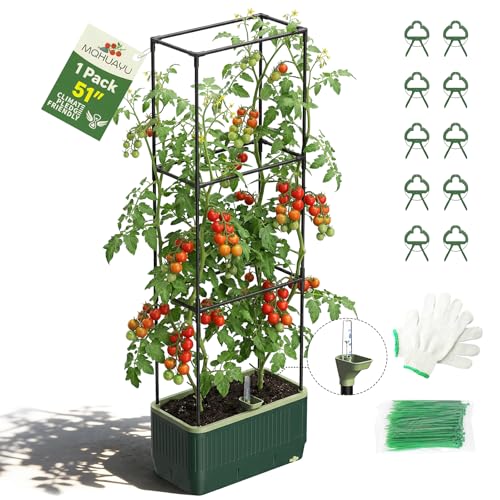
SMART SELF-WATERING & VISUAL GAUGE: Take the guesswork out of watering! Our innovative self-watering system features a deep water reservoir, cotton ropes, and a clear visual water level indicator. You can instantly see when to refill and when it's full, preventing overwatering or root rot. Perfect for busy schedules or weekend getaways, ensuring your plants thrive with minimal effort.