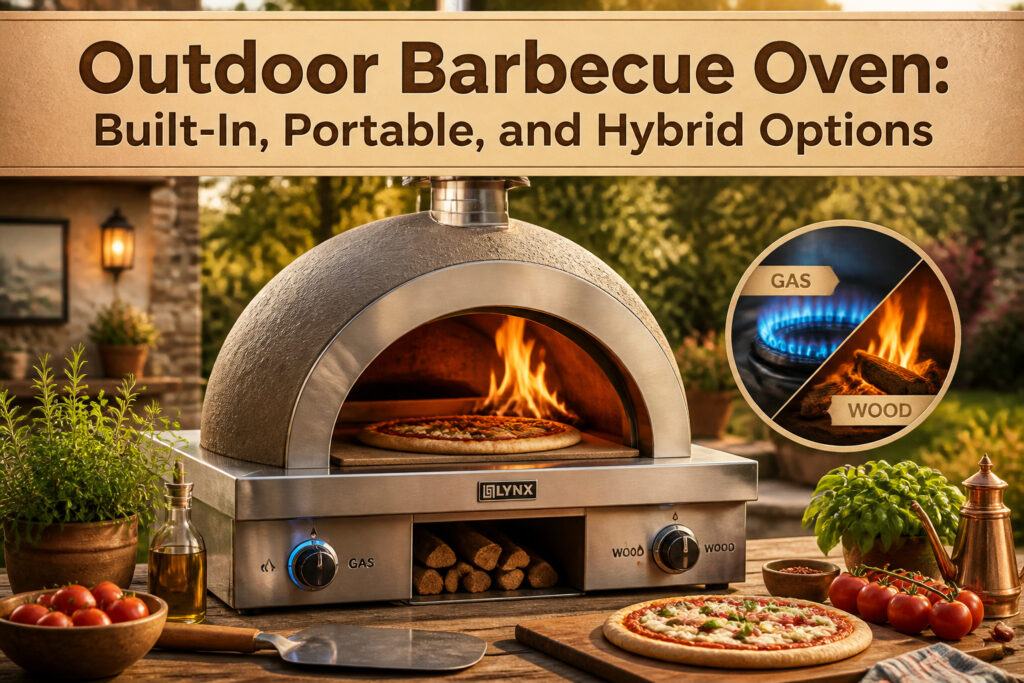
An outdoor barbecue oven is a dedicated cooking chamber, usually domed, built to hold the 700-plus degrees that pizza and open-flame roasting demand. What separates the worthwhile units from the rest is whether they match how you actually cook: gas for fifteen-minute weeknight heat-up, wood for smoke you cannot fake, or hybrid when your schedule varies enough to need both. The Lynx Professional Napoli 30-inch, for instance, drops into a counter or stands alone, a flexibility that matters when you are not sure the outdoor kitchen is permanent.
Lynx Professional Napoli 30-Inch Built-In / Counter Top Gas Outdoor Pizza Oven
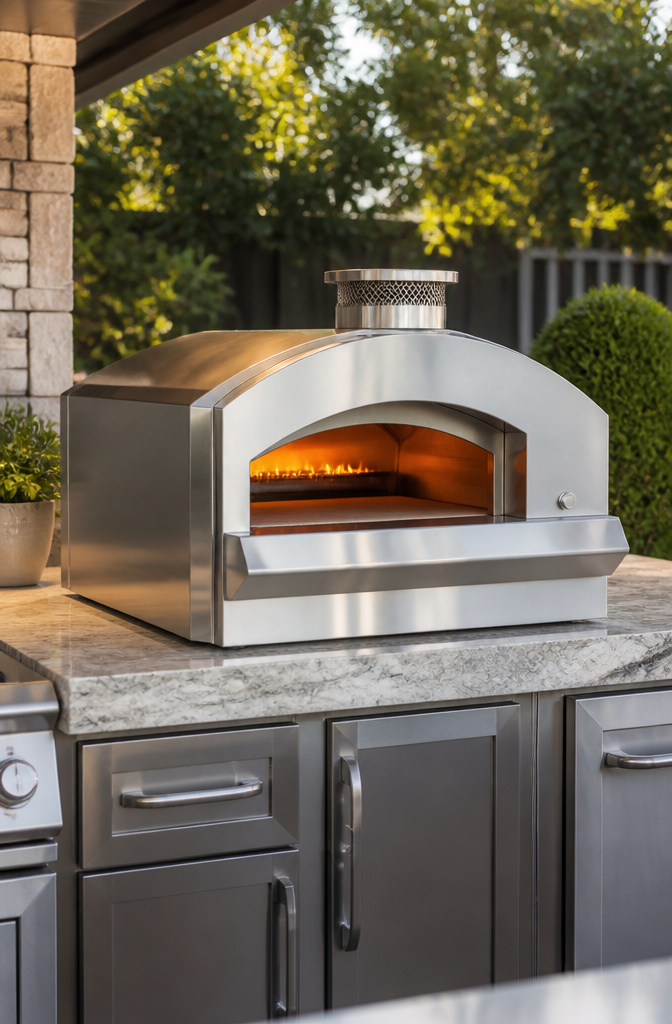
The Lynx Professional Napoli 30-inch sits at a price point where most buyers cross-shop wood-fired ovens, so the gas choice needs to justify itself. What convinced me, reading through the specs and owner reports, is the installation flexibility: the same unit drops into a counter or stands alone, which matters when you are not sure yet whether this outdoor kitchen is permanent or might move with you in two years.
Heat-up time is the practical win. A gas burner brings the stone to temperature in roughly fifteen minutes, where wood demands tending, kindling, and usually a half-hour of patience you do not have on a weeknight. The trade is flavor. You lose the smoke and the slight char variability that wood enthusiasts treat as character; what you gain is consistency and the ability to cook when you only have ninety minutes total.
At thirty inches, the Napoli fits standard outdoor cabinetry without custom masonry, which keeps the project inside a weekend and a controlled budget. For someone who bakes pizza monthly rather than weekly, that convenience probably matters more than the romance of splitting oak.
Blaze Premium LTE+ 26-Inch Built-In Gas Outdoor Pizza Oven with Bluetooth Probes & Rotisserie
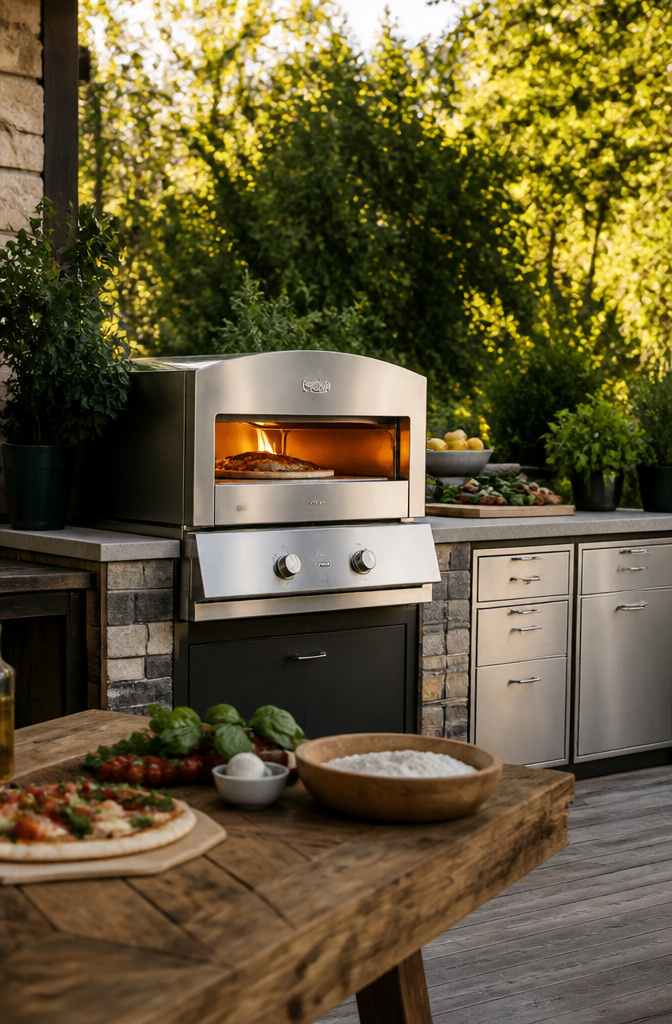
A built-in gas pizza oven that also runs a rotisserie is already an odd pairing, but adding Bluetooth temperature probes turns the Blaze Premium LTE+ into something that behaves more like a modern indoor range than a stone box on the patio. The 26-inch cutout fits standard outdoor kitchen modules, so it drops into a run of cabinets without the custom masonry a wood-fired unit demands. For anyone who already laid stone or stucco around a grill cutout, that dimensional familiarity matters; you are not rebuilding the wall to accommodate a different appliance.
The rotisserie function changes what you cook, not just how. Whole birds or a trussed roast turn while the dome heat does the browning, which frees the main grill grate for sides. The Bluetooth probes matter most when you are stepping away to prep elsewhere in the kitchen or talking to guests across the yard. The app pings when a roast hits temperature, so the food does not sit there overcooking while you finish a drink. That said, the probes are only useful if you actually use them, and in my experience the temptation with outdoor cooking is to eyeball everything. The technology is built for someone who wants precision without hovering. Gas heat also means the oven is lit and hot in minutes, not the hour or more a wood fire asks for. The trade is flavor; you will not get the light smoke and char spots that come from burning oak or fruitwood. For a weeknight dinner after work, that speed usually wins. For a Saturday when you want the ceremony, it might not.
HearthStone Genio 33-Inch 4.0 Sq. Ft. Capacity Wood-Fired Pizza Oven
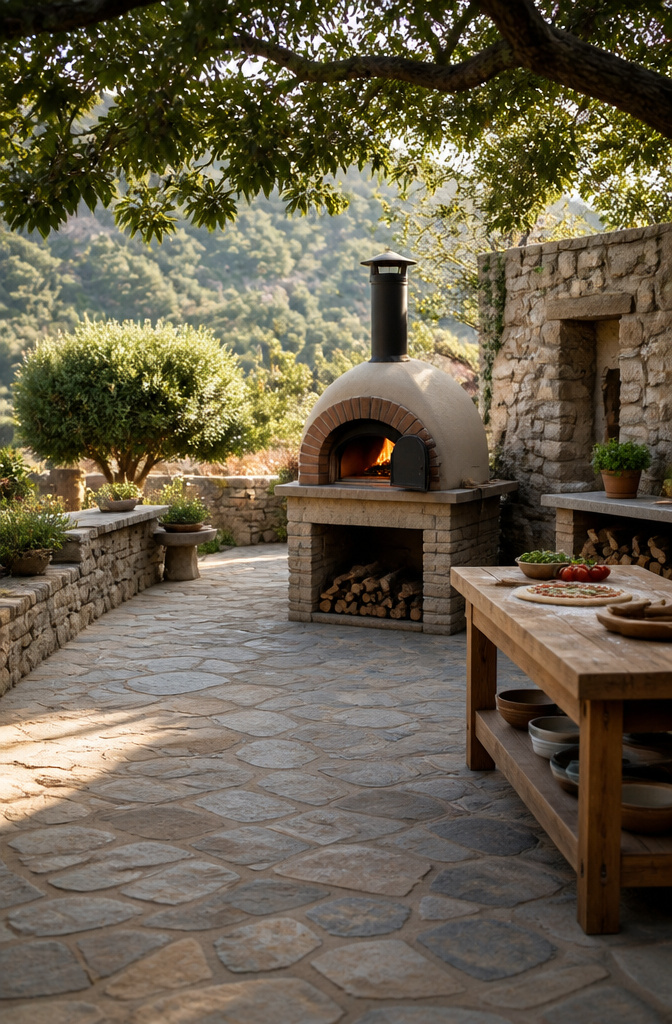
The HearthStone Genio 33-Inch 4.0 Sq. Ft. Capacity Wood-Fired Pizza Oven shifts the conversation from the gas models above to something that runs on split logs and patience. At 33 inches with 4.0 square feet of cooking surface, it sits in the same footprint as the Hestan Campania but behaves nothing like it. Where gas ignites with a knob and holds steady, this one asks you to build and tend a fire, then wait while the stone absorbs the heat.
That wait pays off in flavor. The smoke from oak or fruitwood threads into the crust in a way propane simply cannot replicate, and the temperature swings, 200 degrees in either direction depending on where the flame licks, force you to rotate the pie and read the oven rather than trust a dial. The 4.0 square feet still fits two personal pizzas at once, but the left side runs hotter than the right, so placement matters more than in the even box of a gas unit.
The 33-inch width is generous until you try to slide in a 16-inch peel; you will want the shorter tool. Cleanup means ash, not a drip tray, and the door stays open during bakes so the fire breathes. For someone who treats the tending as part of the evening, not a chore to skip, this is the entry point before the larger Genio hybrids or the Chicago Brick kits.
Chicago Brick Oven CBO-750 Built-In Wood Fired Residential Outdoor Pizza Oven DIY Kit
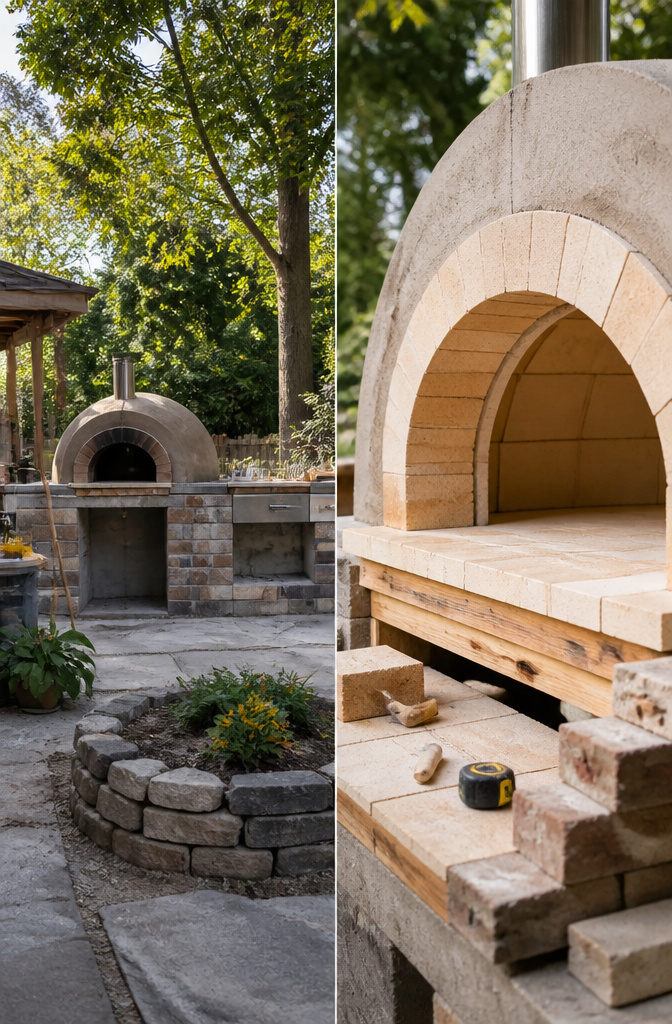
A DIY kit for a built-in wood-fired oven means you are buying the core chamber and the hardware that makes it work, not a finished appliance you slide into place. The Chicago Brick Oven CBO-750 arrives as refractory pieces, the dome and floor, plus the venting and door, and you build the enclosure around it yourself in brick, stone, or stucco to match your outdoor kitchen.
The 750 in the name refers to the cooking surface width in millimeters, which translates to roughly a 30-inch floor. That size fits two full pizzas at once, or a couple of sheet pans if you are roasting. For a homeowner who already has the counter structure planned and wants the oven to read as custom masonry rather than a dropped-in box, the kit route saves money on the unit itself and puts the labor where you can control it.
What you give up is speed. A finished built-in ships with its own jacket and insulation system; you cut the opening, connect the vent, and you are done in an afternoon. The kit needs a curing fire sequence, proper mortar work, and a weather shell you build or hire out. I would only go this path if the masonry surround is already part of the vision, not as a way to cut corners on total project cost.
Wildwood Wood Fired Pizza Oven Kits
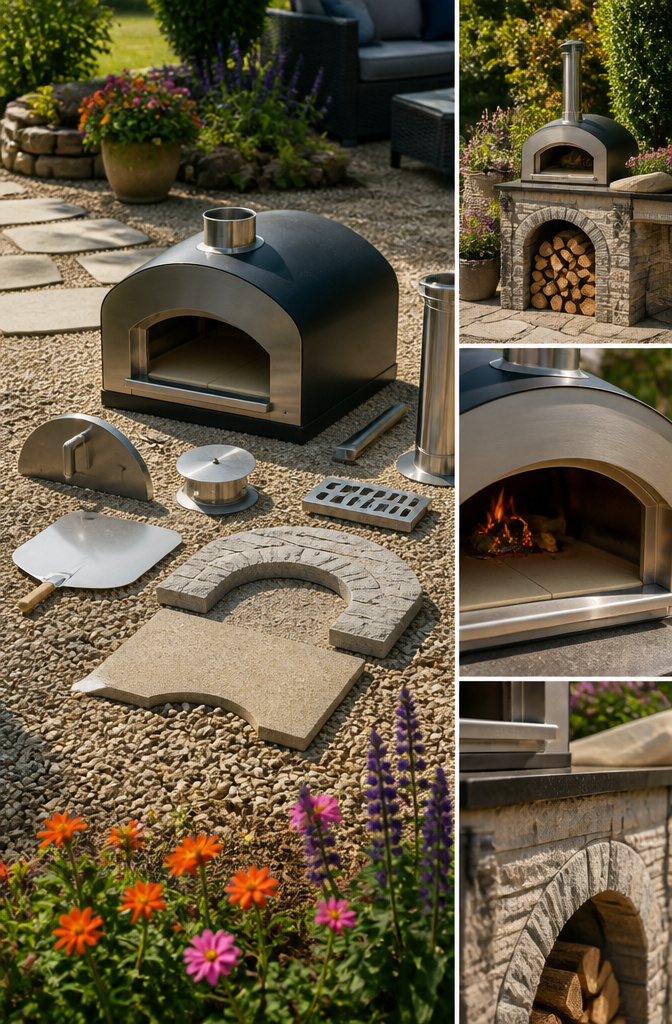
Wildwood’s kit-based approach starts with a wood-fired pizza oven core and builds outward from there. The Los Angeles-based manufacturer fabricates professional-grade components that slot together on site, including stands and enclosures sized to the same footprint as the oven itself. Argentine Parrilla grills, Brazilian rotisserie units, and Santa Maria grills can anchor the same outdoor kitchen layout, so the base kit expands into a cooking station rather than staying a single-purpose appliance.
Where the Chicago Brick Oven kit keeps the focus squarely on the pizza oven assembly, Wildwood treats the oven as one module among several. The installation videos walk through gas burner add-ons, countertop drops, and full stand enclosures as separate decisions rather than a fixed package. That flexibility matters if you already own a grill you like and want the oven to sit beside it, or if you plan to add a rotisserie later and need the framing to accept it.
The tradeoff is more moving parts to coordinate. Wildwood’s range of accessories, from Yakitori grills to modular outdoor kitchen sections, gives you more configuration options but also more choices to make before the first brick gets laid. For a weekend project with a firm stopping point, that can either feel like freedom or like scope creep, depending on how clearly you mapped the layout beforehand.
Alfresco 30-Inch Built-In Gas Outdoor Pizza Oven Plus
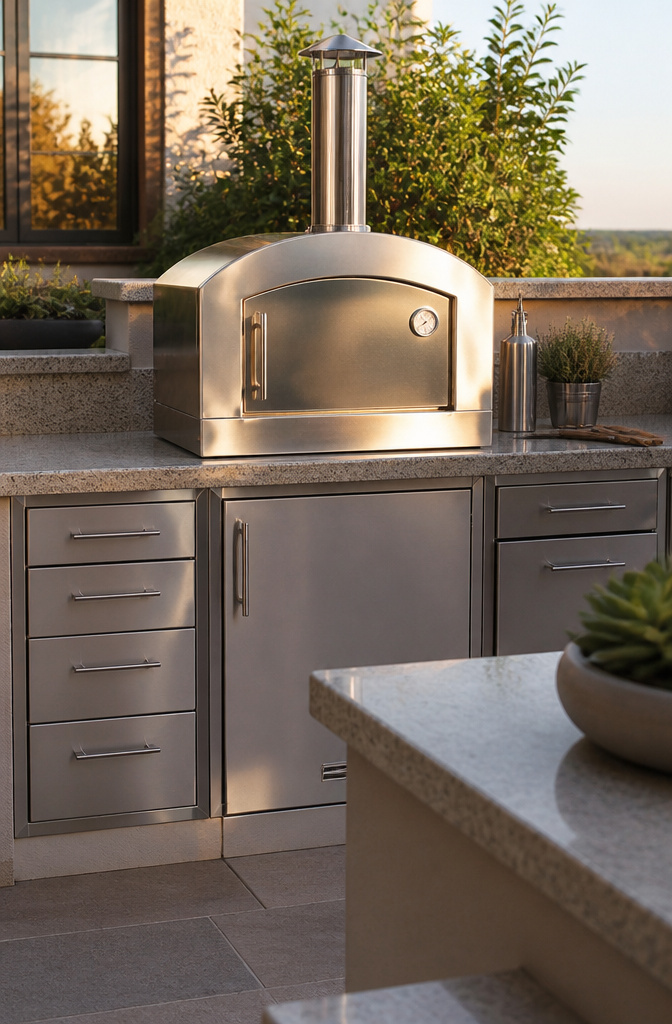
The Alfresco 30-inch built-in gas outdoor pizza oven sits in the premium bracket of outdoor kitchen builds, and that price tag comes with expectations about fit and finish. What shows up in owner feedback, though, is a pattern of headaches around getting the unit properly seated and supported. Multiple buyers describe gaps between the oven chassis and their cutout dimensions, or confusion over whether the listed specs account for ventilation clearances or not. The manual leaves enough ambiguity that some people end up cutting twice.
Where this gets expensive is the service loop. Owners who needed parts, or who had ignition issues out of the box, report long waits for Alfresco to respond and longer waits for replacement components. One buyer described chasing the distributor for six weeks over a faulty thermostat. For a built-in unit you cannot easily swap out, that downtime stings more than it would with a portable model you could just box up and return.
If you are already committed to a full Alfresco outdoor kitchen suite, the matching look may outweigh the risk. For a standalone pizza oven purchase, the customer service track record on this unit is hard to justify at its price point, especially when similarly sized gas ovens from competing brands ship with clearer install kits and faster parts turnaround.
Delta Heat 30-Inch Built-In Gas Pizza Oven
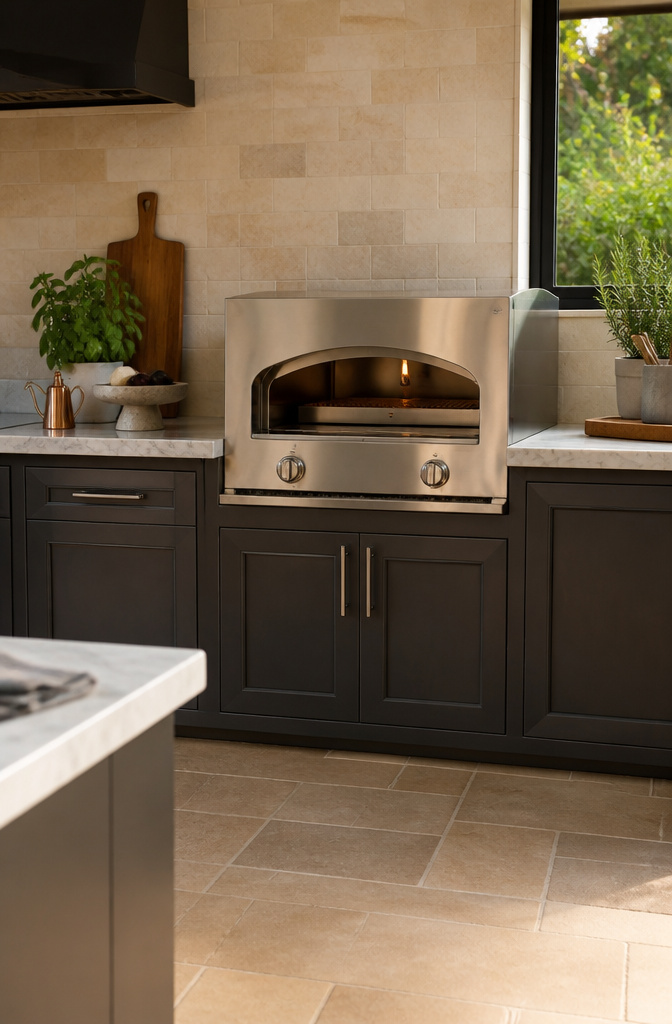
The Delta Heat 30-inch built-in gas pizza oven sits in the same mid-size gas category as the Lynx and Alfresco models, but the installation story differs in ways that matter for timing your project. Where the Lynx leans toward lighter framing and the Alfresco demands a deeper chase for its burner assembly, the Delta Heat unit splits the difference: the body drops into a standard 24-inch depth cabinet without the extra ledger work, yet the venting still wants a straight run up rather than the elbow-heavy paths some outdoor kitchens force. I have seen builds where that single detail added a half day to the cut list.
Intended use tilts slightly toward the entertainer rather than the daily weeknight cook. The burner layout runs hotter at the center deck than the Lynx Napoli, which means a 90-second turn on a Neapolitan dough if you are not watching, but also means the same setting recovers fast between pies when a crowd lines up. For the homeowner firing it twice a month for parties, that trade lands in the plus column. For someone hoping to roast a tray of vegetables while a pizza bakes, the floor gradient asks more rotation than the Alfresco’s more even spread.
Gas line sizing follows the same 1/2-inch minimum as its competitors, though the manual’s pressure spec sits a notch higher; your plumber should clock that before stubbing in, not after the stone is set.
Hestan Campania 33-Inch Gas Outdoor Pizza Oven with Light Kit
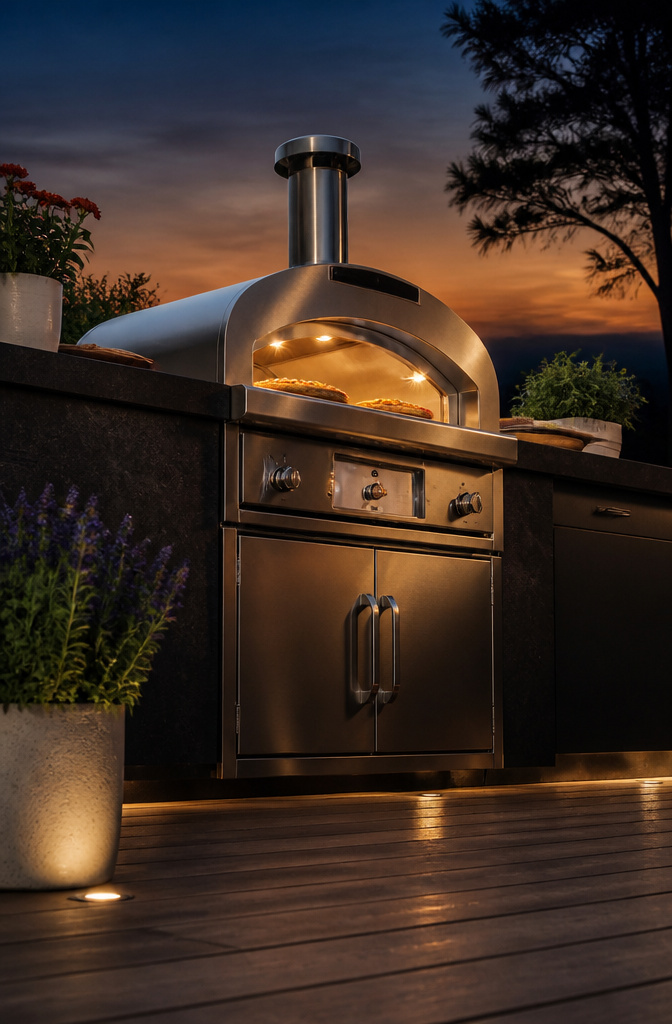
The Hestan Campania 33-inch gas outdoor barbecue oven arrives with a light kit built into the dome, a feature that sounds minor until you try checking a pizza at dusk without it. The interior lighting casts enough glow to judge browning on the crust without opening the door and dropping the temperature, which matters more than you’d think when ambient light fades but the dinner hour doesn’t. Most gas ovens in this class leave you juggling a flashlight or phone, so the integrated solution removes a small friction that adds up across a season of evening cooks. Whether that convenience justifies the premium over a basic Napoli-style unit depends on how often you fire it up after six. For someone running the oven twice a week year-round, the light pays for itself in avoided hassle. For the occasional Saturday afternoon user, it reads as a nice extra rather than a need. The build quality underneath matches the price: heavy-gauge shell, even heat distribution across the deck, and hardware that does not feel like an afterthought. What sold me, reading through the spec sheets and owner threads, was the consistency of the light placement: aimed at the deck, not the ceiling, so you actually see the food and not just a glare off the stone.
Summerset Hybrid Gas & Wood Pizza Oven
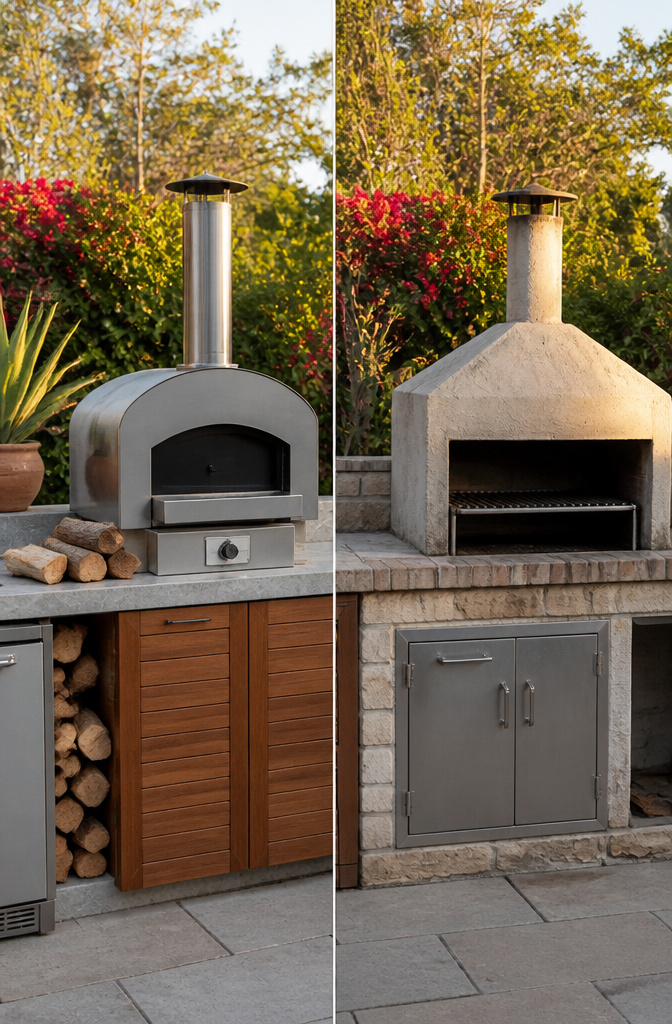
A hybrid outdoor barbecue oven makes sense when you want weeknight convenience without giving up the flavor that only wood delivers. The Summerset runs on gas for the nights when you just want to turn a knob and eat, or switches to wood when you have the time to build a fire and let it come up to temperature the slow way.
Switching between the two is not automatic. You choose the fuel at the start, light it accordingly, and the oven behaves as a gas unit or a wood unit for that session. The gas side handles ignition and steady heat; the wood side asks you to manage the fire, add splits, and rake coals. You are not blending fuels in the same burn, which keeps the mechanics simple and the price lower than ovens that try to mix both at once.
This dual-fuel setup suits the cook who barbecues three or four times a month but wants to do a proper wood-fired pizza night on Saturdays. If you only ever use gas, the wood capability is wasted money and space. If you only ever use wood, the gas burner is a part that will eventually need service for no benefit. The value is in having the option when your schedule varies, not in using both every single time.
Fire Magic Aurora Built-In Gas Pizza Oven
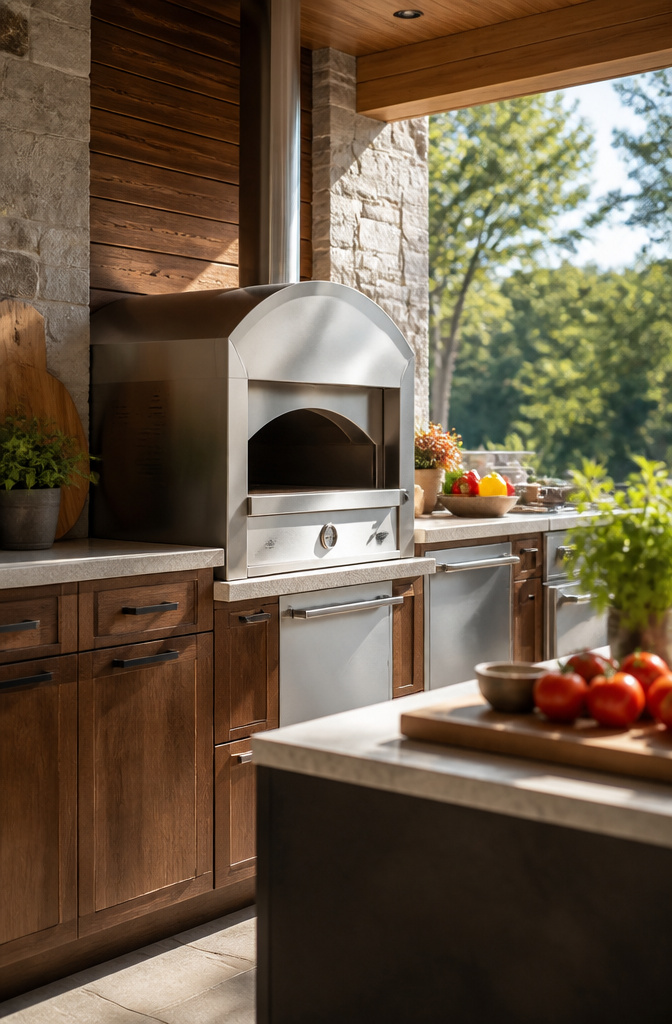
Built-in gas ovens tend to sort into two camps: the compact units that tuck under a counter and the larger ones that anchor a full outdoor kitchen wall. The Fire Magic Aurora lands in that second group, and the difference shows in how you plan around it. The oven opening sits higher than most, which means the surrounding counter runs closer to bar height than standard prep height. If you are already sketching a layout with a raised-back bar behind the main counter, the Aurora slides into that geometry without forcing a custom cabinet order.
What distinguishes it from the other built-in gas models in this lineup is the burner layout. Most gas pizza ovens run a single U-shaped or straight-line burner across the rear; the Aurora splits heat across two zones, which matters when you shift from pizza mode to roasting. A whole chicken or a shallow casserole pan sits more evenly without the constant rotation dance. The trade is width: you need the full 30-inch cutout plus working room on both sides for the venting, so a 6-foot grill bank starts to feel cramped with one of these added.
In typical installs I have seen, the Aurora ends up on the return leg of an L-shaped kitchen, not the primary grill run. That placement keeps the main line clear for the everyday burger-and-steak workflow and reserves the pizza oven for the weekend project without blocking traffic. If your outdoor kitchen is a straight 8-foot island, you will want to check whether losing that counter length to a specialty oven is worth the sacrifice, or whether a portable unit stored below makes more sense.
Portable Pizza Ovens
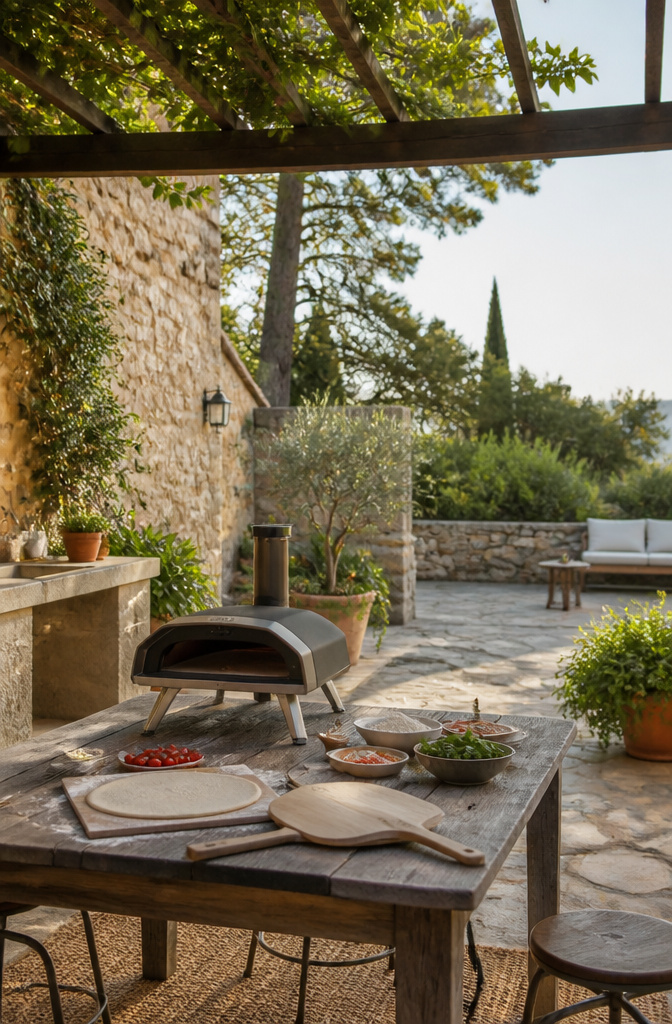
A portable pizza oven trades the thermal mass of a built-in unit for the freedom to cook where you want and store it when you don’t. The floor and dome are thinner, so they heat faster on a Saturday morning but shed temperature the moment you open the door to turn a pie. You learn to work fast, or you learn to live with longer bakes.
For renters or anyone with a small patio, that trade is usually worth it. The oven lives in the garage between uses, rolls out for a party, and never asks for a masonry pad or a gas line. What you give up is stability: a built-in oven might hold 750°F through a dozen pizzas, while a portable one drops fifty degrees each time you load it and climbs back only if you pause between pies.
The sweet spot, if there is one, is the hybrid portable: propane for weeknight heat-up, wood for the flavor you want when guests are watching. Either way, the real limit is the cooking surface. Most portables run 12 to 16 inches wide, so your "large" pizza is what a pizzeria would call medium, and you are turning it by hand because there is no rotating stone. That is the cost of mobility.
Outdoor Kitchen Design with Pizza Oven
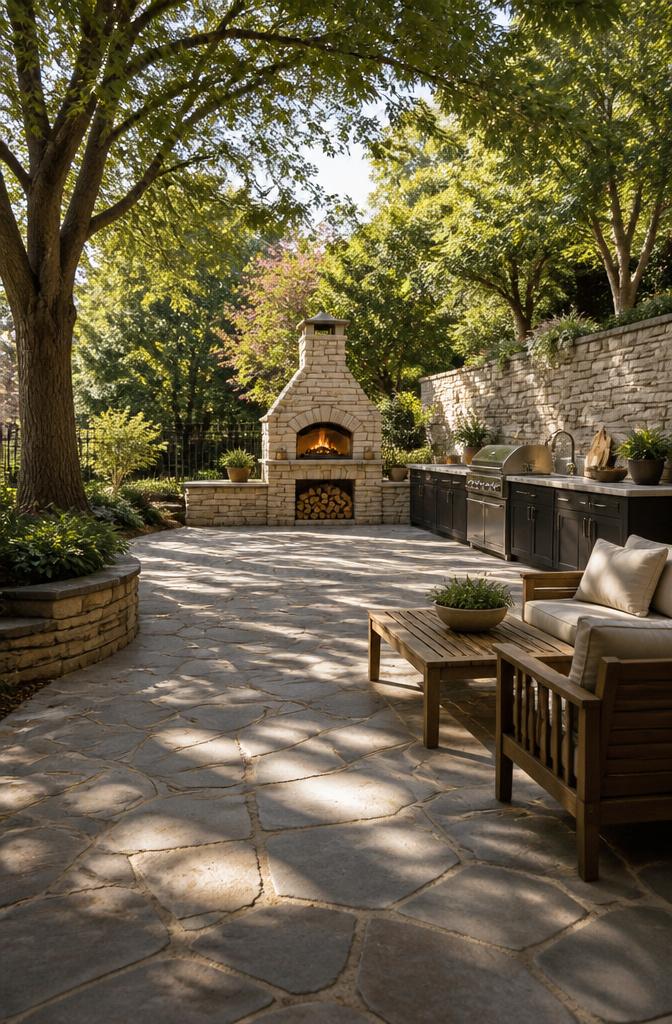
A pizza oven anchors an outdoor kitchen the way a stove anchors an indoor one, but the placement matters more when walls aren’t dictating where things go. Siting the oven ten to fifteen feet from the main seating area keeps smoke off guests while keeping the cook in the conversation. That’s the distance I settled on after one evening where everyone migrated upwind and left me alone with the fire.
The visual weight of a masonry oven or a built-in steel unit sets the back edge of the whole kitchen layout. Counter space runs toward it, not across it, so the oven reads as the terminus rather than an obstacle you circulate around. Low counters beside a tall oven look apologetic; matching heights or stepping the counter down deliberately reads as intentional design.
Facing matters too. An oven mouth that opens toward the house turns the cook’s back on the yard. Opening toward the seating area invites the "come watch" gesture that makes outdoor cooking social instead of isolating. I learned that facing the hard way, with a year of solo tending while friends sat behind me.
Material continuity helps. Brick ovens want brick or stone nearby, not sleek cabinets that make the oven look like a relic. Steel built-ins pair better with powder-coated aluminum or stainless counters. The mismatch of rustic oven against modern surround is a common Pinterest trap that looks curated in photos and off-putting in person.
Gas, Wood, and Hybrid Fuel Types
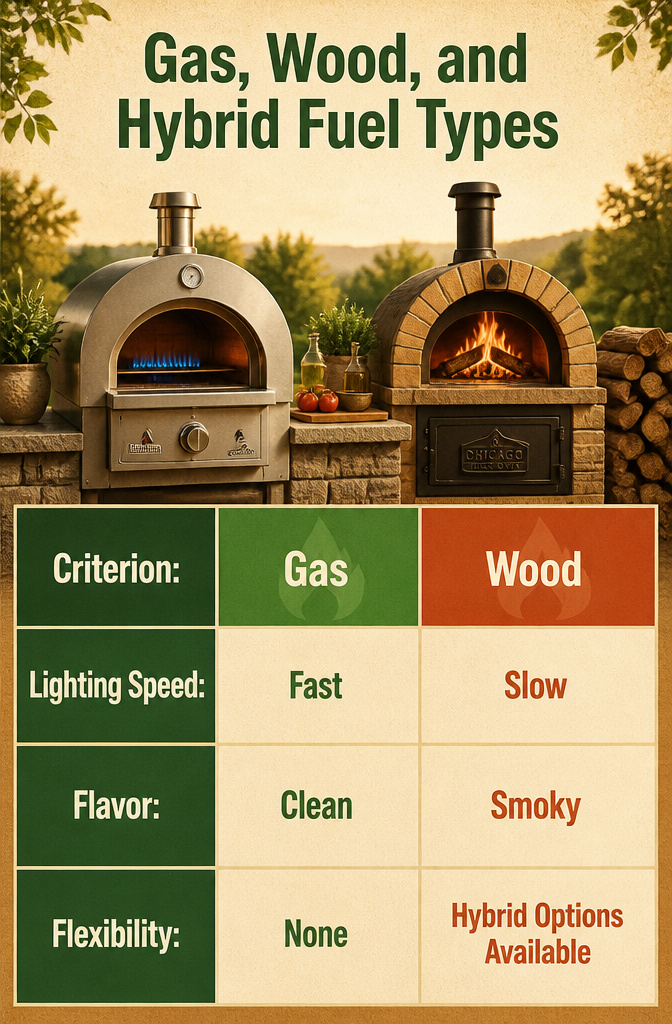
Gas runs clean and lights fast. The Delta Heat 30-inch and Blaze 26-inch built-ins both run on propane or natural gas hookups, and that convenience matters when you are trying to feed people who showed up hungry. No kindling, no ash dump, just a knob turn and the oven is climbing toward pizza temperature while you prep toppings.
Wood trades that ease for flavor you cannot fake. The Chicago Brick Oven CBO-750 and the Sole Gourmet Italia lines burn actual splits, and the smoke does something to crust that gas simply does not reach. The HearthStone Genio 33-inch stays purely wood-fired too, though the brand also makes hybrids that let you switch.
Those hybrids are where things get interesting. The HearthStone Genio 32-inch, 40-inch, and 44-inch models all run gas and wood, as does the Summerset Hybrid and the Chicago Brick Oven CBO-750 in its hybrid kit version. You can start on gas to get the floor hot fast, then throw in a few oak splits for the last hour of a long cook. The Summerset and the smaller HearthStone Genio are the only hybrid setups that do not force you to choose one fuel permanently, and that flexibility costs more upfront but saves you from buying two ovens down the line.
Built-In Versus Portable Installation
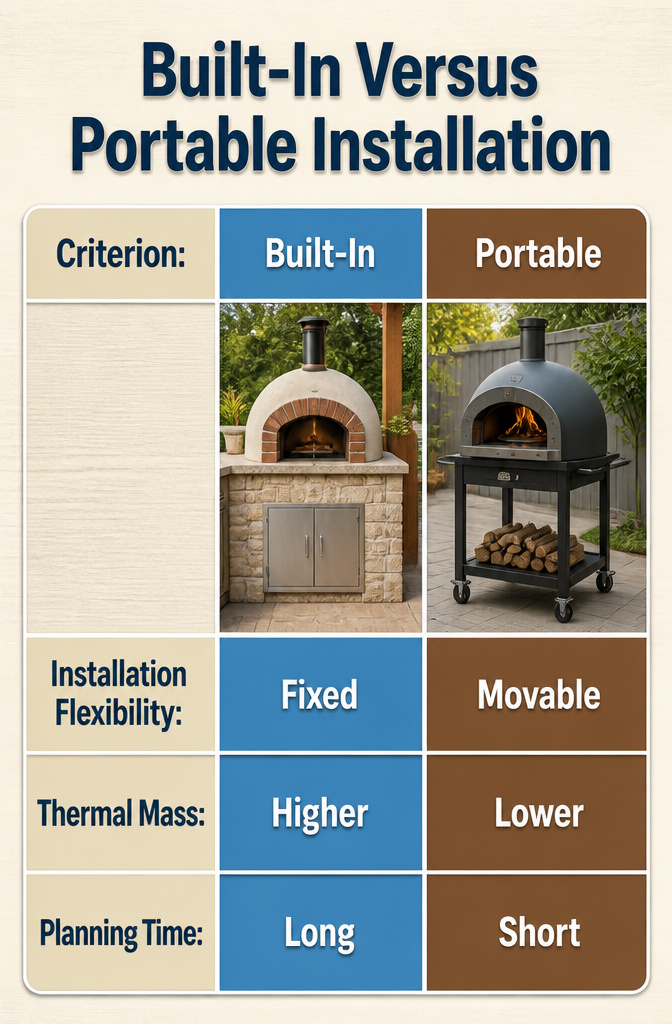
Built-in outdoor barbecue ovens lock you into a footprint and a fuel line before the first pizza slides out. A masonry surround or cabinetry cutout means measuring twice, because that cavity is not forgiving once the stone sets. Portable units roll away on casters or lift by handles, which matters when you are renting or when the patio layout changes with the seasons. The tradeoff shows up in insulation and capacity. Fixed installations pack more thermal mass around the dome, so they hold heat through a long cook session. Freestanding models compensate with thicker shells, though the lighter ones cool faster between batches. What convinced me, reading through a dozen manuals, is that built-in demands a season of planning while portable rewards someone who wants to cook next weekend and figure out the permanent home later. Hybrid fuel options tend to split the difference: some ship as freestanding carts with an optional surround kit, so you can anchor it later without starting over. If you own the patio and the gas line stub is already in, built-in saves steps long-term. If the landlord owns the concrete, portable keeps your options and your security deposit intact.
Accessories That Extend What an Oven Does
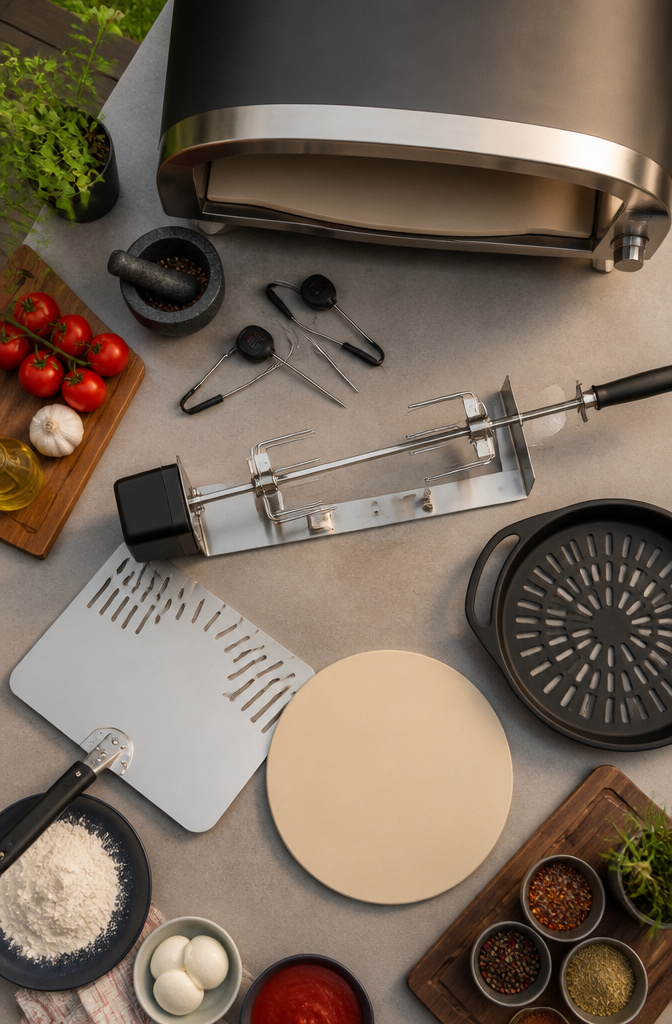
A pizza oven kit changes what a built-in dome can do without replacing the whole unit. Wildwood sells DIY pizza oven kits with optional gas burners that bolt onto a wood-fired core, and their video library walks through adding a natural gas burner to an existing countertop install. That same flexibility shows up in factory-built models, but the accessories bundled with them vary sharply.
The Blaze Premium LTE+ 26-inch built-in gas oven ships with Bluetooth probes and a rotisserie already in the box. The base Blaze 26-inch model keeps the rotisserie but drops the probes, so the price gap between the two is really a question of whether you want remote temperature monitoring or are fine checking the door. Hestan’s Campania 33-inch gas oven takes the opposite approach: the standard stainless version is probe-free, and the light kit only arrives with the upgraded SKU. You are buying the feature as an add-on whether you notice at checkout or not.
Stands and enclosures sit outside most built-in lines entirely. Wildwood builds outdoor oven stand enclosures as separate steel frames, and their Argentine parrilla grills drop into the same modular kitchen system. No one is throwing in a stand for free.
Bluetooth probes matter most for overnight or long-haul cooks where opening the door costs heat. Rotisserie attachments suit anyone who bought the oven for meat first and pizza second. Light kits sound minor until you are pulling a pie at dusk and cannot see the leopard spotting. If you are deciding between two Blaze models, the extra cost for the LTE+ pays out only if you will use the probes more than twice a month. Otherwise, pocket the difference and add a stand later.
Frequently Asked Questions
What is the best outdoor pizza oven?
The best outdoor barbecue oven depends on how you cook and how often. The Lynx Professional Napoli 30-inch suits buyers who want gas convenience with installation flexibility, since it works as either a built-in or countertop unit. The Hestan Campania 33-inch fits those who cook after dark, thanks to its integrated dome light. For cooks who refuse to choose between fuels, the Summerset Hybrid handles both gas and wood, though you pick one per session rather than blending them.
How do I install a pizza oven?
Built-in units drop into a cabinet cutout or counter opening, with gas models needing a fuel line and proper venting clearance. The Delta Heat 30-inch fits standard 24-inch depth cabinets without extra ledger work, while the Alfresco 30-inch has left buyers guessing whether listed specs include ventilation space. DIY kits like the Chicago Brick Oven CBO-750 ship as refractory pieces you surround with custom masonry, which demands a curing fire sequence and weather shell you build or hire out. Portable ovens need no installation at all; they roll out for use and store afterward.
What are the benefits of a wood-fired pizza oven?
Wood-fired outdoor barbecue ovens produce smoke flavor that gas cannot replicate, with oak or fruitwood threading into the crust in ways propane simply does not reach. Temperature swings of 200 degrees across the deck force you to read the oven and rotate the pie actively, a hands-on process some cooks treat as part of the evening’s ceremony rather than a chore. The HearthStone Genio 33-inch and Chicago Brick Oven CBO-750 both run purely on splits, though that payoff costs you the fifteen-minute heat-up gas provides and leaves ash to clean instead of a drip tray.