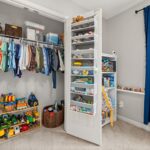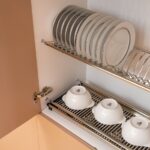
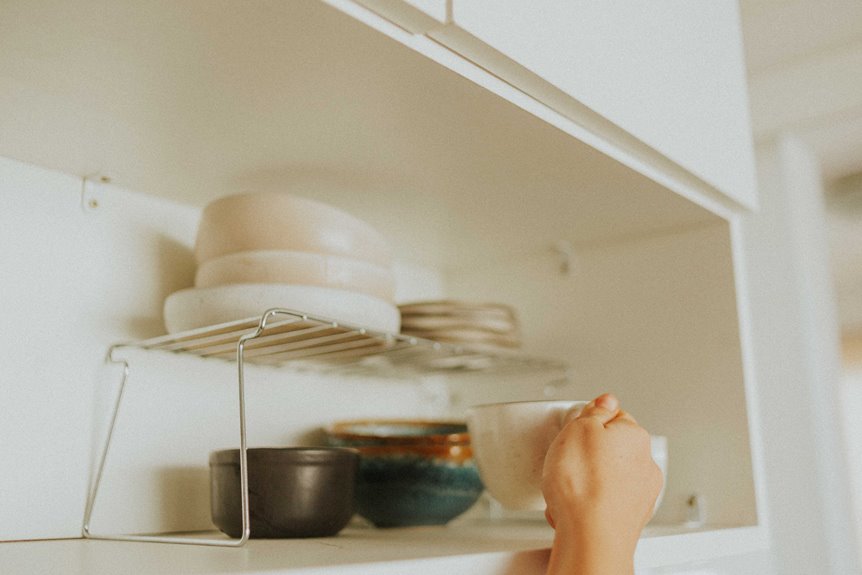
I’ve organized hundreds of kitchens, and the real game-changer isn’t buying more containers; it’s recognizing that most cabinets fail because people organize by item type instead of by how their hands actually move through a Tuesday night dinner.
Start by pulling everything out and purging what’s expired, chipped, or rarely used. Then, place daily essentials at eye level, adjust your shelves to fit actual items rather than settling for awkward gaps, and swap opaque bins for clear ones so nothing hides in back corners.
Tackling blind spots and sticking to a quick weekly reset keeps the system functioning effectively over time.
There is a more efficient way to handle every shelf height and awkward angle, and I will guide you through how to make your cabinets work for you.
Declutter Your Kitchen Cabinets First
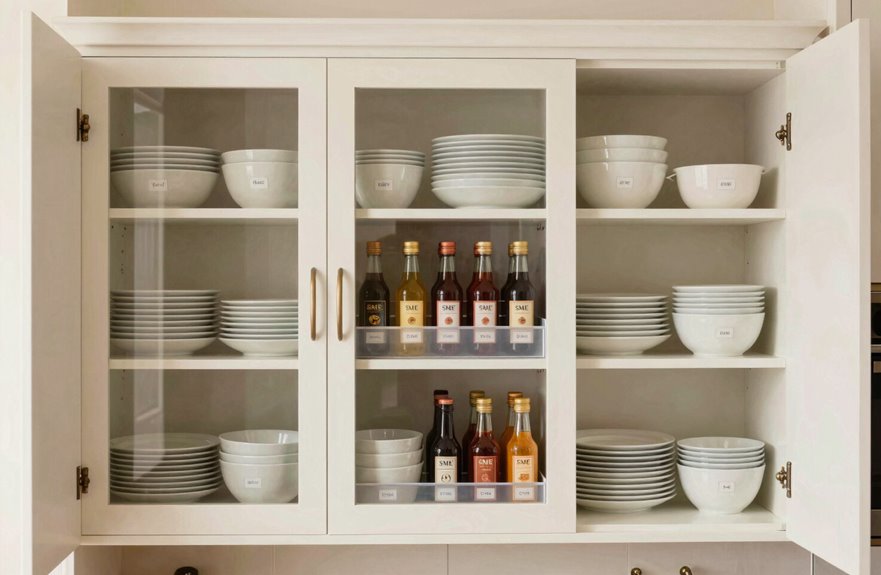
I start every cabinet overhaul the same way: by pulling everything out and sorting with ruthless honesty. I grab a trash bag and immediately toss expiring foods; I’ve found decade-old beans buried in back corners, and you might have a few surprises too. When we declutter together, we’re building cabinets that welcome us home.
I remove chipped dishes, random lids, and gadgets I’ve used once. Cabinet organization means keeping what earns its spot through real frequency of use. I group plates and bowls with serving platters, and stash glassware separately so everything fits neatly. I swap opaque containers for clear bins, boosting pantry visibility instantly. Risers work for mug collections, but I pull them from shelves where they hide what’s behind. We’re creating space that feels inviting.
Organize Cabinets by How Often You Use Items
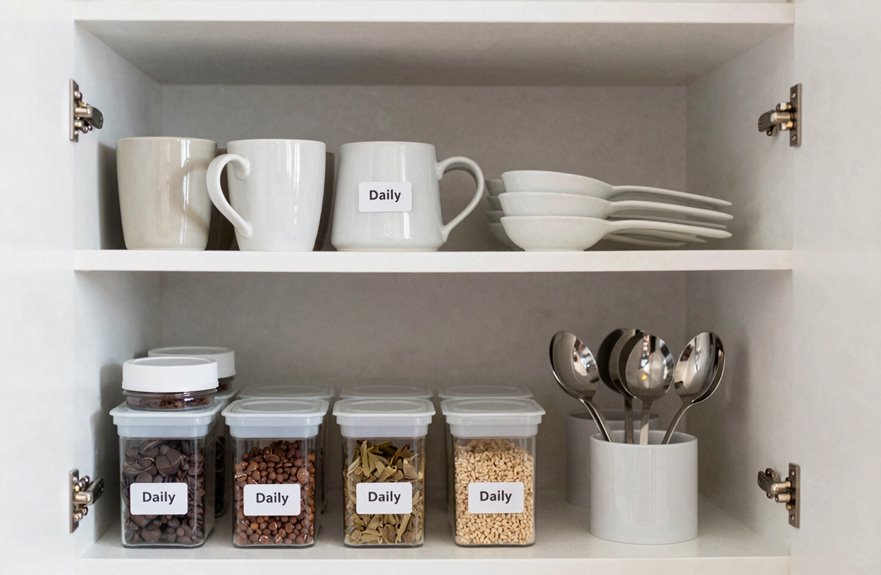
Where do you reach first when you open a cabinet? It’s usually dead center, at eye level, the spot we all naturally gravitate toward. This is why kitchen arrangement should prioritize frequency of use.
Smart cabinet organization means placing daily-use items—mugs, plates, and go-to pans—where your hands naturally land. Create dedicated storage zones: everyday essentials at the center, occasional tools on the top shelf, and specialty gadgets tucked below. This principle enhances cooking efficiency.
After decluttering, I reevaluate my setup monthly. Sometimes I shift items without realizing it, which can affect accessibility. I swap lower shelf treasures with neglected top-shelf items when usage patterns change. Function comes first, followed by aesthetic considerations.
Adjust Cabinet Shelves to Fit What You Store
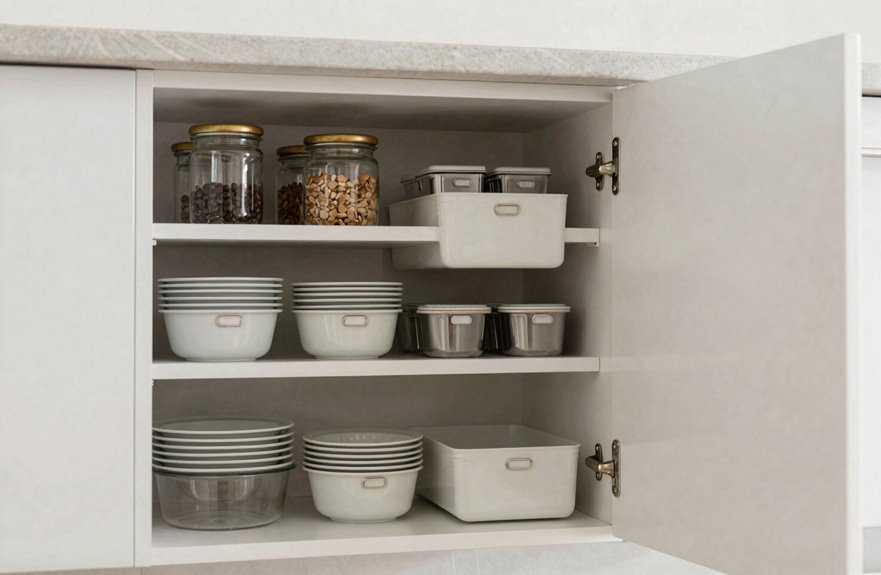
How often have you struggled with a cabinet that won’t fit your tallest pitcher or that awkward stack of pans? I transformed my kitchen storage by using adjustable shelves with simple peg systems, moving away from metal risers that obstructed my view.
I position deep shelves for my baking sheets with vertical dividers. No more tumbling tins. Tall racks hold wine glasses securely up high, while I reserve top shelf access for seasonal items. Zone organization keeps dinnerware clustered together, placing daily pieces within easy reach.
Organize Corner Cabinets and Dead Zones
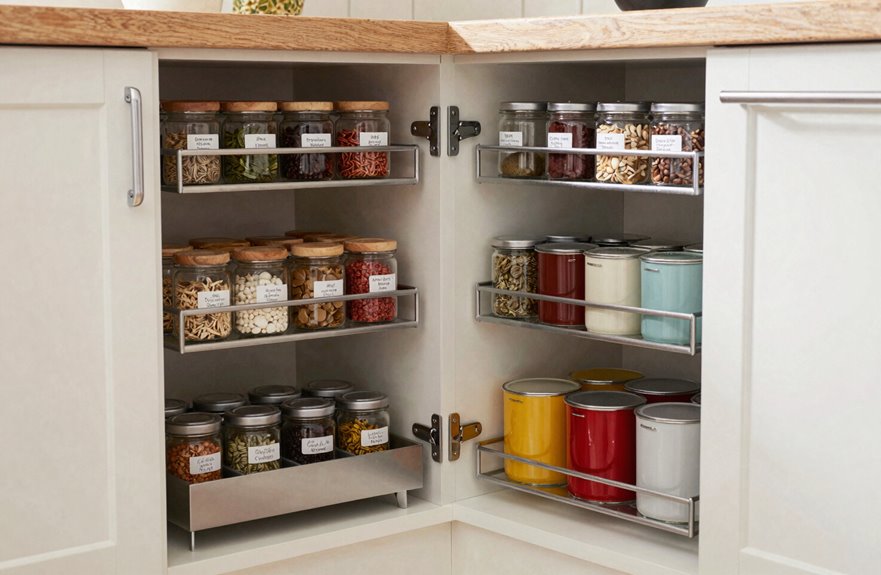
What a waste that blind corner cabinet was; I would shove pots in there and forget them for months. Then I discovered pull-out organizers, which changed everything. A two-tier system runs $672–$850 on sale, but it is worth every penny for easy access to bulky cookware.
Here’s how I tackled my dead zones:
| Problem | Solution | Cost |
|---|---|---|
| Buried pots | Two-tier pull-out | $672–$850 |
| Hidden clutter | Open upper cabinets | Varies |
| Lost items | Lazy Susan install | Moderate |
| Tall items | Rehome to top shelves | Free |
These organization tips transformed my kitchen. I moved tall items like wine glasses up, kept frequently used items lower, and swapped solid uppers for open upper cabinets to boost visibility. I even relocated seasonal gadgets to a closet, freeing corner cabinet storage for daily essentials. No more dead zones; the kitchen now functions effectively for us.
Maintain Your Cabinet System Weekly
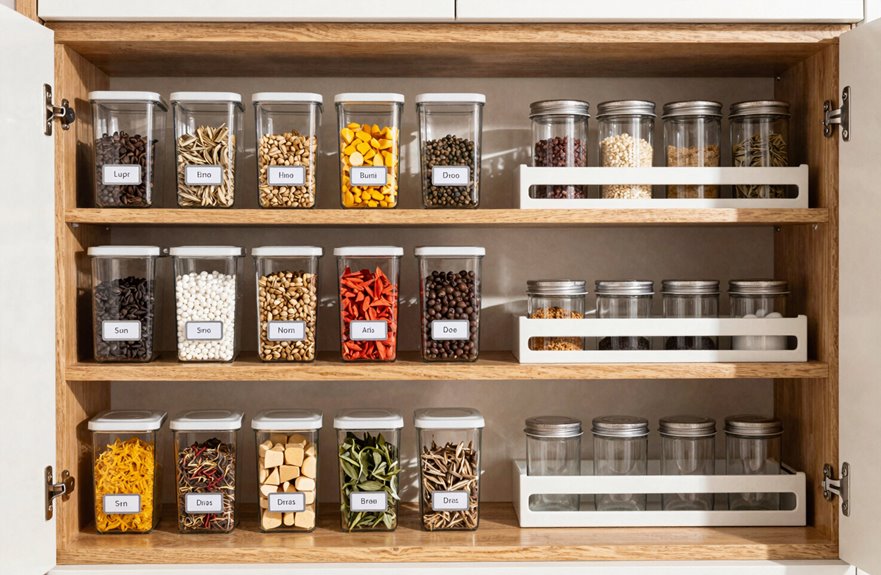
Why let a weekend of good organizing go to waste? I maintain my cabinet organization with a simple weekly routine that keeps our kitchen functional.
Every Sunday, I check my cabinet zones and see what’s hiding in the back corners. I move my most-used items to eye level and store occasional pieces higher up to optimize space. My FIFO pantry operates on a rotating system: new jars go behind, and older ones come forward. This approach prevents forgotten quinoa or duplicate spice bottles.
I adjust my shelves when risers block visibility and accessibility. Sometimes, I remove them entirely. By regularly reassessing items, I pull out anything unused for six months. Kitchens should work for us, not against us.