
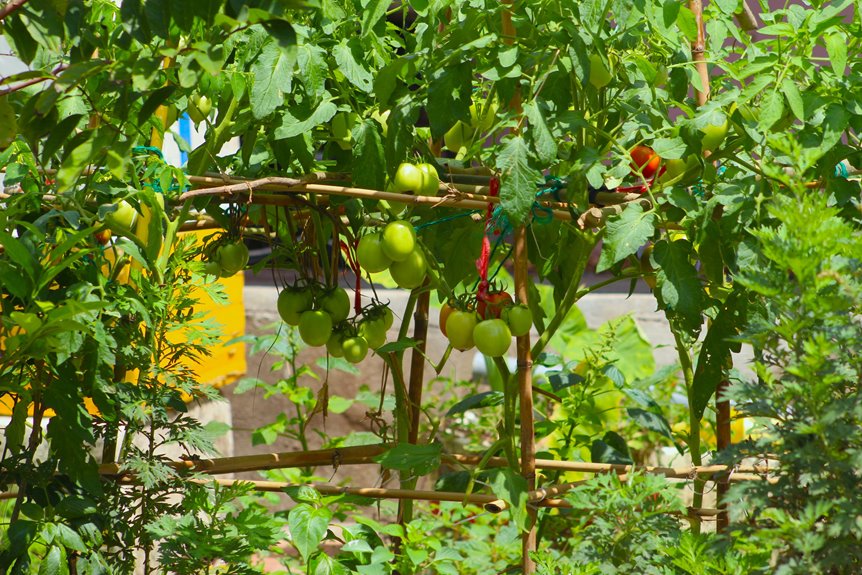
I skip flimsy cages and stake determinate tomatoes with wood or rebar instead, driving posts deep and tying stems loosely as they grow. For rows, I run the Florida Weave, using twine between end posts every 8–10 inches to cradle branches horizontally. When vines get heavy, I build wire mesh trellises from hog wire or cattle panels, spacing them in zigzags for airflow and sun. Indeterminate plants climb twine or arches overhead, creating walkable tunnels. I mulch bush varieties 2–3 inches deep to keep fruit clean, and I check ties weekly to adjust growth. There is a method here that will fit your space perfectly.
Pick the Best Support for Your Tomato Type
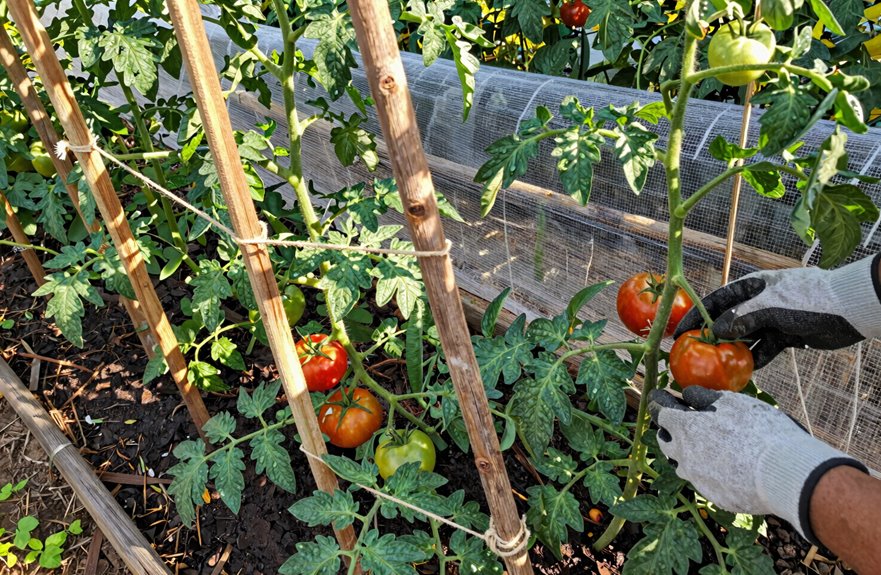
Which tomatoes am I growing? Figuring that out first is essential for us growers.
Indeterminate varieties continue climbing until frost, so I’m providing them tall supports—at least five feet—to prevent issues. For these vigorous vines, I’m skipping cages and using the Florida Weave method, running twine between sturdy end posts every eight to ten inches. This approach allows for dense planting while maintaining excellent air circulation.
When dealing with significant height and heavy fruit, I’m choosing hog wire fencing or cattle panels. Those sixteen-foot panels, zigzagged through my rows, can support the load without buckling.
For any trellis I build, I ensure it is strong enough for the season-long commitment that indeterminate varieties demand. Staking is critical; it helps keep my plants thriving and contributes to a successful garden.

Good for Trellising Tomatoes Climbing Plants: each roll contains 6150 feet (approx. 3.3 lbs) of strong white garden twine, ideal for supporting tomato plants, cucumbers, beans, and other vining crops; This durable garden twine is perfect for building sturdy Florida weave trellises or tying vines securely throughout the growing season

Sturdy Support - This heavy-duty twine is built to last, with a tensile strength of 59 lbs. This durable polypropylene twine can handle the weight of your heaviest fruits and vegetables throughout the growing season. It provides reliable support as a tomato string for your garden.

Complete Kit: this set includes 6152 ft 3.31 lb tomato tying garden twine, 600 clips and a waist wearable storage box, providing essentials for plant support; It fits tomato twine for string trellis application, and matches tomato roller hooks and plant rollers to gardening tasks
Stake Determinate Tomatoes With Wood or Rebar
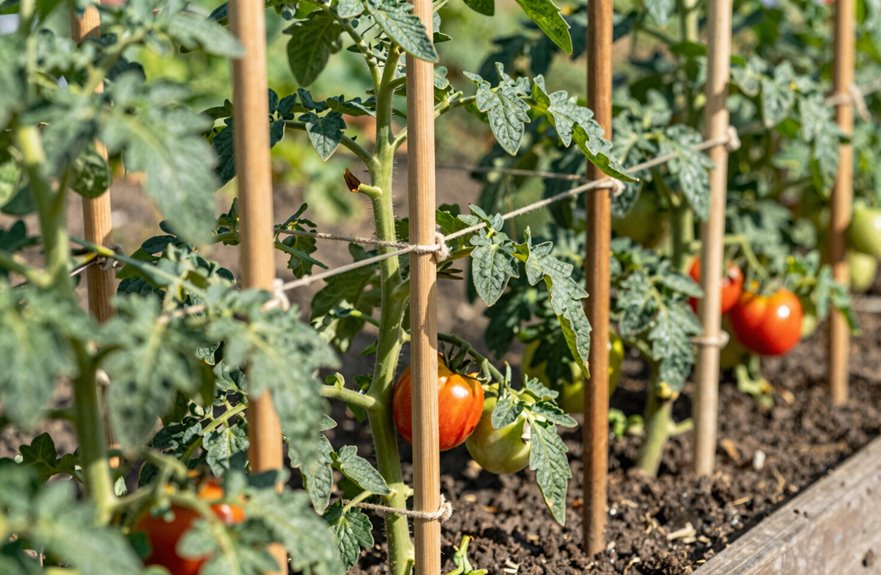
Since determinate tomatoes reach a fixed height and set most of their fruit at once, I stake them with wood or rebar instead of using bulky cages. Place your stake 3–5 inches from the plant and drive it at least one foot deep for solid support.
I prefer rebar for my determinate tomatoes because it lasts season after season and slides into the ground effortlessly; wood works well too. As your plant grows, loosely tie the main stem with soft ties, leaving some slack to avoid pinching or snapping.
For extra stability, especially during windy conditions, stagger your stakes and add a corner tie between them. I am careful with pruning, removing just enough to direct energy toward fruit while maintaining good airflow. Taller stakes can accommodate any unexpected growth spurts.
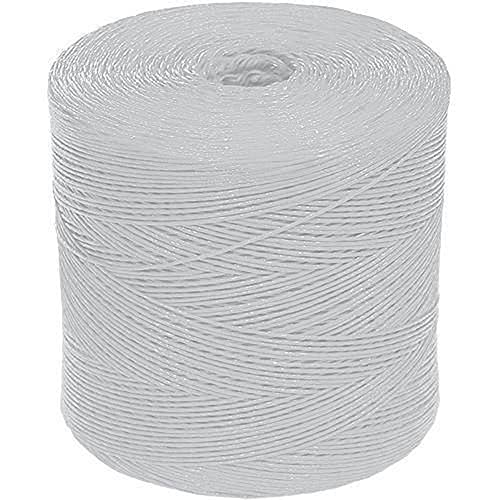
6,300 ft Tomato Twine

Made of jute fiber, the garden jute twine is biodegradable and won’t hurt environment

Gentle For Plants - Our tomato ties are made of polyester fibre material, the soft fabric does not cut into any fragile stems and damage the new delicate vine growth. It offers good protection for plants and is more gentle than plastic ties or wire
Try the Florida Weave to Support Tomato Rows
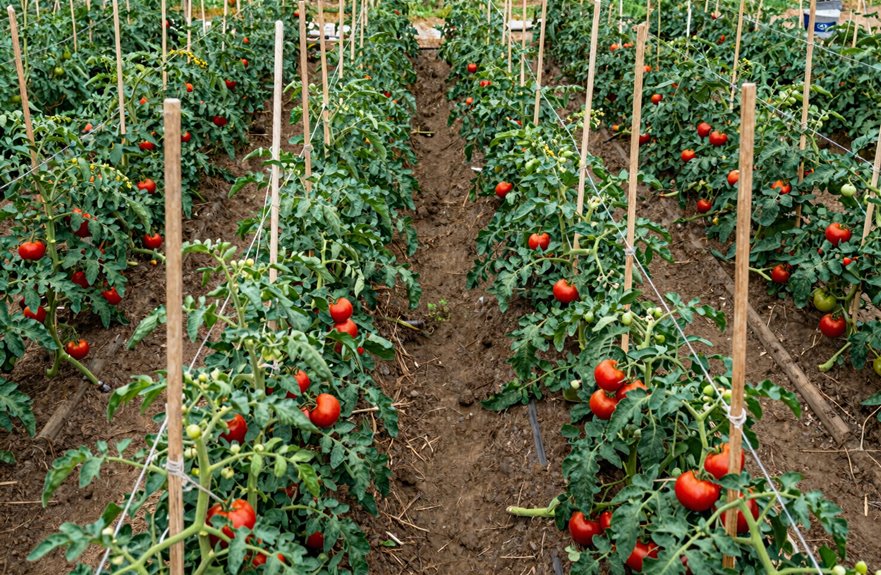
I use the Florida Weave by driving T-posts every four to five feet at row ends, then weaving twine horizontally between my tomato plants in eight- to ten-inch tiers as they reach eighteen to twenty-four inches tall. You’ll need sturdy end stakes, notched T-posts facing outward, and strong garden twine to create this continuous horizontal support system. It is cost-effective, keeps vines upright without cages, and allows for denser planting while maintaining airflow and easy access for harvesting.

Heavy-Duty Construction Size: 100ft (length) × 48" (height) Material: High-strength galvanized steel wire ,Surface Treatment: Hot-dip galvanized for superior rust resistance & extended lifespan

175 Feet. 20 Gauge galvanzied

【Rust-Proof Sturdy Tomato Cages】Built with heavy-duty thickened metal steel core (not solid metal ) and protective plastic coating. The plastic coating resists rust and prevents overheating, protecting climbing vines from scorching summer sun. Our metal square tomato stakes combine high strength and stability with a sleek, practical design, delivering long-lasting durability to support your plants.
How It Works
Why wrestle with bulky cages when I can weave my tomatoes into neat, supported rows instead? I start the Florida Weave by driving stakes at each row end, spacing them 4–5 feet apart. I run horizontal twine between these stakes, creating a living lattice that cradles my vines. Once my plants reach 18–24 inches, I begin weaving, wrapping twine around stakes every 8–10 inches as vine growth requires. I keep ties loose but secure, lifting branches for ground clearance and preventing rot. This support system adapts as I go; I add tiers without dismantling anything. This method excels in high-density planting situations where cages would crowd your beds. Best of all, it is reusable season after season, allowing for continuous harvests with a single setup.
Required Materials
What do I need to get this weave started? Let’s break it down so you’re fully prepared.
For the Florida Weave, I start with sturdy stakes. I place end stakes every 4–5 feet and add a T-post at each interval to create the backbone of my setup. The T-post anchor ensures stability when plants become heavy with fruit.
You will need twine; I prefer natural fiber, though wire or metal cord will work as well. The notches on your T-post should face outward, guiding the twine as I weave it every 8–10 inches upward. Once plants reach 18–24 inches, I install initial stakes and loosely attach them with twine.
I continue weaving and tying as growth progresses, providing support for branches and fruit without the use of bulky cages.
Build a Wire Mesh Trellis for Heavy Loads
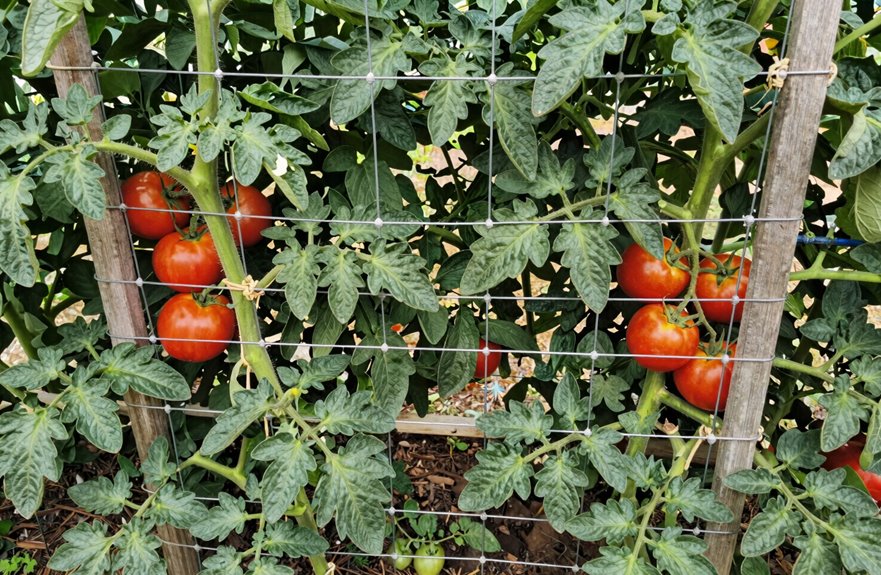
I build my wire mesh trellises with hog wire or cattle panels because they handle heavy loads without buckling. Space sturdy T-posts about eight feet apart and secure the panels tightly so nothing shifts during storms. I will guide you in selecting the right mesh and setting the posts to ensure your vines remain supported throughout the season.

[High Quality] - The Bamboo stakes are made of high quality natural bamboo.It’s very strong and durable,great for plant support!Each stakes is inspected manually to ensure quality.

[DURABLE AND STURDY] Crafted from robust hollow steel, this garden stakes features a fade-resistant green plastic coating, offering reliable protection against wind, rain, and rust. With anti-slip ridges, it's easy to tie on plant ties, aiding in plant climbing. the pointed bottom design of tomato stakes enables effortless soil insertion, ensuring a secure anchoring effect with minimal effort
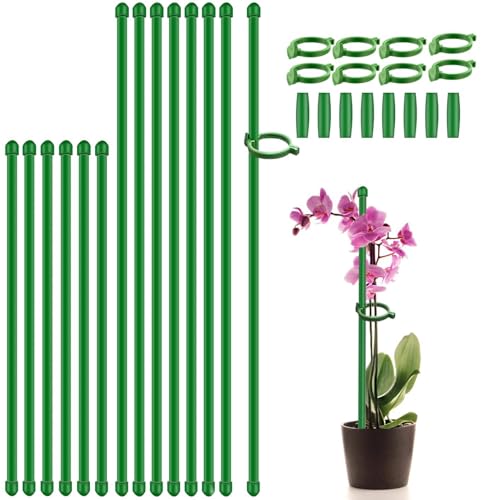
💐[PACKAGE INCLUDE]--16Pcs thick plant sticks(17inch and 11inch each 8pcs),16 ring buckles and 8 connectors,20 strapping tapes.
Mesh Selection Tips
How do you keep heavy tomato vines from collapsing mid-season? I use hog panels or cattle panels, those sturdy 4-by-16-foot structures with a 6×6 inch grid that allows tomatoes to climb without overcrowding. Rust can damage these panels, so I always opt for galvanized options that withstand the elements season after season. We will build a mesh trellis that holds up well. I space the panels 1.5 feet apart in zigzag rows to enable the vines to weave through freely. For stability against strong winds, I drive T-posts 18 inches deep and secure everything with aluminum ties, preventing any wobbling during storms. In the fall, I stack these panels flat in my shed. Next spring, we can set them up again.
Installation Best Practices
Once you’ve picked your galvanized panel and mesh, you’re ready to assemble the trellis. I drive my posts 18 inches deep at 8-foot intervals for solid rigidity, then secure the wire panels with aluminum ties. For my tomato trellis, I use zigzag planting with 1.5-foot spacing to ensure every vine reaches the grid. I thread irrigation—either a soaker hose or T-tape—along both sides, keeping fruit clean and moisture balanced.
When plants reach two feet, I start weaving the vines through the mesh and add aluminum ties as needed. As they mature, I continue guiding their growth upward. When winter arrives, disassembly and storage take only minutes; the panels fold flat or I cut sections to fit snug spaces. This creates a practical solution that is strong, tidy, and ready for reuse next season.
Train Indeterminate Vines on Twine or Arches
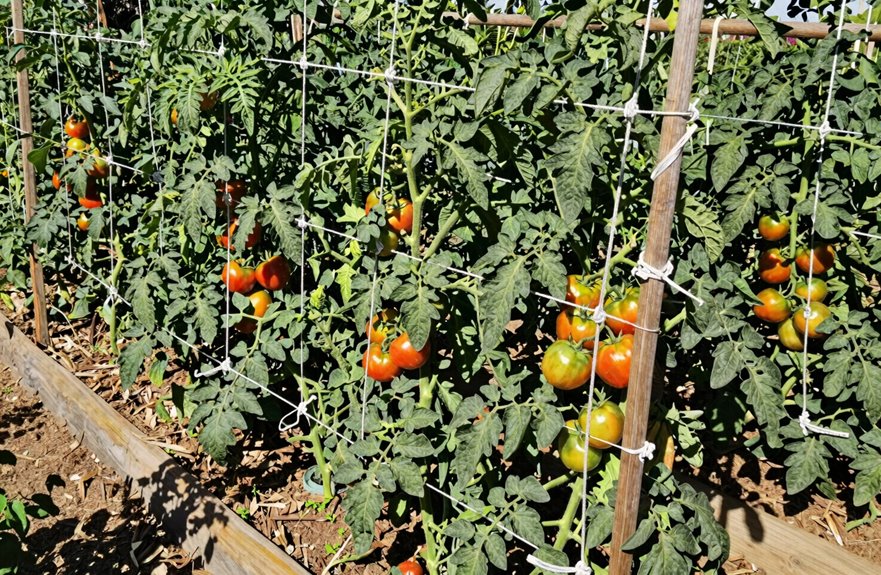
Because indeterminate tomato vines keep growing until frost hits, I train them on twine or arches to direct their growth upward and promote air circulation. I favor the Florida Weave method, using end stakes with horizontal twine woven every 8–10 inches to support emerging growth as it accelerates. When vines outgrow the stakes, I bend the tops down or add taller supports to maintain their upward trajectory.
| Method | Key Benefit | My Tip |
|---|---|---|
| Twine weaving | Boosts air circulation | Space rows 8–10″ apart |
| Garden arches | Creates elevated pathways | Plant base at each side |
| Continuous tying | Cuts pruning workload | Check weekly ties |
| Extended stakes | Sustains vertical growth | Add before vines topple |
Arches create walkable tunnels in my garden, making harvesting easier. This training method keeps fruit clear of soil-borne issues, enhancing overall yield and efficiency.

🔔Innovative Design🔔: Our Avocado Keeper features an upgraded design with numerous protrusions along the edge to increase friction, making it easier to open. This space-saving container not only keeps your food fresh but also organizes your fridge efficiently. Its apple-shaped design perfectly fits halved fruits and vegetables for easy identification.

Includes 10lb block of Back to the Roots compressed Coconut Husk Mulch that expands to over 2 cubic feet of mulch. Use it for gardens, raised beds, pet bedding and more
Mulch Bush Tomatoes for Clean Ground Growth
Twine and arches work well for my vining tomatoes, but I take a different approach for my bush varieties. I mulch my bush tomatoes heavily to promote clean ground growth and keep fruit off damp soil where rot can occur.
I spread organic mulch like compost or aged leaf mold in an even layer 2-3 inches deep, keeping it slightly back from the stems. This provides solid root protection, retains soil moisture during hot spells, and delivers nutrients as it breaks down. The weed suppression means I spend less time battling competitors for nutrients.
Since bush tomatoes grow lower and set fruit all at once, soil splash during rain or watering poses a disease risk. A good mulch barrier keeps my harvest cleaner and healthier, allowing for a more enjoyable gardening experience.
Space and Maintain Any Tomato Support System
Wherever I set up my tomatoes, spacing and maintenance are crucial alongside the specific support style I choose. I space my plants 18–24 inches apart in raised beds and drive stakes every 4–5 feet to anchor my Florida weave, weaving twine every 8–10 inches as vines climb. For larger plots, I zigzag plants 1.5 feet apart along a hog wire trellis to maximize airflow and sun exposure. I build sturdy hog wire cages from 16-foot panels that stack flat when the season ends. In container gardening, I select tall cages and stakes and prune regularly to keep fruit off the soil and speed ripening. Whichever support system I choose, I check ties weekly and adjust as plants grow.

HIGH BREAKING STRENGTH TWINE: Available in Green & White with 2 performance options: 1.3mm diameter (114 lbs) for short-term tasks, and 2.0mm diameter (200 lbs), offering significantly higher strength than standard market twine (130140 lbs) and designed for reliable, full-season durability
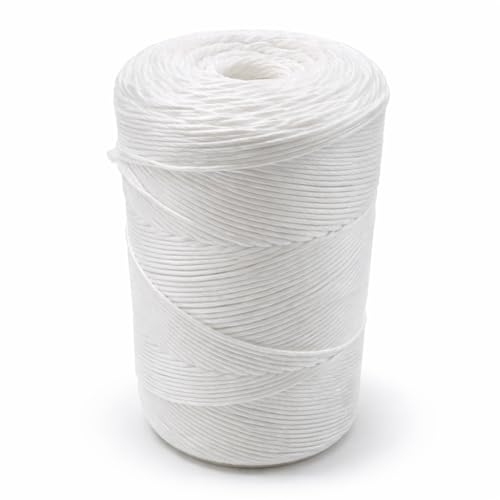
HIGH BREAKING STRENGTH TWINE: Available in Green & White with 2 performance options: 1.3mm diameter (114 lbs) for short-term tasks, and 2.0mm diameter (200 lbs), offering significantly higher strength than standard market twine (130140 lbs) and designed for reliable, full-season durability

PERFECT GARDEN TOOL - The cloth plant ties helps to support young plants, keep heavy branches from breaking, and train climbing plants to grow in the desired direction. Suitable for all kinds of plants, such as tomato plants, climbing roses, fruit trees, garden veggies and so on