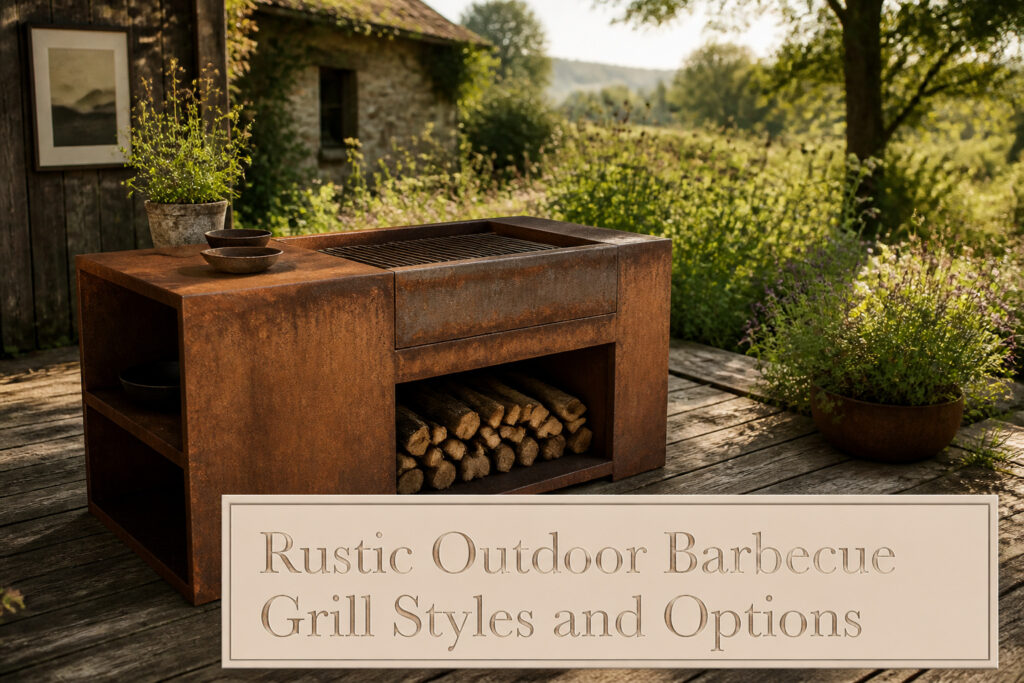
A rustic outdoor barbecue grill is defined by the weathered finish it keeps rather than hides. That only works if the steel is Corten, an alloy that forms its own protective rust layer instead of flaking apart. A 1300L by 1000W by 1000mmH unit in this material starts at $360, but only when ordered a thousand pieces at a time.
Rustic Style Outdoor BBQ Grill

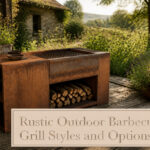
Corten steel carries a rust finish that keeps deepening instead of flaking off, which is the whole reason it reads as rustic rather than neglected. The alloy forms its own protective layer once it weathers, so the anti-corrosion property is built into the look rather than hidden beneath paint. That matters if you want a grill that sits out year-round and still photographs well for a backyard gathering.
The unit runs 1300L by 1000W by 1000mmH, a footprint that fills a patio corner without dominating it. Bulk pricing starts at $360 for orders of 1,000 pieces or more, which puts it in conversation for property developers or hospitality buyers rather than a single homeowner. At smaller quantities the price steps up through $390, $430, and $460 tiers, so the per-unit cost assumes you are buying at scale or splitting an order with neighbors.
What makes the style distinctively rustic is the rust itself, left visible rather than corrected. Most outdoor cooking equipment chases a clean black powder coat or brushed stainless; this one leans into the weathered surface as the finish. The result sits somewhere between industrial and rural, especially when paired with rough timber or stone.
Charcoal BBQ Grill
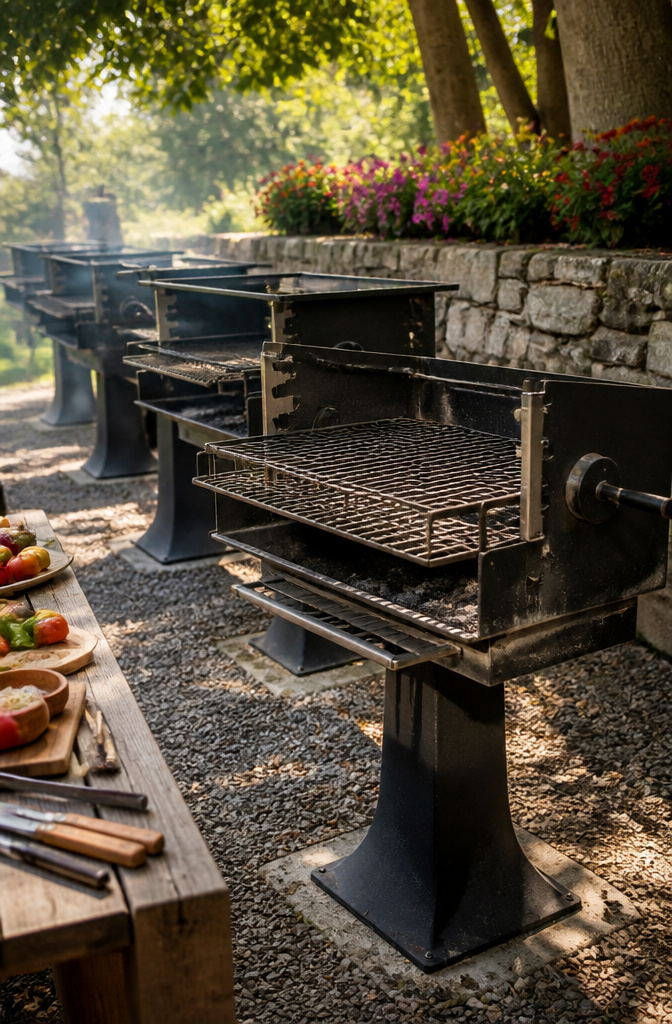
Twenty-two charcoal models fall under the rustic outdoor barbecue grill category, split between in-ground, surface, and pad-mounted installs plus a few combo mounts that let you switch between two of those. Every one of them clears at least 300 square inches of cooking space, which is the floor you want for a weekend cookout without crowding burgers into a shuffle.
The grates make or break the experience. Adjustable cooking grates are where charcoal wins over gas for anyone serious about heat control: you can drop the surface closer to the coals for a hard sear or lift it to finish slow. A few models add double flip-back grates that hinge out of the way for ash cleanup without lifting the whole rack off. The 360-degree rotation on some in-ground units matters less for cooking than for avoiding smoke in your face, but it is handy when the wind shifts.
Pedestal-style frames with sturdy bases keep the box stable, and rust-resistant fireboxes extend life in wet climates. Ash collection systems range from a simple slide-out tray to nothing at all; the ones with trays save about ten minutes of cooldown scraping.
Typical price points run from budget park-grill territory up through heavy-duty pedestal models built for daily use. Gas options tend to start higher and climb faster, but they do not give you that grate adjustment or the coal-bed proximity that delivers real crust on a steak.
Commercial Grade Park Grills
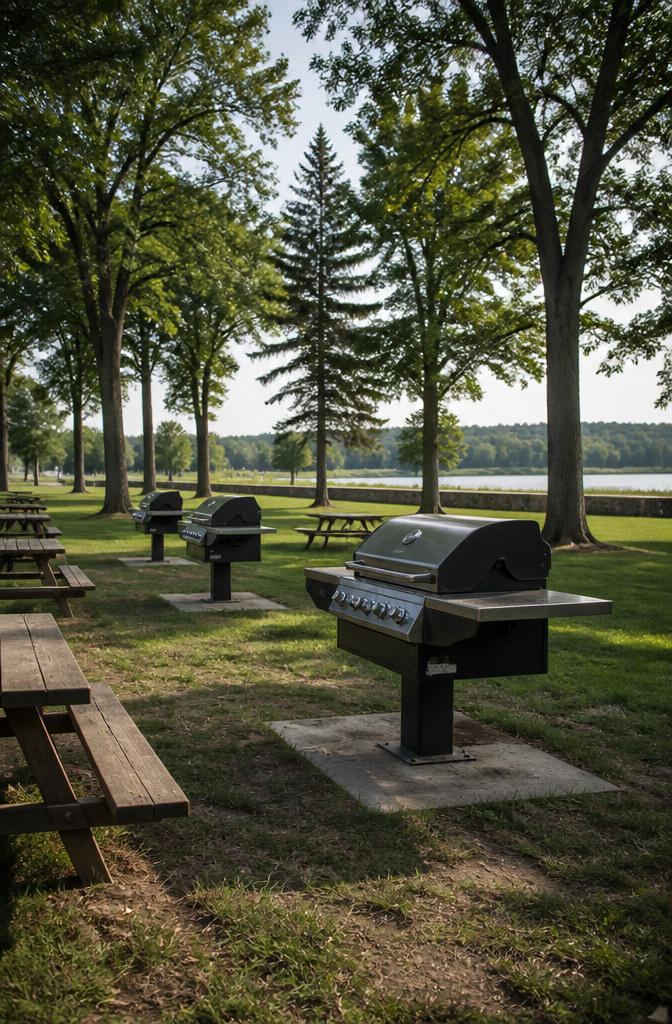
Commercial-grade park grills sit on a different tier than anything built for a backyard. The steel runs thicker, the welds are continuous, and the whole frame is powder-coated to survive years of rain and public abuse without flaking through. I have looked at enough of these to know the difference shows up fast in actual use: a residential grill in a public park bends, sags, and rusts at the joints within two seasons.
Sizes run from compact pedestal units to party-scale models pushing 1,000 square inches of grate, and the fuel choice is wider than people expect. Natural gas dominates the commercial installs I have priced out, but propane, electric, and even wood-fired pizza ovens show up in the same product families. The customization gets granular: burner count from one to eight, overall width from under 20 inches past 78 inches, certifications for ANSI or CSA where local codes demand them.
These are not for someone outfitting a patio. The buy-in starts around $1,700 for a basic built-in and climbs past $13,000 for a 51-inch cart-mount stainless unit with the full burner array. That money buys a grill meant for campgrounds, apartment complexes, and municipal parks where a dozen families might cook on the same surface in a single weekend. If the use is lighter or the budget tops out at a few hundred, this class of equipment is simply overbuilt for the job.
Pedestal-Style Charcoal Grills
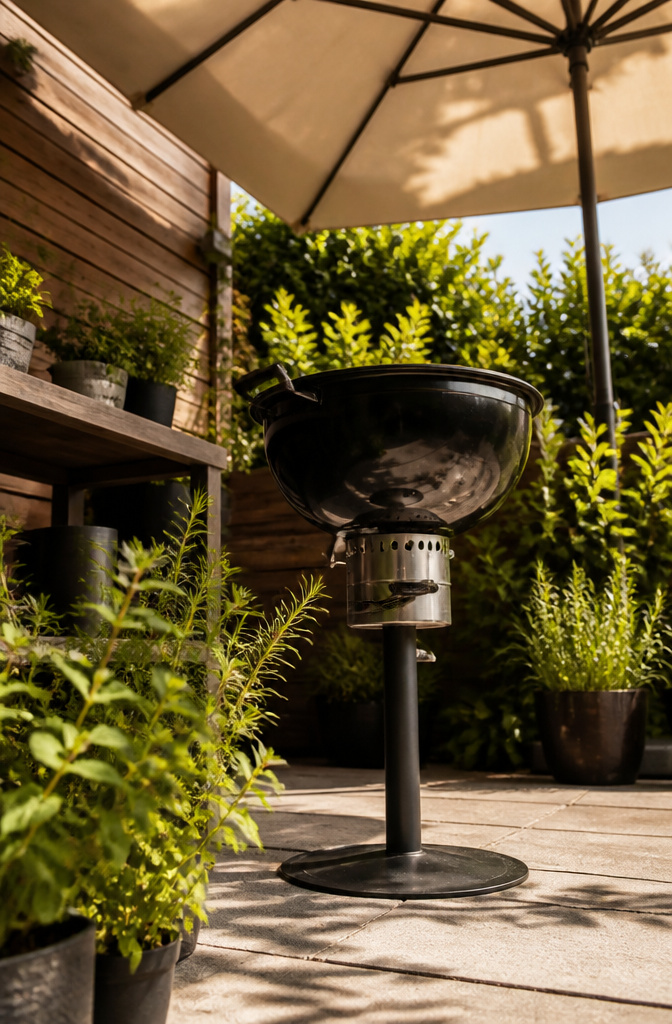
A pedestal-style charcoal grill stands on a single post rather than legs or a cart, and that difference matters more than it looks. The weight sits directly over the center, so the base can be smaller without tipping when you lean in to flip burgers or scrape the grate. The pedestal base keeps the grill stable even on uneven patio stones or packed dirt, which is why these show up in backyards without perfect leveling.
The tradeoff against cart-style units is mobility and storage. A cart rolls to the garage in November and carries your chimney starter on a side shelf. A pedestal grill stays where you put it and asks you to carry your tools or find a nearby surface. Built-in options tie you to a permanent location and a masonry budget; a pedestal gives you the standalone footprint without the commitment.
Most pedestal models run a round kettle or barrel body on top of that post, with adjustable grates and some form of ash collection. The ash tray or catcher matters more than I expected reading through specs, because without it you’re lifting a heavy drum to dump out remains, and that gets old fast. For renters or anyone who might move in two years, the pedestal hits a useful middle ground: stable enough for real cooking, light enough to disassemble for a truck bed, and no footprint that outlasts your lease.
Party-Sized Charcoal Grills

A 1300 mm long cooking surface changes what you can pull off on a Saturday. That is roughly the footprint of the corten steel party grills coming out of manufacture now, and it is enough to serve about thirty people without turning the host into a line cook who never sits down.
Size this way does not just mean more burgers at once. Heat management splits into zones whether you planned it or not. With that much real estate, the center runs hotter than the edges by nature, so you end up with a sear zone and a hold zone without buying anything extra. The trick is learning which side the wind hits and banking the coals to the leeward half, then using the grate height or the adjustable airflow vents to slow the temp where the chicken needs to finish without torching.
These dimensions suit the gatherings where someone else brought the guest list: block parties, family reunions, the kind of backyard wedding where the grill is the kitchen. The multiple grates help, but the real advantage is the sheer surface area letting you cook proteins and vegetables simultaneously without the asparagus taking on pork fat.
Heavy use is where the weight of the steel pays back. Thinner party grills flex and shed heat fast; a corten unit at this scale holds steady through four hours of service. The rust finish is not decorative, it is the corrosion barrier doing its job, so the thing can live outside without the flaking you get from painted steel that scratches on move-in day.
Adjustable Rotating Grills

A rotating grill suspends food on a spit or basket that turns slowly above the heat source, usually by hand crank or a small battery motor. The motion matters because the meat bastes itself; juices roll across the surface instead of dripping straight down, and no single side faces the flames long enough to char before the center cooks through. Whole chickens, thick roasts, and cylindrical cuts like pork loin see the biggest payoff, since their bulk makes uneven cooking the usual headache with fixed grates.
Adjustment range separates the workable models from the frustrating ones. Look for a spit height that moves from close to the coals for searing up to roughly eighteen inches back for slow roasting, plus a tilt function that lets you angle the spit to catch drippings in a pan below. Without that tilt, you’re stuck choosing between a grease fire and a dry bird. Hand cranks give more control over speed than fixed motors, though they demand someone nearby; battery units free you up but tend to rotate too fast for large cuts, so the outside overcooks before the middle warms. My preference ran toward the crank models once I saw how often I needed to pause rotation to probe temperature or baste with the drippings I’d collected.
Standard Park Grills
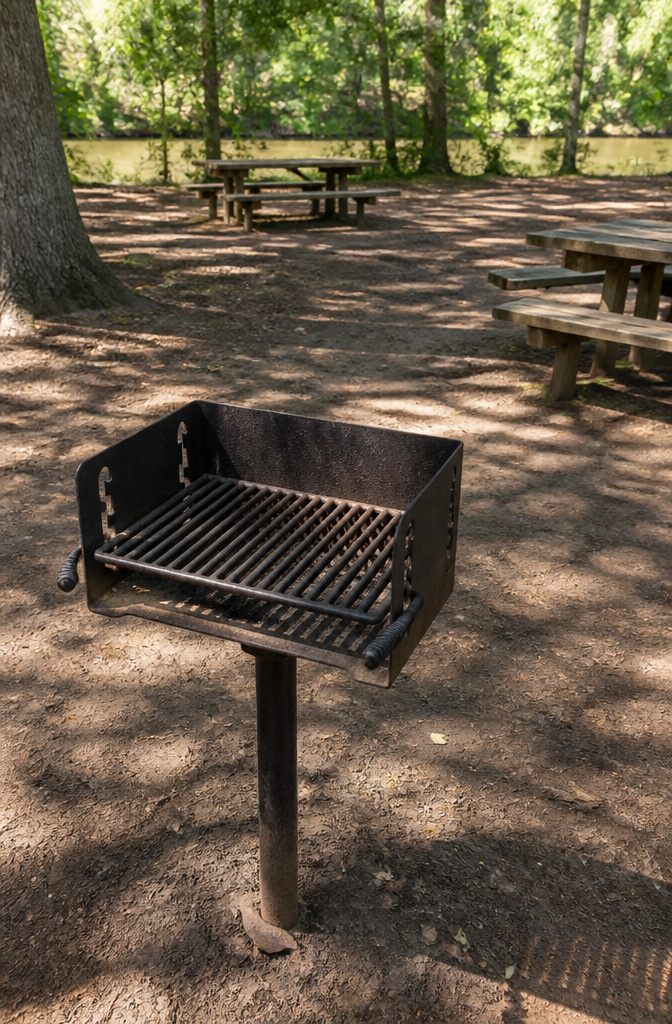
A 300 square inch cooking surface sits right where most backyards need it: enough room for a family cookout without the footprint of a commercial installation. At $307, the standard park grill lands in a middle space that makes sense for someone who has outgrown the $99 cart-style charcoal grill from the hardware store but does not need the features that push pedestal models past $400.
The 20 3/8" by 15" by 10 1/8" firebox weighs 76 pounds, which tells you this is not the thin metal of entry-level options. Pad and inground mounts both come standard, so the same unit works on an existing patio or sunk into fresh concrete. What you give up at this price is adjustability. The grate sits fixed, unlike the tilt-back version at $315 or the fully adjustable model at $329. For weekend cooking where you are not feeding a crowd, the fixed grate handles burgers and brats fine. If you are the type who switches between searing steaks and slow-cooking chicken, those extra $22 or $42 start to look reasonable fast.
The choice really comes down to how often you cook and how much you fuss. The standard park grill does the core job. The upgrades add convenience you notice mostly if you use it weekly.
Fully Adjustable Standard Park Grills
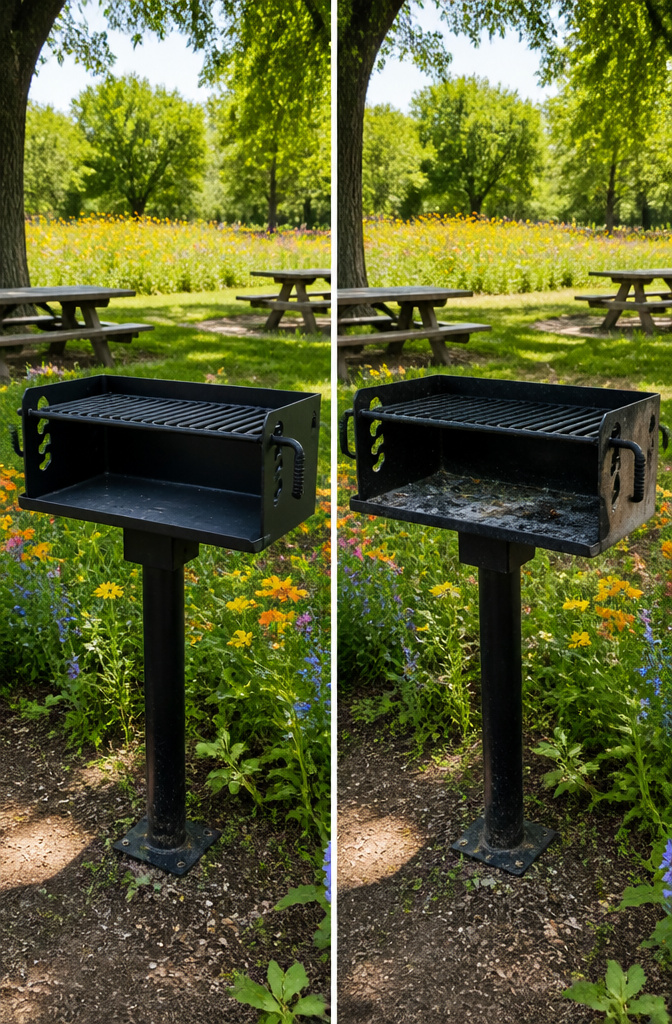
A 600 square inch cooking surface gives you room for about two dozen burgers at once, which is the difference between cooking for a party and cooking in shifts. The fully adjustable model runs $739, about $200 above the standard park grill it otherwise resembles.
That extra money buys movement the fixed grate cannot match. The pivot lets you swing the cooking surface off the fire entirely, useful when flames flare up or when you need to add fresh coals mid-cook. Height adjustment matters more than I expected reading the specs: lower for searing steaks, higher for slow-cooking chicken or keeping finished food warm without scorching.
The standard model locks you to one height and one angle. For occasional burgers that works fine. If you cook varied food, or cook often enough that you have learned what different heat does to different cuts, the adjustability pays back in control rather than in features you list to guests.
Features That Matter
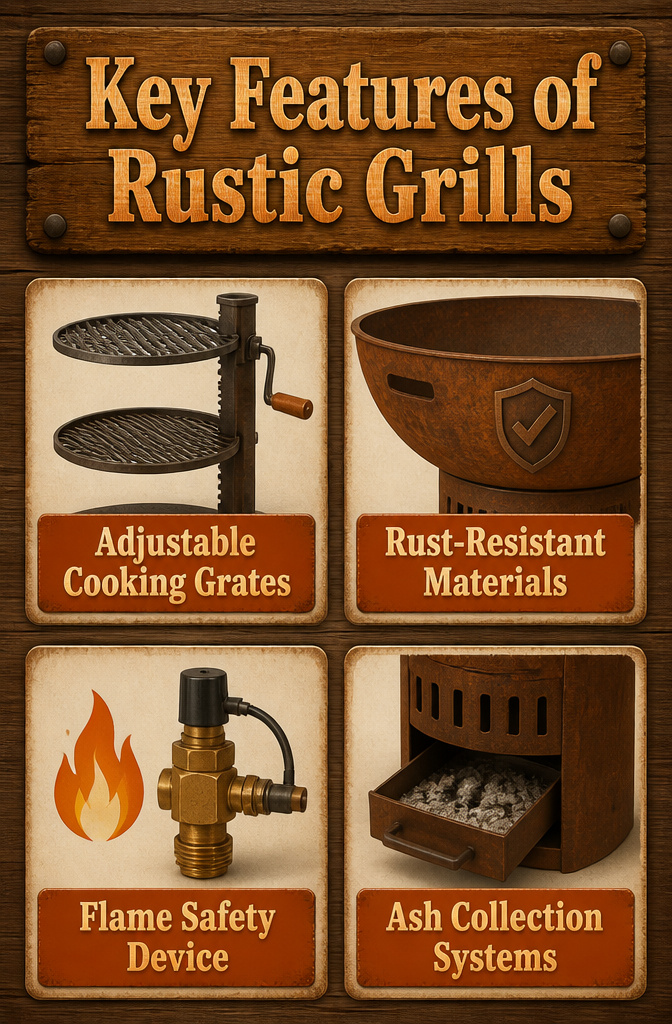
Adjustable cooking grates make the difference between searing burgers over hot coals and keeping chicken warm while it finishes through. The pedestal-style charcoal grills I looked at use grates you can raise or lower, which matters more than you’d think when you’re working with live fire instead of a dial.
Rust-resistant materials sound like marketing until you see a grill after two seasons of rain. Corten steel handles this differently than coated finishes: the surface develops its own stable rust layer that protects what’s underneath, rather than fighting oxidation with paint that eventually chips. That "anti-corrosion" feature listed on the specification sheet actually describes this self-sealing behavior, not a factory coating that will need touch-up.
The flame safety device is worth requiring if your setup includes any gas assist or ignition component. It shuts fuel flow when flame drops out, which is the kind of feature you forget about until the afternoon breeze gusts wrong and you remember why it mattered.
Ash collection systems keep the practical side of charcoal manageable. Without one, you’re tipping hot debris onto the patio or into the grass every third cookout, and the grates stay cleaner longer when ash falls through rather than sitting damp against the metal.
What Rustic Grills Cost
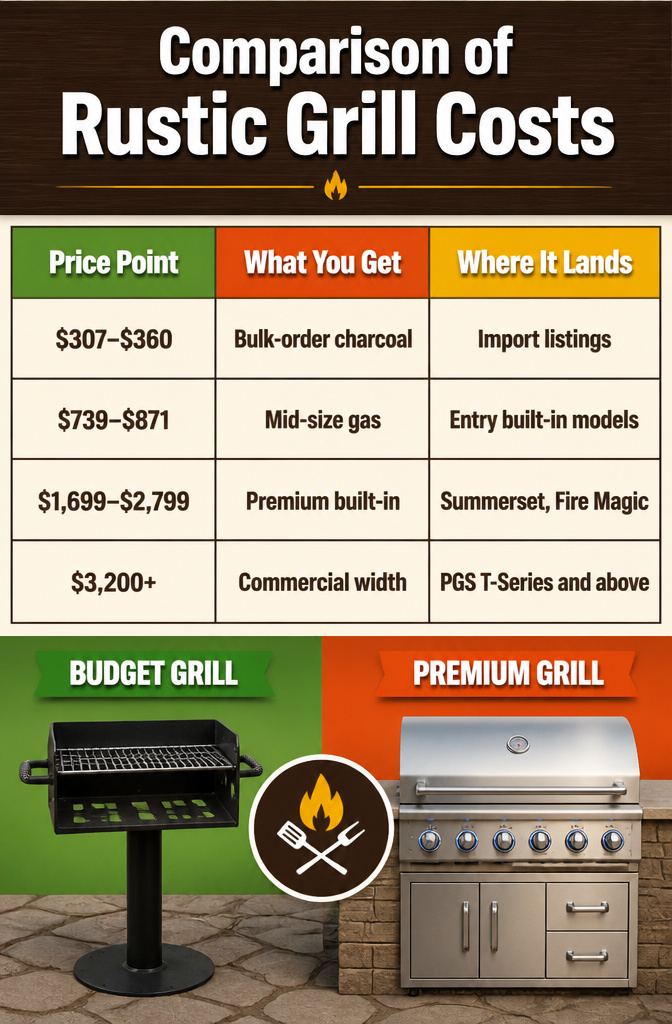
A rustic outdoor barbecue grill can land anywhere from $307 for a basic unit to well past $3,200 once you start adding width and burner count. The price gaps come down to fuel type, cooking surface, and whether the thing is built to drop into stone or stand on its own.
| Price point | What you get | Where it lands |
|---|---|---|
| $307–$360 | Bulk-order charcoal, minimal features | Import listings, park-grade units |
| $739–$871 | Mid-size gas, 3–4 burners, ~500 sq. in. | Entry built-in or cart models |
| $1,699–$2,799 | Premium built-in, 32" width, convection or infrared | Summerset, Fire Magic territory |
| $3,200+ | Commercial width, 6+ burners, 700+ sq. in. | PGS T-Series and above |
The $871 mark tends to be where stainless cart mounts start. The $739 range gets you a 25" built-in with fewer frills. Charcoal park grills rotate 360 degrees and hit that $307 floor, but they are single-purpose and small. If you are feeding a crowd regularly, the jump to $2,000-plus buys you the burger count and the even heat.
Materials and How They Hold Up

Corten steel and heavy-duty steel sit at opposite ends of the maintenance spectrum, and corten wins only if you genuinely want that weathered look rather than avoiding upkeep entirely.
Corten develops a stable rust patina that seals the surface underneath. The outer layer corrodes intentionally, then stops, which means no painting, no sealing, no annual touch-ups. Heavy-duty steel, the kind used in most park-style grills, arrives coated or painted and stays that way only as long as the coating survives. Once moisture finds an edge or a scratch, it spreads.
The difference shows up fastest in places with hard freezes or salt air. Corten handles both without drama; heavy-duty steel needs its coating inspected every spring and spot-treated where it failed. In dry climates the gap narrows, though heavy-duty steel still eventually rusts where legs meet damp ground.
A corten grill left under cover keeps its character longer. One left fully exposed just reaches the final patina faster. Heavy-duty steel left uncovered is simply shortening its lifespan, and the replacement math favors spending more upfront on corten if the grill stays in one place for years.
Frequently Asked Questions
What are the best rustic outdoor barbecue grills?
The best options include charcoal models with adjustable grates for heat control, pedestal-style grills that stay stable on uneven ground, and party-sized corten steel units that can serve about thirty people. For public or heavy-use settings, commercial-grade park grills with thicker steel and continuous welds outlast anything built for backyards. The right choice depends on whether you need portability, a permanent install, or enough surface area to cook for a crowd without working in shifts.
How much do rustic outdoor barbecue grills cost?
Prices run from $307 for a basic standard park grill up past $3,200 for wide commercial units with six or more burners. A fully adjustable park grill with a 600 square inch surface lands at $739, while mid-size gas built-ins typically start around $871. Bulk pricing on corten steel charcoal grills begins at $360 per unit for orders of 1,000 pieces, with smaller quantities stepping up through $390, $430, and $460 tiers.
What materials are used in rustic outdoor barbecue grills?
Corten steel and heavy-duty steel are the two main materials, and they age very differently. Corten develops its own stable rust patina that seals the surface underneath, so it needs no paint or touch-ups and handles hard freezes and salt air without issue. Heavy-duty steel arrives coated or painted and requires annual inspection and spot treatment once moisture finds a scratch or edge, especially in wet climates.