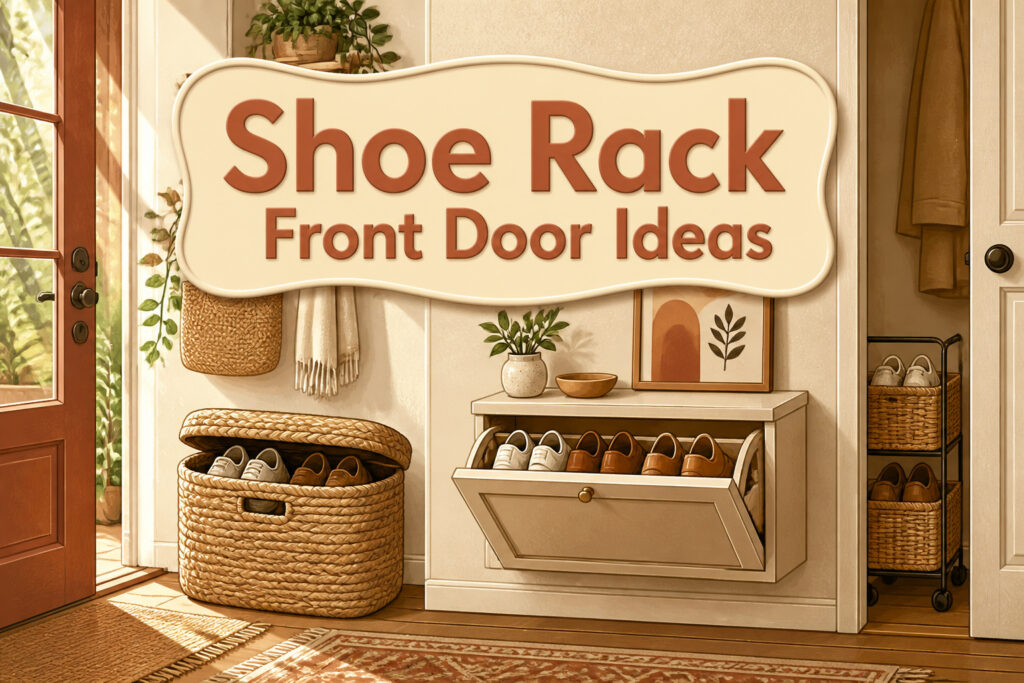
The right shoe rack front door setup costs anywhere from a seagrass basket to a tilt-out cabinet, and the single deciding factor is whether your entry has a closet within rolling distance. Without one, a lidded basket or wall-mounted cabinet hides the pile entirely; with closet access, a 2-tier rolling basket under 12 inches wide can disappear before guests arrive.
1. Shoe Baskets
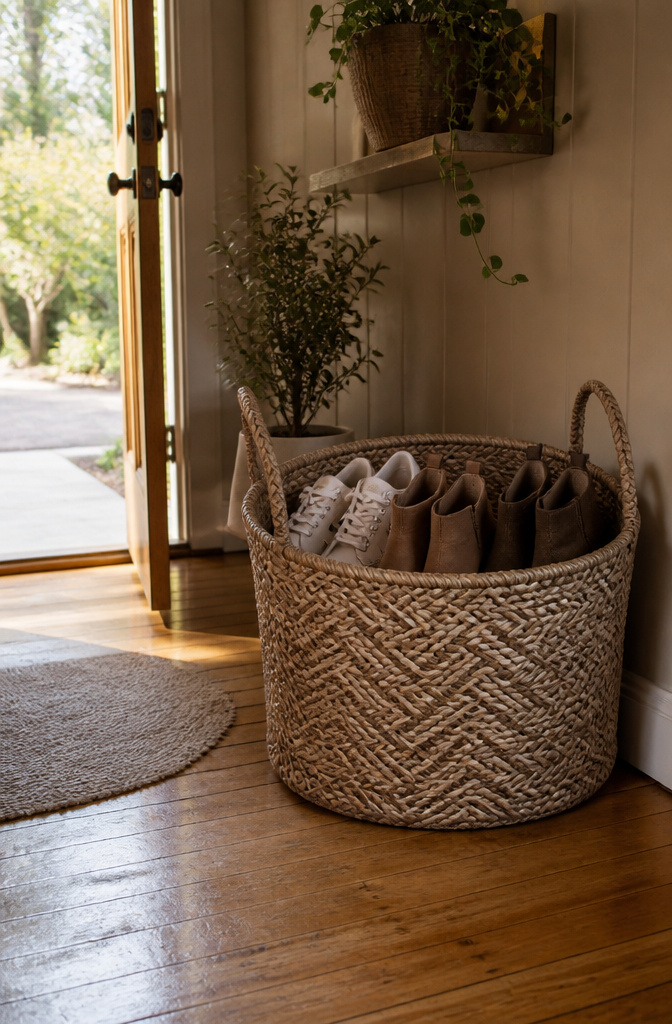
A large decorative basket at the front door corrals shoes without looking like furniture you will have to move later. The metal framework inside some braided-handle versions keeps the shape from sagging once sneakers or ankle boots go in, which matters more than it sounds: a basket that collapses sideways reads as clutter, not storage. Seagrass and cotton rope options in gray-and-white or taupe herringbone sit against most rental walls without fighting the existing finishes, and a lidded set hides the jumble on days you would rather not look at it.
What makes this work for renters specifically is that nothing mounts to the wall and nothing weighs enough to leave a mark on the floor. Slide it into a closet when you leave, or repurpose it for blankets. The same basket styles keep showing up across entryways because they read as intentional decor first; the shoes inside are a practical afterthought, which is exactly the balance a small rented space needs.
2. Storage Ottomans
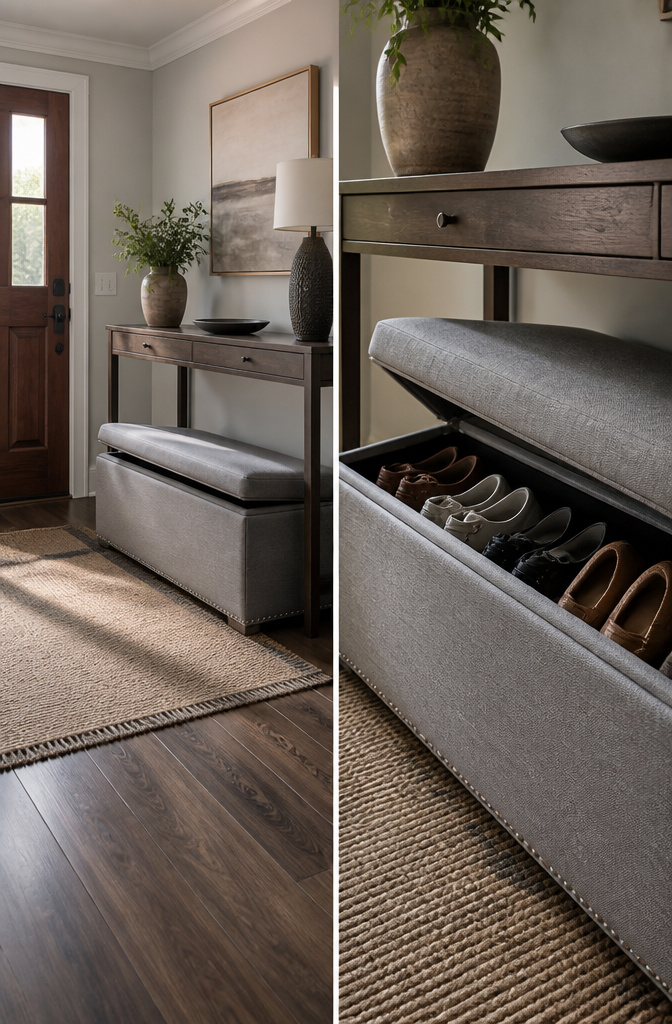
A storage ottoman slid under an entryway console earns its keep twice: the seat for pulling on boots, and the hollow inside for the boots themselves once they’re off. The lift-off top on a typical upholstered cube opens to enough depth for four or five pairs stacked heel to toe, which matters when your front door opens straight into living space and every piece of furniture has to justify its footprint.
Round storage ottomans work the same way, though the curved wall steals a little interior volume compared to a square one. In a narrow passage where the console itself is only 10 or 12 inches deep, that difference can mean fitting the third pair or kicking it to the closet down the hall.
The catch is the lid. A lift-off top needs both hands free and somewhere to set it while you rummage; a hinged lid would solve that, but most console-height cubes use the simpler design. For households where shoes come off in pairs and get retrieved in pairs, the trade is manageable. For anyone fishing out single shoes on the way to the car, the rhythm gets old fast.
Baskets under the same console hide the same clutter without the seating, which is the honest comparison. The ottoman wins only if someone actually sits there. In my reading, the households that make this work are the ones that treat the seat as daily routine, not occasional convenience: kids lacing up, a partner with coffee waiting. Without that habit, the basket is cheaper and lighter to slide in and out.
3. Entryway Shoe Storage Bench
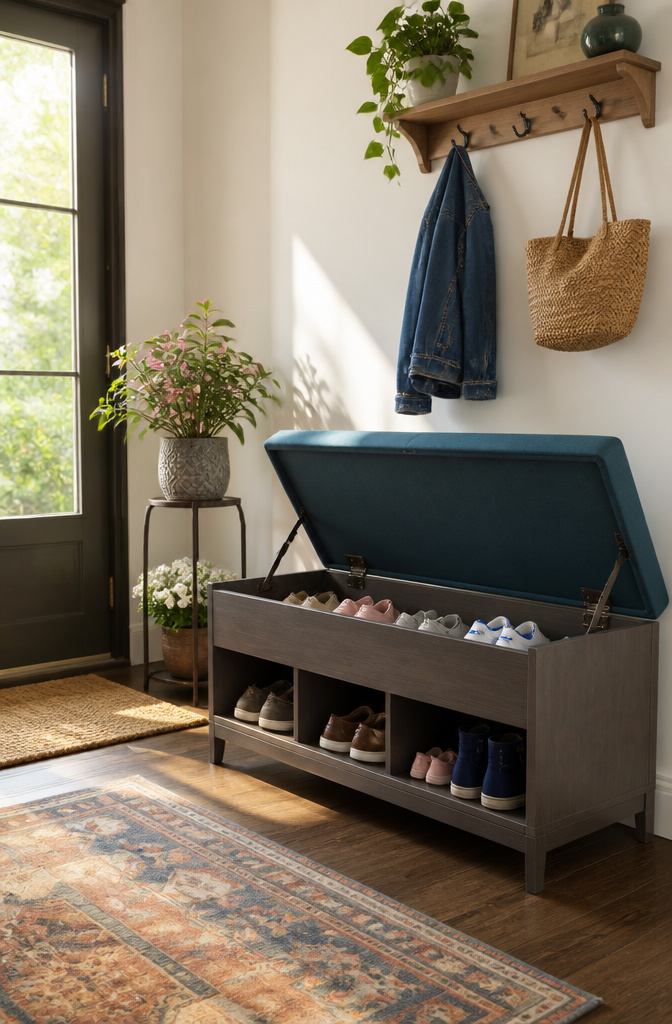
A bench with a flip-top seat gives you a place to drop your bag and a place to hide the shoes that otherwise fan out across the floor. The hinged top on the style that fits nine pairs stays open on its own, which matters when you are wrestling off boots and trying not to let the lid slam on a toddler’s fingers. It closes slowly too, a small detail that keeps the peace in a busy entryway.
Nine pairs is the practical math for the lined-up arrangement, though piling them in like a basket buys you a few more. That capacity assumes adult shoes; mix in kids’ pairs and the count shifts, but the point is this is storage for a household’s daily rotation, not a museum archive. The bench comes in white, gray, natural, and teal, so it reads as furniture first and shoe storage second.
Smaller entryways or apartments where you only keep two or three pairs out might do better with a storage drawer bench instead. It takes up less visual room and still gives you that first seat when you come home, which is the real win: a place to sit before you have walked your street dirt any farther into the house.
4. Hall Tree
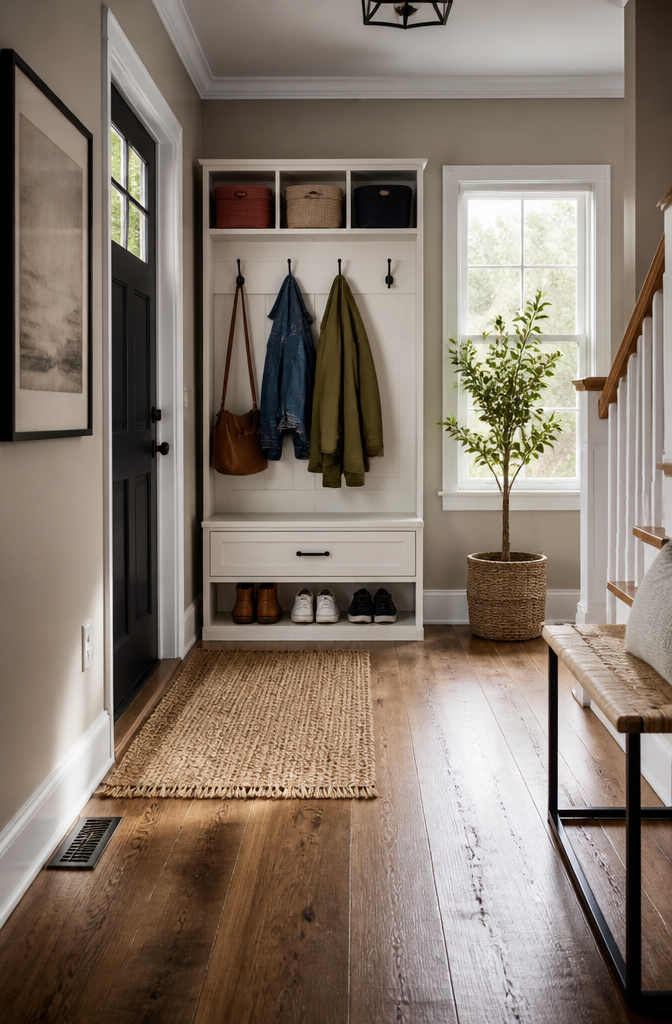
A hall tree with hooks plus a drawer or cubby below handles two entryway jobs in one footprint, which matters when your front door dumps straight into the living room and every inch counts. Coats hang at eye level, shoes slide into the lower storage, and the whole thing reads as furniture instead of clutter. The units come in white, black, navy, and gray, so matching what you already own is usually possible. Some include a top shelf that works for bins of gloves and hats, though that adds height you may not have under a low ceiling. The tradeoff is depth: a hall tree needs more floor space front-to-back than a slim shoe rack alone, and in a narrow passage that can mean brushing against it every time you walk through. If your entry is a tight hallway, measure the depth before ordering. For open-concept apartments where the door opens into the main space, the consolidated footprint usually wins.
5. 2-Tier Rolling Baskets
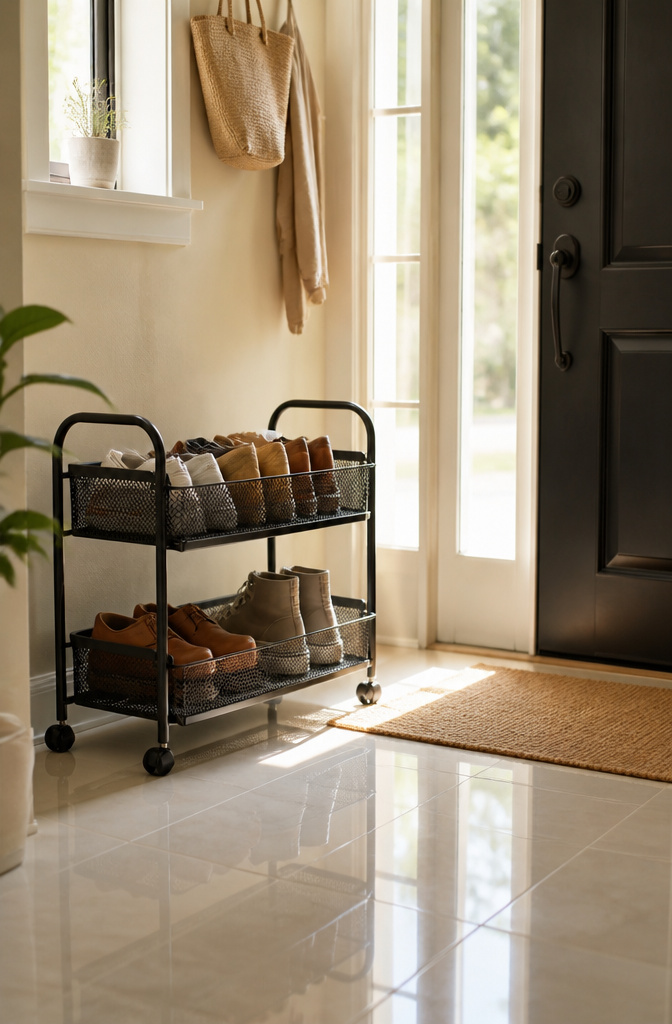
A 2-tier rolling basket under 12 inches wide solves the same shoe-pile problem as a big flip-top bench, but the tradeoff flips from seating to mobility. Both hold about the same number of pairs; what changes is where the storage lives.
I like these for entryways that double as laundry paths or for anyone splitting time between a closet and the door. The wheels let you roll the whole unit into an entryway closet when guests come through, then pull it back out for morning rushes. No fixed bench means no fixed footprint, which matters in a rental where the front door opens straight into the living space.
The catch is exactly that flexibility. Shoes sit in open wire rather than a lidded box, so the look stays casual, and the basket needs a closet or corner to hide in. If your entry has no nearby closet, the rolling feature becomes half-useful; you are still staring at sneakers. For tight spaces with closet access, though, this trades the bench’s seat for a storage unit that moves where the mess is.
6. Shoe Storage Cabinet
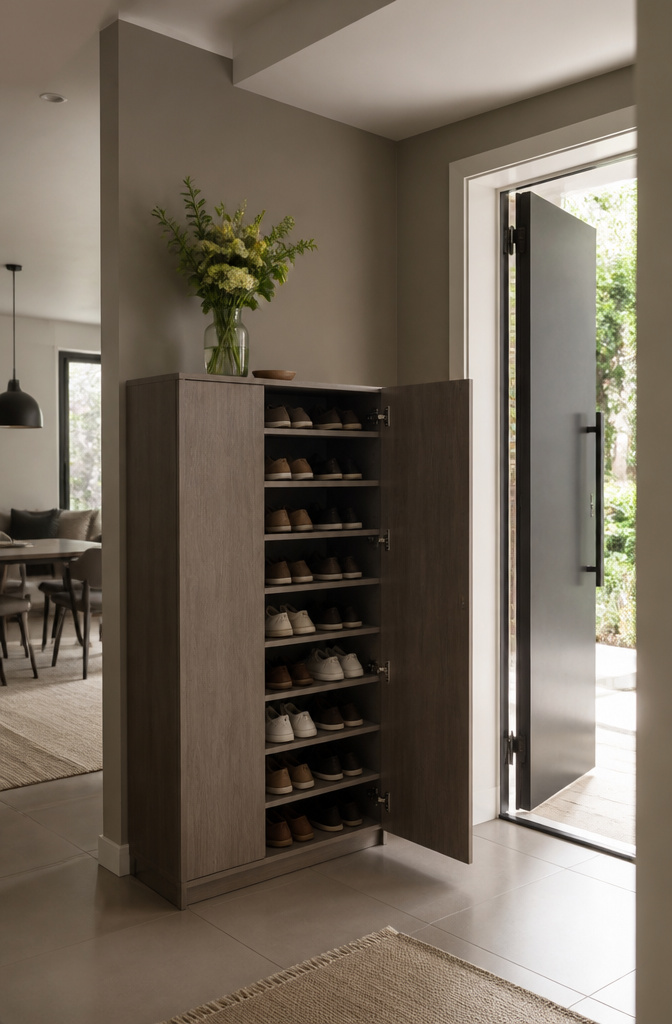
A shoe storage cabinet built for twelve pairs changes how the entryway reads from the living room. The door can stand wide open and the sightline stays clean, which matters in a narrow apartment where the front door opens straight onto the sofa. I used to think open racks looked "honest," but guests do not need to inventory my running shoes the moment they step inside.
The trade is depth. A cabinet that hides a dozen pairs needs more floor space than a vertical rack, and the doors need swing clearance. In a tight entry, that means a shallow cabinet with tilt-out drawers rather than a deep box. The shallow versions run under a hundred dollars on sale and sit close enough to the wall that the door barely brushes past.
Dusty gray oak finishes are common now, and they read as furniture rather than closet hardware. That helps when the entry is visible from the rest of the living space. The cabinet does not solve ventilation; shoes go in dry or the closed space holds odor. I leave a small sachet of baking soda in the bottom drawer and swap it when it stops working.
7. Over the Door Shoe Storage
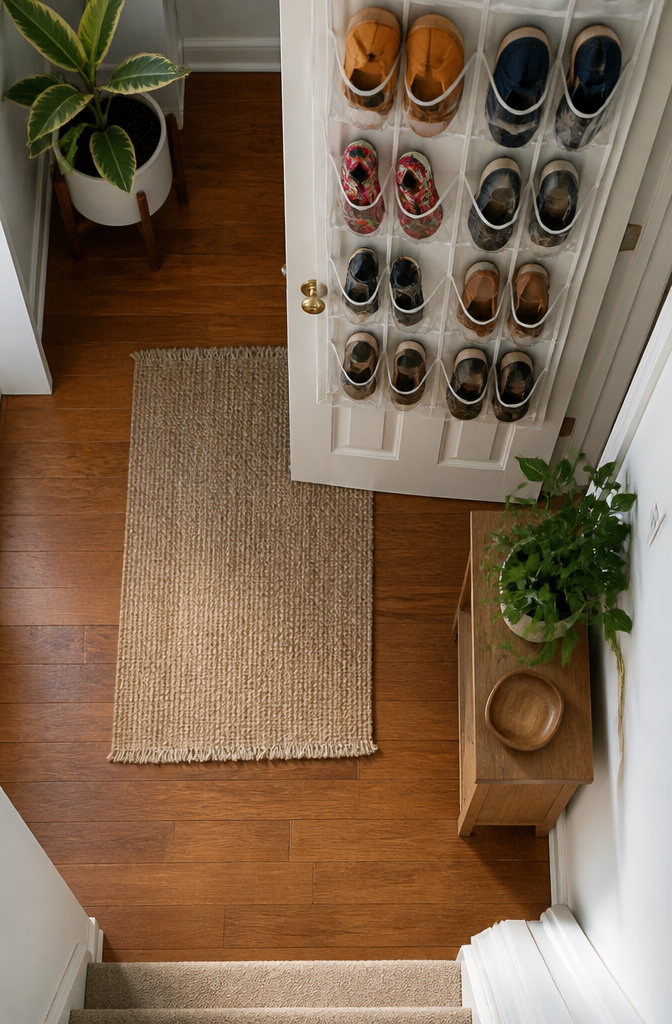
Hanging a shoe organizer on the back of a closet door keeps every pair off the floor without eating an inch of walkway. In a narrow entry where the door barely clears a mat, that matters more than it sounds. The tradeoff is the reach: you stand at the door and work behind it, fishing for shoes at shoulder height instead of bending to a rack. For anyone with a stiff back, that angle can feel like a win; for kids, it is usually the opposite.
The options run from 12 pairs up to 36 pairs depending on the pocket layout, so matching the organizer to your actual collection matters more than buying the biggest one. A 26-pair grid with clear pockets lets you see what you have; a 12-pair version with deeper pockets swallows boots that would flop out of the shallow ones. The door still has to close, so check the gap between the door face and the jamb before you order. A bulky organizer will leave the door ajar, and an entry door that does not latch is a problem that cancels the storage fix entirely.
What Multi-Function Actually Saves
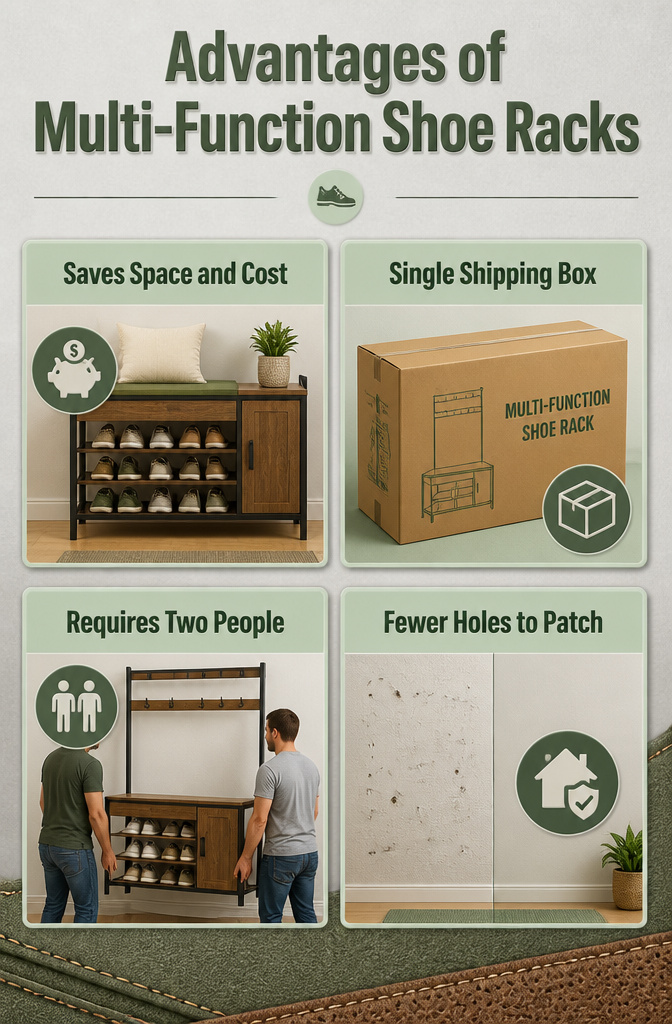
A piece that stores shoes and gives you somewhere to sit means you are not buying a separate bench and figuring out where the bench goes. The same footprint now handles two problems, and that matters most in a narrow entry where every inch is already claimed by the swing of the door. I learned this the hard way after installing a slim rack and then realizing there was nowhere to pull boots on. One multi-function unit costs less than two single-purpose pieces and usually ships in a single box, which is worth counting when you are hauling it up stairs yourself. The weekend timeline holds because you are assembling one thing, leveling one thing, and anchoring one thing to the wall. The tradeoff is weight; a hall tree with a bench seat and upper hooks runs heavy, so a second pair of hands for the lift is not optional. If you are renting, the payoff is also on move-out day: fewer holes to patch, fewer items to sell or donate, and less of your security deposit spent on restoring the space you never fully controlled anyway.
Space You Did Not Know You Had
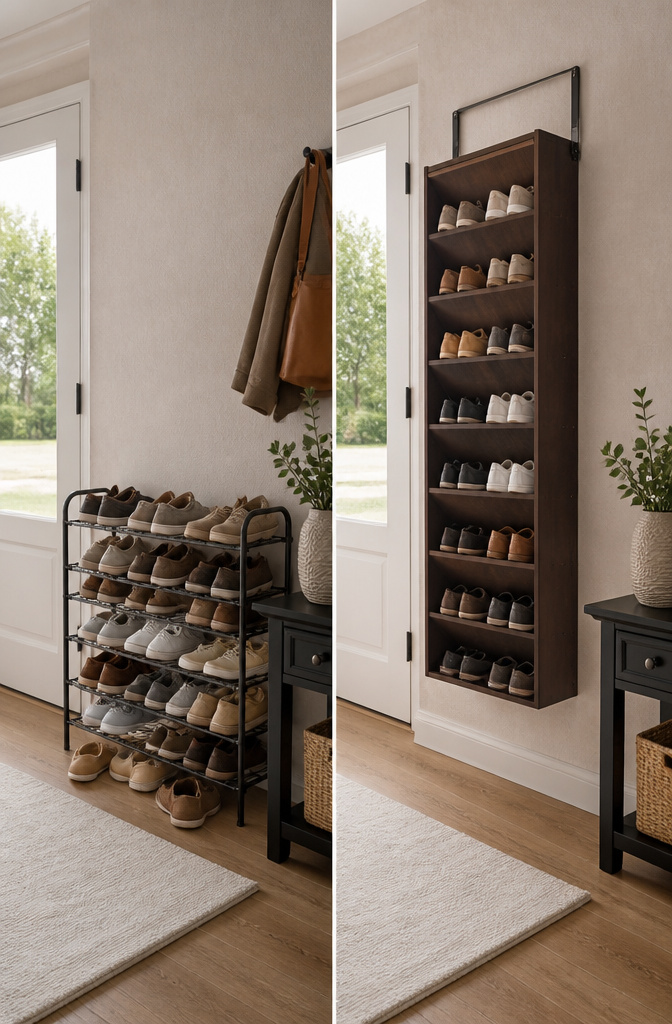
The real shift happens when you stop measuring your entryway in square feet and start measuring it in surfaces that move, lift, or slide. A rolling basket under twelve inches wide can live inside a closet until the moment you need it, then roll out to the front door for the morning scramble. That same logic applies to the vertical plane behind the door, where an over-door organizer turns dead wall into shoe storage that never touches the floor. Under a console table, a storage ottoman with a lift-off top hides what you kicked off yesterday while still giving you a place to sit and tie your boots. The ottoman slides back out of sight when the routine is done. None of these options ask for more room than you already have. They ask you to notice the inches between furniture and floor, the gap behind a swing door, the hollow inside a seat. That is where the extra capacity lives.
When Good Enough Looks Better Than It Sounds
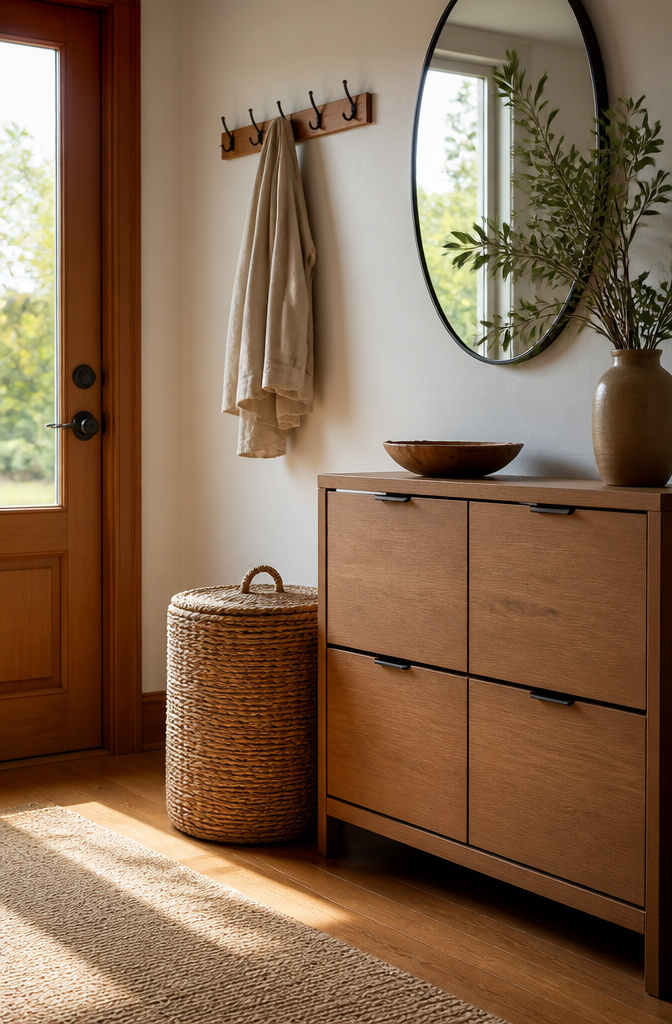
Baskets, cabinets, and hall trees all face the same test at the front door: they have to look like something you chose on purpose, not storage you settled for. The ones that pass this test tend to share one trait. They hide the shoes entirely rather than framing them as a display.
A woven basket with a lid reads as a side table until someone lifts it. A cabinet with a wood finish that matches your trim disappears into the wall. Hall trees with enclosed lower compartments keep the visual weight up where the hooks and mirror live. The mistake is buying something attractive from the front and discovering the open shelves turn your entryway into a shoe advertisement every time you walk in.
What convinced me, reading through a dozen of these setups, is that renters especially need pieces that work both ways. The cabinet that looks built-in can move to a bedroom later. The basket that hides winter boots in March can hold garden gloves by June. Spending a little more on the exterior finish usually pays off here because the item stays visible, not tucked behind a closet door where only function matters.
Frequently Asked Questions
What are some shoe storage ideas for entryways?
Seven practical options work well for front door entryways: decorative baskets, storage ottomans, flip-top benches, hall trees with hooks and lower cubbies, 2-tier rolling baskets, shoe storage cabinets, and over-the-door organizers. Each trades off between visibility, seating, mobility, and how completely it hides shoes from sight. The best choice depends on whether your priority is hiding clutter, having a place to sit, or keeping the floor entirely clear.