
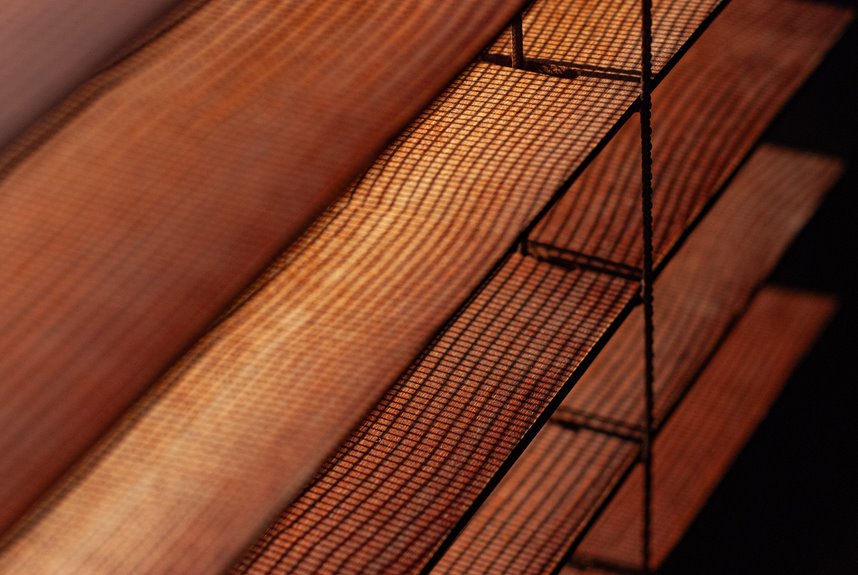
I’ve found blinds and Roman shades solve light control in completely different ways. Blinds provide precise tilt control through rigid slats, while Roman shades soften rooms with continuous fabric folds. Although Roman shades have a higher upfront cost, they offer better insulation; blinds are more durable in busy hallways. For nighttime privacy, Roman shades with blackout lining are superior since slats often leave slight gaps. Cleaning involves dusting individual slats versus vacuuming between fabric pleats. My mounting tolerance is also important—blinds accommodate minor bracket errors, while Roman shades require exact headrail alignment for even stacking. I always check for cordless or motorized options when kids or pets are present. Here are additional insights to help you make an informed choice.
How Blinds and Roman Blinds Are Built Differently
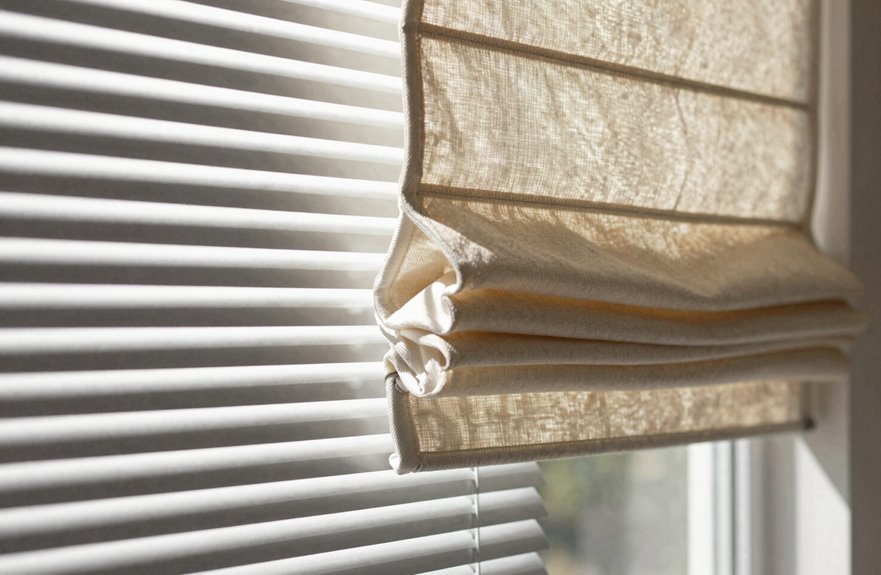
When choosing between blinds and Roman shades, I start by examining their construction. Blinds consist of rigid horizontal slats that tilt for light control, while Roman shades feature a continuous fabric panel that folds into neat horizontal pleats when raised. These construction differences influence their functionality in my space.
Blinds stack tightly when raised, offering a slim, minimal look common in modern homes. In contrast, Roman shades cannot compress in the same way; their layered fabric folds become a design element.
The construction also affects performance. Blinds diffuse light through slat tilt, while Roman shades require specific fabric and lining choices for light control and insulation. Both styles offer cordless or motorized options, allowing me to choose an aesthetic that suits my home without sacrificing convenience.

1【Our Strengths】Over 100 Years Window Covering Expertise (SCHOENBERGER GROUP est.1878)

1【Our Strengths】Over 100 Years Window Covering Expertise (SCHOENBERGER GROUP est.1878)
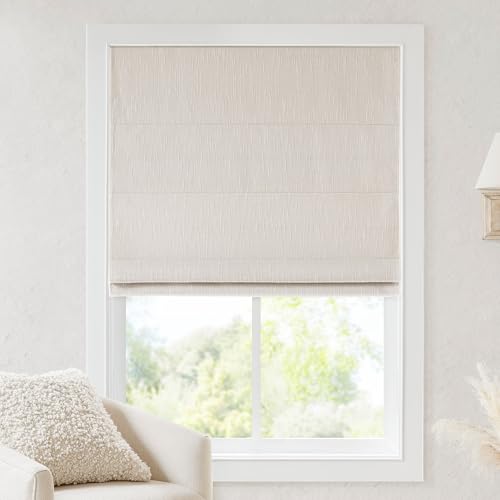
True to size - Refer to our sizing guide image for your perfect fit. SIZE: 34"W x 64"L. Inside mount requires shade 0.5" shorter in width, while outside mount requires shade 3" wider than your window size
Slat Angles vs. Fabric Folds: Which Controls Light Better?
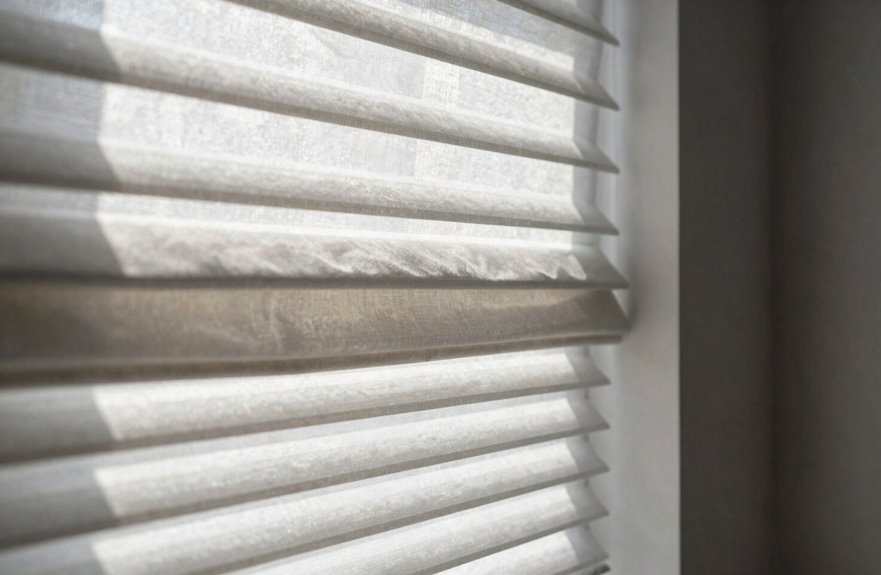
How do I want light to behave in my room? That’s the question I consider when comparing slat angles and fabric folds.
I’ve noticed that blinds provide direct light control through slat tilt. I can angle them precisely to catch that morning glow or block harsh midday sun without lifting the entire shade. My room’s sun diffusion becomes sculptural, allowing light to enter exactly where I want it.
Roman shades create a different effect. Their fabric folds produce softer light diffusion. I depend on fabric weight, lining, and opacity to manage brightness. Raising or lowering the shades changes everything; there is no in-between.
For me, it’s about precision versus atmosphere. Slat angles excel at adjustable daylight, while fabric folds are better for gentle, filtered ambience. Both options provide distinct ways to interact with light.
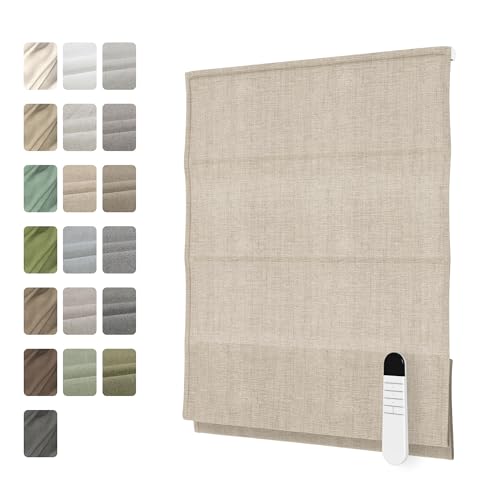
Remote Control Convenience: No more cords or climbing over furniture—just grab the remote and control your motorized roman shades from anywhere in the room. Whether you’re relaxing in bed or cooking in the kitchen, it’s comfort at the click of a button. Simple, smooth, and super easy for everyone to use—especially great for seniors or anyone who wants hassle-free light control.
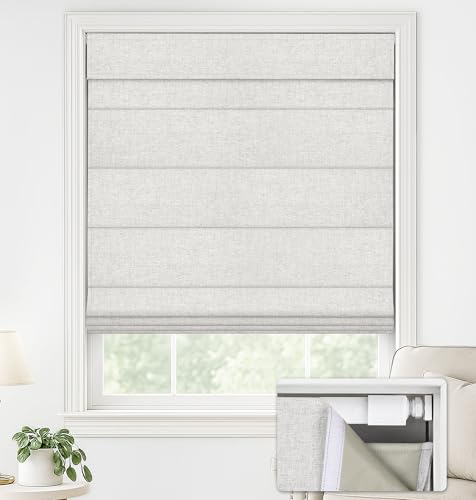
【For inside mount】order the exact width of your window frame. If your frame is 29", buy 29". No deduction – we make it to your exact size

Remote Control Convenience: No more cords or climbing over furniture—just grab the remote and control your motorized top down bottom up roman shades from anywhere in the room. Whether you’re relaxing in bed or cooking in the kitchen, it’s comfort at the click of a button. Simple, smooth, and super easy for everyone to use—especially great for seniors or anyone who wants hassle-free light control.
Which One Gives You Better Privacy at Night?
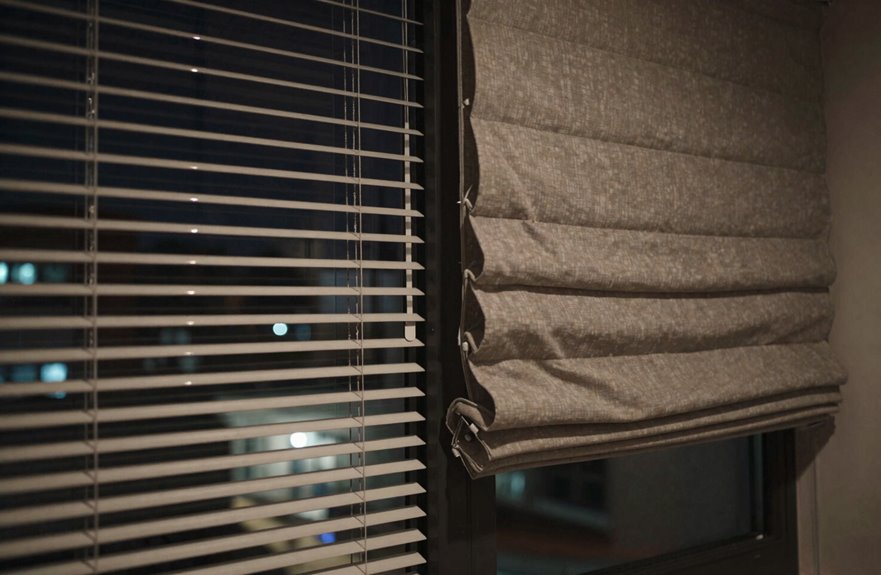
Why does night privacy often feel more critical than daytime control? Many of us have experienced that sense of vulnerability when darkness falls and our windows reflect the outside world.
It’s essential to feel secure in your space, especially at night. Roman shades with blackout lining provide superior privacy compared to traditional blinds. Their continuous fabric prevents light leakage that can occur with slatted blinds, particularly through gaps between tilted slats. Without blackout lining or a snug fit, edge light bleed can compromise your privacy.
Cellular or thick woven Roman shades create a solid barrier—no slat gaps, no visibility. For effective night privacy, I recommend installing Roman shades with proper blackout lining flush to your frame.
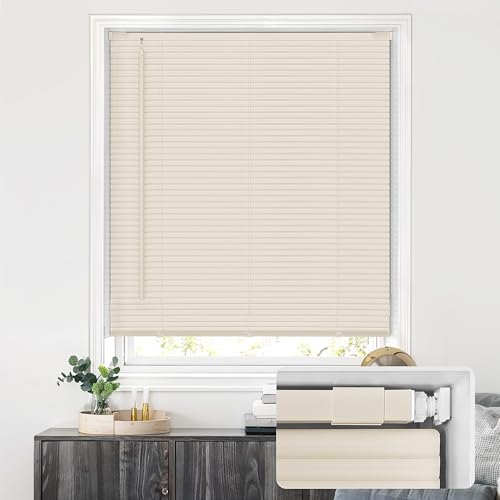
Inside Mount ONLY. For better internal installation, a standard 3/8 inch deduction is made to the blind width. The actual blind size is 28 5/8" W x 48" H, the unique spring rod can extend 1 inch in total, allow the blind to fit for window width 28.7-29.6 inch, blind height can adjust from 0" to 48". (Pls Note) Minimum 1 1/5" depth of window frame required for inside mount.

Attention: Measure for Inside Mount: The blind you order will be the exact size with no deductions. To ensure a proper fit, measure the width of your window at the top, middle, and bottom. For a 22.5" wide blind, your window should measure between 22.875" to 23.5" wide, allowing for a snug fit with minimal light gaps. Next, measure the height from the top of the window to the windowsill on the left, middle, and right sides, and use the largest height measurement when placing your order.
Attention: Measure for Inside Mount: The blind you order will be the exact size with no deductions. To ensure a proper fit, measure the width of your window at the top, middle, and bottom. For a 29.5" wide blind, your window should measure between 29.875" to 30.5" wide, allowing for a snug fit with minimal light gaps. Next, measure the height from the top of the window to the windowsill on the left, middle, and right sides, and use the largest height measurement when placing your order.
Best Rooms for Blinds vs. Roman Shades
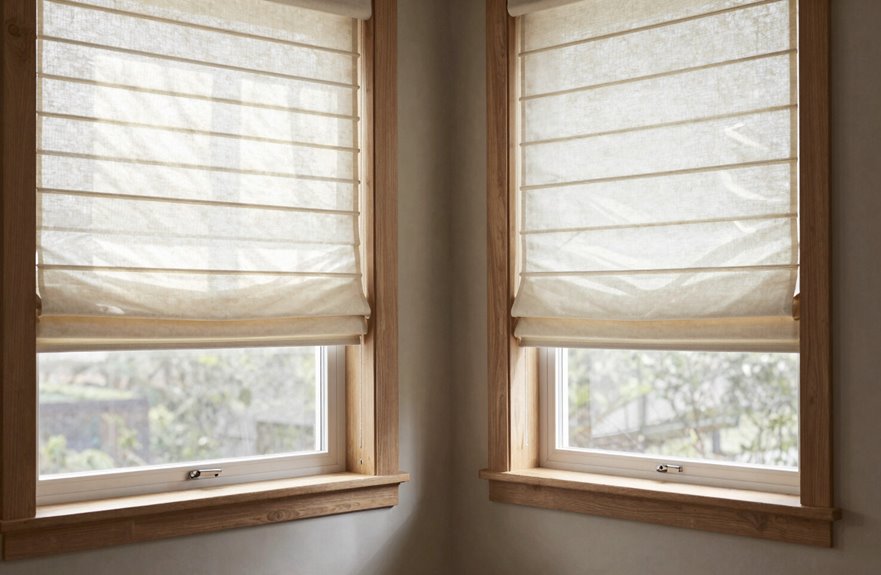
Where should each treatment live in your home? I consider shades versus blinds in terms of how we actually use our spaces.
- Living room & dining room: Roman shades are preferred for aesthetics; their fabric folds create a welcoming, polished atmosphere for gatherings.
- Bedroom: Roman shades also excel here; their various lining options allow for customized light control and privacy.
- High-traffic zones: Blinds are more durable. Their easy-to-clean slats are ideal for kitchens and offices.
The suitability of each option depends on your priorities. Blinds provide minimalist, contemporary lines where function is key. Roman shades add warmth and texture to more formal spaces. Both options offer good privacy, but Roman shades can transform a bedroom or dining room into a more inviting area, making it feel designed for comfort.


Package includes 1 panel Tie Up Shade with 46" width x 63" length (117cm x 161cm), same color as front. 3" pocket fits various standard or decorative curtain rod/pole.

True to Size – Refer to our sizing guide image for the best fit. Size: 35"W x 64"H. For inside mount, order 0.5" narrower than your window; for outside mount, 3" wider.
Which One Actually Keeps Heat In?
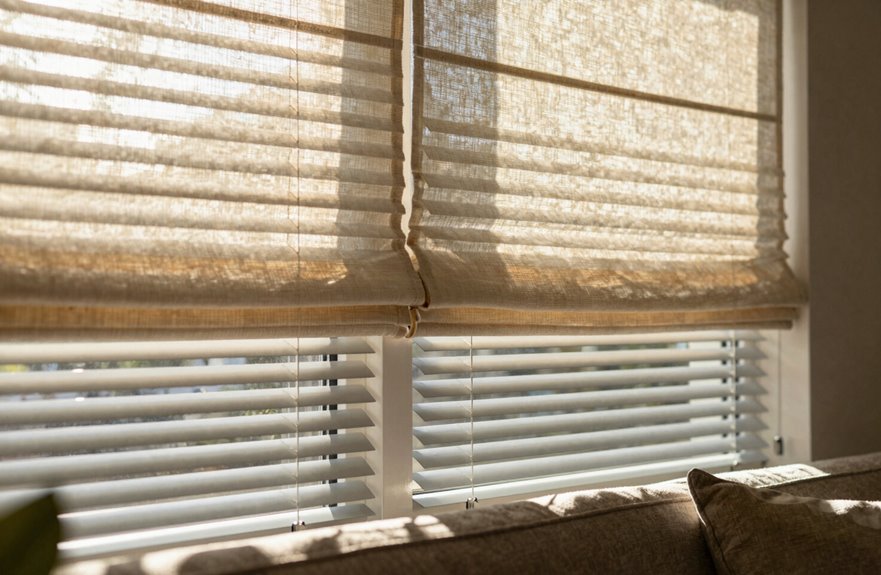
I think you’ll find Roman shades edge ahead when it comes to insulating fabric layers, as their thicker weaves and optional interlinings create natural barriers that trap warmth inside your rooms. The way they seal air gaps is significant; flat Roman styles sit flush against window frames, blocking drafts more effectively than standard roller alternatives. If you’re weighing these options for heat retention, fabric weight and lining quality make Roman shades the smarter choice for most homes.

✔️ 60 Pieces - There are 60 Pieces 1.18inch*1.18inch Vertical Blind Repair Tabs in the package. So you have a sufficient number of Verticle Blinds Snap in Replacement to fix all the Vertical blinds in your home.

😀 Best Value Package -- A plastic bag contains 10 sets white Horizontal Blind Repair Tabs. It can be used simply and conveniently

Clear Horizontal Mini Blind Slat Repair Kit
Insulating Fabric Layers
When trying to keep heating bills down, paying close attention to how window treatments trap warmth is essential, and the fabric layers make a significant difference.
Roman shades are particularly effective due to their thicker construction, often featuring interlining between the face fabric and privacy lining. This design creates natural air chambers that slow heat transfer more effectively than basic roller options. Heavier fabrics like wool deliver noticeably better thermal performance compared to thinner materials.
Cellular shades excel in this area with engineered honeycomb structures specifically designed for insulation.
Here’s what to prioritize:
- Seek fabric weight and layered construction for genuine warmth retention.
- Verify your window installation fit to minimize edge leakage.
- Consider how lining choices directly impact convective heat loss through every fold.
Air Gap Sealing
Although fabric layers are important, the effectiveness of a shade in sealing against the window frame significantly impacts heat retention.
Let’s focus on what truly impacts our homes. Roman shades with thickness and interlining trap some air for insulation, but their raised stack often leaves an air gap around the edges, allowing drafts to enter. Roller shades fitted snugly with blackout lining block these pathways more effectively. Cellular roller shades enhance insulation further, as their honeycomb pockets typically outperform standard Romans. If you prefer Roman shades, double lining can improve performance, though sealing remains more difficult. For optimal comfort, I recommend well-fitted roller shades equipped with proper side channels. This approach ensures a cozy environment without drafts.
Which One Survives Busy Hallways and Kids’ Rooms?
How well do blinds and Roman shades hold up in the spaces where life happens most?
Cordless or motorized options keep little ones safe from hazards in hallways and kids’ rooms. Here’s what every busy household needs to know:
- Durability: Roller shades withstand frequent use better than Roman shades, whose fabric folds wear faster in high-traffic areas.
- Maintenance & cleanliness: Roller shades offer easier maintenance with smooth surfaces, while Roman shades collect dust in their folds.
- Light control: Both deliver darkness, though roller shades provide crisper blackout solutions that clean more easily.
Roller shades simplify daily routines with minimal maintenance needs. Choosing wisely between these options is essential for a functional and lasting home environment.
1【Our Strengths】Over 100 Years Window Covering Expertise (SCHOENBERGER GROUP est.1878)
【For inside mount】order the exact width of your window frame. If your frame is 33", buy 33". No deduction – we make it to your exact size
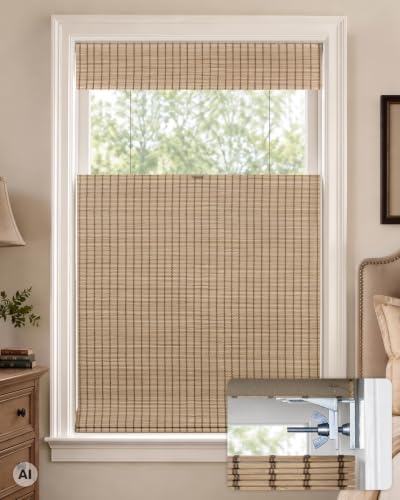
1【Our Strengths】Over 100 Years Window Covering Expertise (SCHOENBERGER GROUP est.1878)
What’s Actually DIY-Friendly?
I need to compare installation complexity and mounting hardware for blinds versus Roman shades from a first-person perspective. Roller and pleated blinds usually go up faster since I don’t have to deal with precise fabric fold alignment. Roman shades require careful measuring and cleat installation to achieve even pleats. Both types need basic tools like a drill and level. Choosing motorized options may increase complexity, as they might require wiring expertise.

Package: This contains 2 L-shaped Light Blockers, made of light absorbing PVC plastic material, which can be cut. The size is 57" x 1.38" x 1.38". Compared with similar products, the width is wider and firmer, and the shading effect is better.
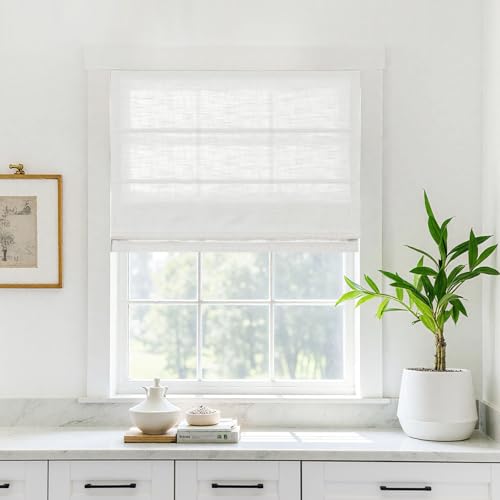
INSIDE MOUNT: Motorized operation requires a minimum window depth of 4", manual operation requires at least 2.5". Please measure the exact inside width and height of your window, then subtract 3/8" from the width when placing your order to ensure proper clearance and smooth operation.

PACKAGE DETAILS: Self-sticky top, you can easily remove the fabric from the head rail. Easy to maintain, operate, and install. All hardware included.
Installation Complexity Comparison
When I’m standing in the aisle weighing Roman shades against blinds, installation complexity often influences my decision more than style or price. Let’s break down what you’re actually signing up for.
- Headrail alignment demands precision. Roman shades need exact fabric tension and perfect headrail alignment, while blinds allow for minor bracket placement errors during leveling.
- Inside mounting narrows your margin. I measure twice for Roman shades since recess dimensions affect fabric lift; blinds can accommodate slightly imperfect fits if brackets remain plumb.
- Cordless versus motorized trade-offs. Cordless blinds are easy to install, but motorized Roman shades involve wiring complexity that can extend my DIY project into the weekend.
Balancing confidence and capability is crucial. Knowing your mounting complexity upfront helps you avoid staring at half-installed brackets while second-guessing your choices.
Mounting Hardware Essentials
Understanding installation complexity leads me to examine the actual hardware in my shopping cart before I commit. Most kits include the necessary installation hardware: mounting brackets, screws, and sometimes wall anchors for drywall situations.
I’ve learned that inside mounts require exact window depth measurements; if they are too shallow, your headrail will protrude awkwardly. Outside mounts offer more flexibility with extra width to completely cover trim. Cordless and tilt mechanisms now feature snap-in brackets, which reduce excessive drilling.
My DIY tribe marks bracket placement at the top corners, prioritizes securing to studs when possible, and attaches everything before final test-fitting. Safety is important; wall anchors prevent accidents in homes with curious children. The right mounting brackets make this achievable on your own.
Cordless Options: What’s Safer for Kids and Pets?
Why risk a tangled cord when shopping for window treatments? Cordless and motorized options protect my family by eliminating choking hazards and strangulation risks for curious kids and pets.
- Cordless systems use bottom-weight mechanisms or internal gearing for secure, cord-free operation.
- Motorized controls allow me to adjust shades remotely, preserving convenience without exposed cords.
- I always verify safety certifications and manufacturer guidelines to ensure compliance with child safety and pet safety standards.
Whether I choose cordless Roman shades or motorized roller styles, I prioritize the safety of my family. I make sure that products explicitly state cord-free operation and meet rigorous testing standards, as my home requires effective protection.

Used to tilt slats back and forth (open and close.) NOT used to raise or lower blinds.
Attention: Measure for Inside Mount: The blind you order will be the exact size with no deductions. To ensure a proper fit, measure the width of your window at the top, middle, and bottom. For a 70.25" wide blind, your window should measure between 70.625" to 71.25" wide, allowing for a snug fit with minimal light gaps. Next, measure the height from the top of the window to the windowsill on the left, middle, and right sides, and use the largest height measurement when placing your order.

THIS PACKAGE CONTAINS: Quantity of 34 Slats at 42.5 Inches (Length) x 3.5 inches (width). Slat Material PVC, Color White, Smooth Curved (no texture). Additional Sizes & Qty Listed Above.
Dusting Slats vs. Vacuuming Fabric: Cleaning Compared
Cleaning blinds and Roman shades requires completely different approaches. I wipe each slat individually with a cloth to target grime in the grooves. In contrast, Roman shades necessitate careful vacuuming between fabric folds where dust accumulates. Both tasks require gentle handling, but fabric care demands extra vigilance to avoid snagging or discoloration, which is not a concern with slats.

STANDARD SIZE: Sold per panel, package contain one beautiful window tie up curtain. Size measures: 42"W x 63"L. Constructed with 4" rod pocket which fit up to 2" diameter basic or decorative curtain rods.Please NOTE:The actual color of curtains may vary slightly on different monitors, But we blieve that when you open it, You will be surprised when you receive the package.

READY MADE: 1-piece printed lined tie up window curtain, measures 25” wide and 47” long, constructed with 3” Rod Pocket on top. Easy to install.
Cleaning Mechanism Comparison
While both window treatments require regular upkeep, cleaning blinds and Roman shades demands entirely different approaches. Dusting flat slats takes minutes, while vacuuming fabric folds requires patience; tackling household chores can be a shared experience.
- Blinds allow for quick dusting with a microfiber cloth, eliminating concerns about moisture or damaging the material.
- Roman shades need careful fabric care; vacuuming between folds gently or using spot cleaning for marks is essential, as cleaning difficulty increases with delicate fabrics.
- When dust accumulates, I find that blinds can handle repeated cleaning easily, while shades may require professional cleaning to maintain their appearance.
Choose what fits your lifestyle; low-maintenance homes are achievable for everyone.
Fabric Care Requirements
I’ve broken down general cleaning approaches, but the specific fabric care requirements deserve closer attention. When maintaining blinds, dusting each slat with a microfiber cloth prevents dust from settling into grooves; it is straightforward and quick. Roman shades require gentler cleaning methods; I vacuum mine carefully using a brush attachment to address buildup in the folds without tugging the fabric.
These maintenance differences influence your daily routine. Blinds tolerate damp wiping for deeper cleans, while Roman shades require spot-cleaning with mild soap—always test hidden areas first. Delicate materials like silk or wool in fabric shades often need professional care, unlike hard-surface blinds that I can handle myself. Vacuuming works for both, but aggressive suction can warp the fabric. Choose your approach based on how much hands-on care fits your lifestyle.
Sticker Price vs. Replacement Costs
How much should I really expect to spend? When weighing roller shades against Roman shades, I recognize upfront costs tell only part of the story. Roman shades typically demand more from my wallet initially. More fabric, more construction, custom dimensions, and premium materials, such as silk or layered designs, quickly escalate my investment. Roller shades keep my entry point lower, especially for standard sizes and basic synthetics.
Our community of smart buyers considers replacement costs and maintenance costs over time. I’ve learned material durability is crucial.
- Roller shades: Less material, lower upfront costs, and durable synthetics reduce my replacement costs.
- Roman shades: Rich fabric options like cotton blends versus silk significantly affect my price comparison.
- Natural fibers: Require more care and potential re-lining, increasing my long-term investment.
I choose wisely, as both options have their advantages.

【Durable and Strong】: These white vertical blind repair vane savers are made of high-quality metal, durable and strong. Strong gripping force can effectively repair the top broken vertical blind slats and will not lose its effect due to temperature.

Decorative & Practical: The blind repair tabs of pure white color and matte texture are elegant and slim, perfect to blend seamlessly with any window decor. Unassuming color and profile let them hide in the blinds, don’t affect the overall aesthetic of window blinds.

✔ Best Value Package – There are 25 Sets(50 Pieces)1.18inch*1.18inch vertical blind repair tabs in the package. So you have a sufficient number of verticle blinds snap-in replacement to fix all the vertical blinds in your home.