
Navy painted across all 4 walls gives a different feeling than royal blue on an upholstered bed frame, and both work differently than LED strips tucked under a bed in a grey room.
The balance you need between the 2 colors depends on how much natural light the room gets and whether you want the palette to feel dramatic or restful.
1. Blue Patterned Wallpaper
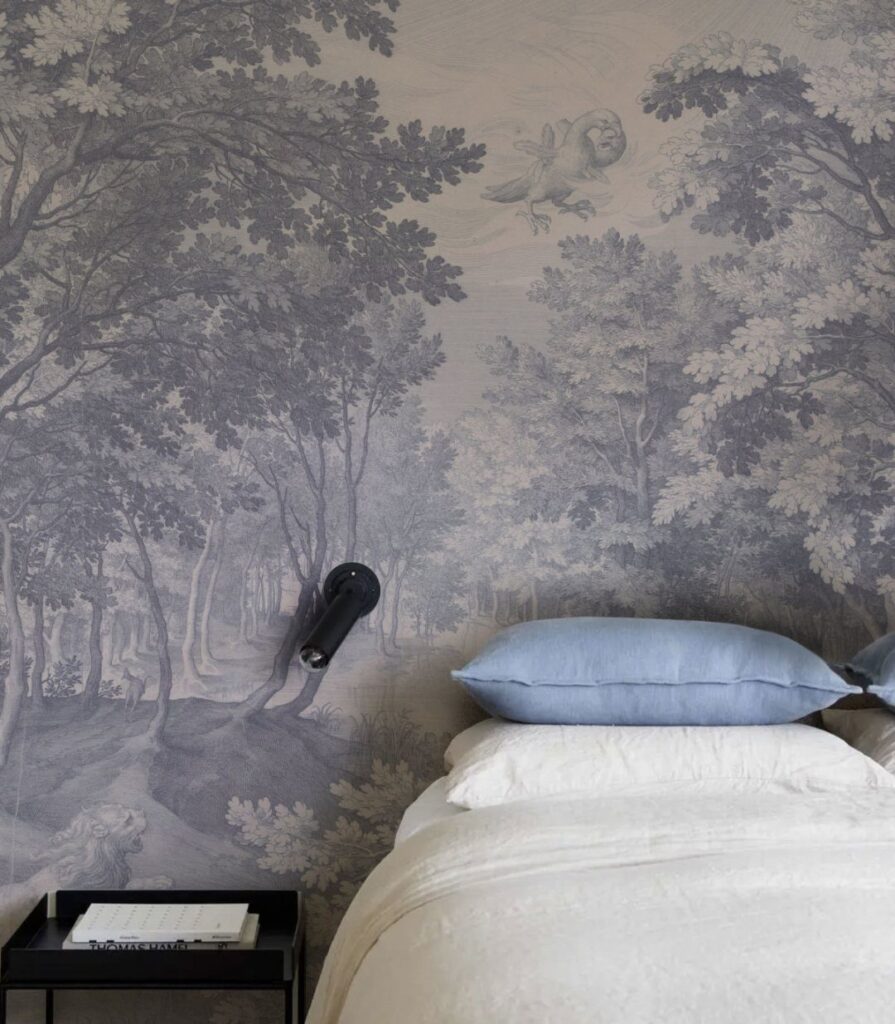
A single wall of patterned blue wallpaper behind the bed gives the room a focal point without committing every surface to the color.
The pattern here is a forest scene, which adds depth and keeps the eye moving across the wall instead of landing on a flat field of blue. Pair it with white or cream bedding so the wallpaper stays the focus.
Black accents like a bedside table or a wall-mounted lamp tie the palette together without competing for attention. This setup works well in smaller bedrooms where you want interest on one wall and simplicity everywhere else.

Size Tips: Our men's slippers are available in 5 sizes. Please note that these sizes run slightly small. We recommend referring to the size chart for a more accurate fit to ensure a comfortable wearing experience.
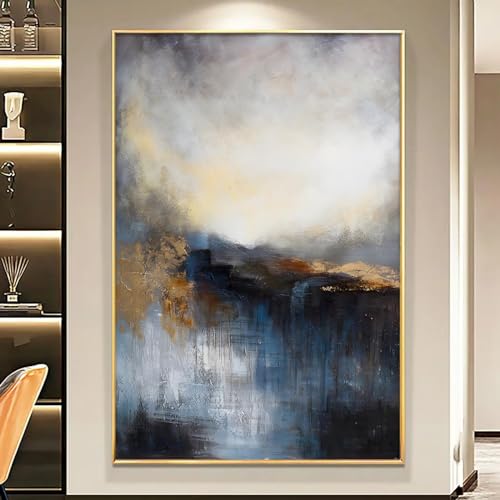
Our Artwork: High definition print on this high grade canvas created by Haruhiart is a 16x24 inch frameless artwork,Our canvas wall art is printed with high quality canvas and environmentally friendly ink, which is not easy to fade and the printing effect is clear and natural

ELEGANT DESIGN: 1-panel BLACKOUT CURTAIN per package. Each Curtain Panel measures 66" wide x 102" long. The NICETOWN drapery is constructed with gorgeous matte silver grommets, fitting the curtain rod of your choice up to 1.6 inches in diameter, making the curtains easy to install and slide.
2. Blue Wallpaper and Creamy Beiges
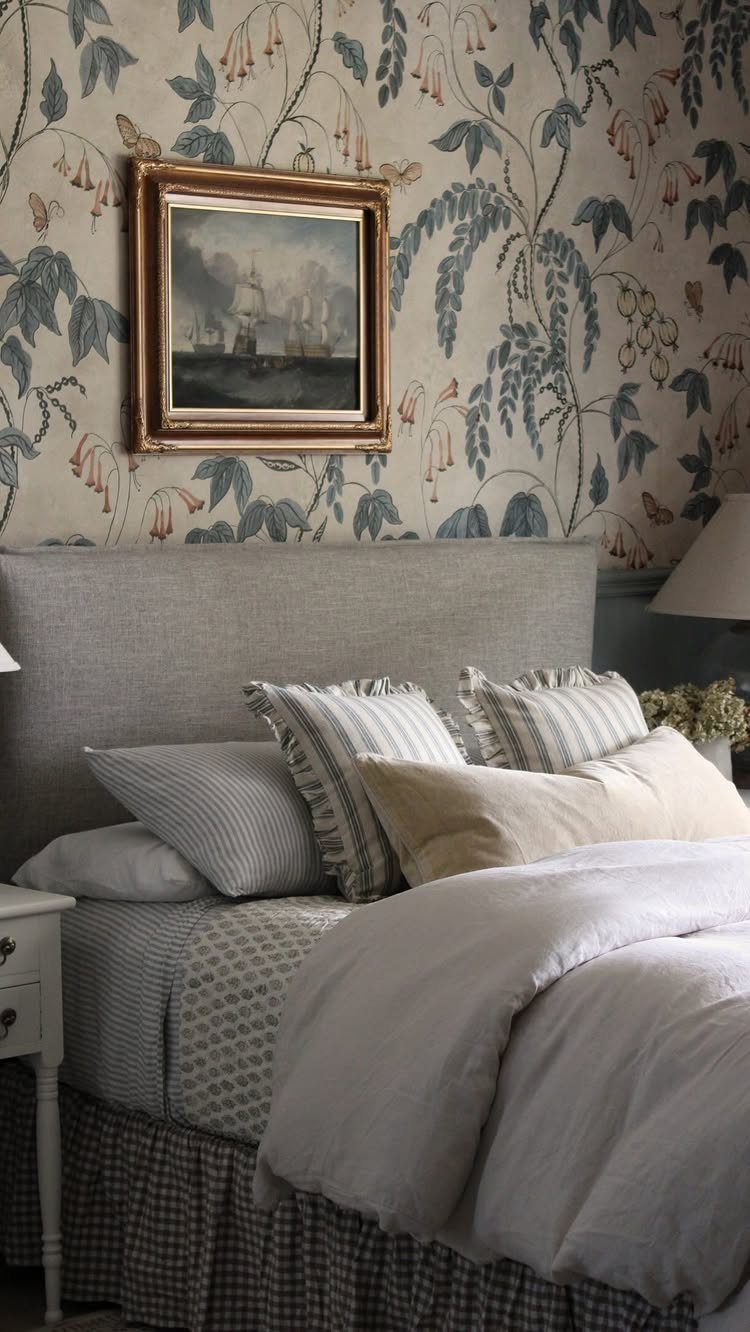
Floral wallpaper in shades of blue softens the room when you layer in creamy beige linens and light wood or neutral furniture.
The combination keeps the space from reading too cold, which is a risk anytime blue meets black in large doses.
In this setup, the blue stays on the walls and the bed pulls in warmer tones through striped or solid beige bedding.
A checkered bed skirt or a few patterned pillows add texture without introducing more color. If your bedroom gets limited natural light, this approach balances the blue with enough warmth to keep the room inviting.

Dual rows of chrome nailhead trim along the headboard edge add a touch of elegance and sophistication.

MATERIAL&FILLING: This comforter set is made of 100% polyester distressed velvet for the face and brushed microfiber fabric for the reverse. Both fabrics are finished for super soft handfeel. The fill is made of light weight down alternative polyester. This comforter set is light weight and warm, suitable for all seasons.

Vertical channel stitching blends classic charm with modern comfort for a refined look.
3. Blue Bedding with Black
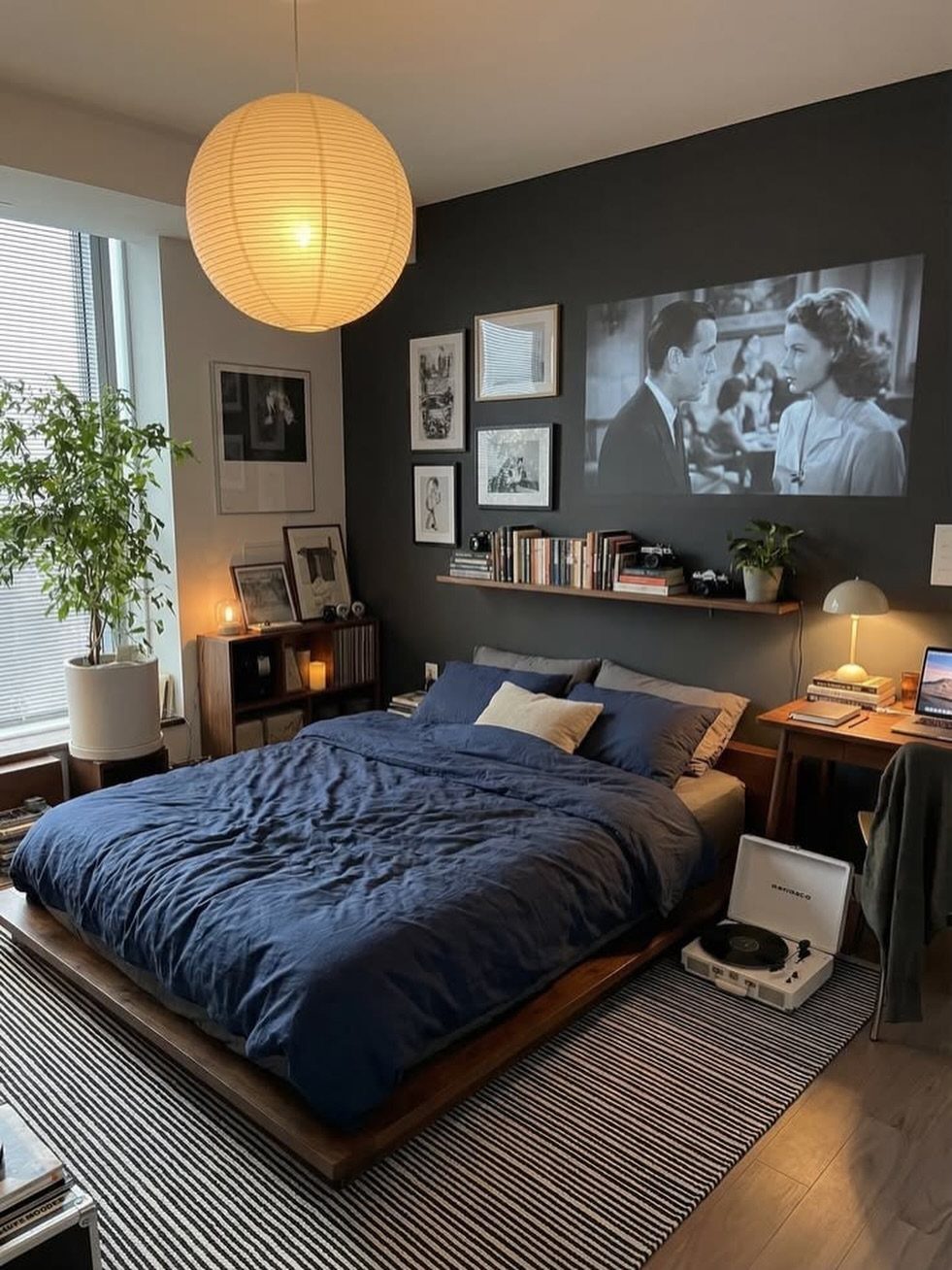
Navy or cobalt bedding offsets the weight of a black or charcoal wall better than white does, because it holds its own against the dark backdrop instead of disappearing.
The blue brings in just enough color to soften the contrast without feeling too bright or out of place.
A wooden platform bed keeps the look grounded, and a few personal touches like framed photos or a record player make the room feel lived-in rather than stark.
If black walls feel too risky, a deep charcoal does the same thing with slightly less commitment.

Size:24"x36" (60cmx90cm),Custom Made Offered.Please Make Sure It's The Size You Really Want Before Purchasing


High quality 100% hand made pretty oil paintings on canvas painted by our professional artist with years of oil painting experience.A perfect Christmas and New Year gifts for your relatives and friends.
4. Blue and Black with Neutrals
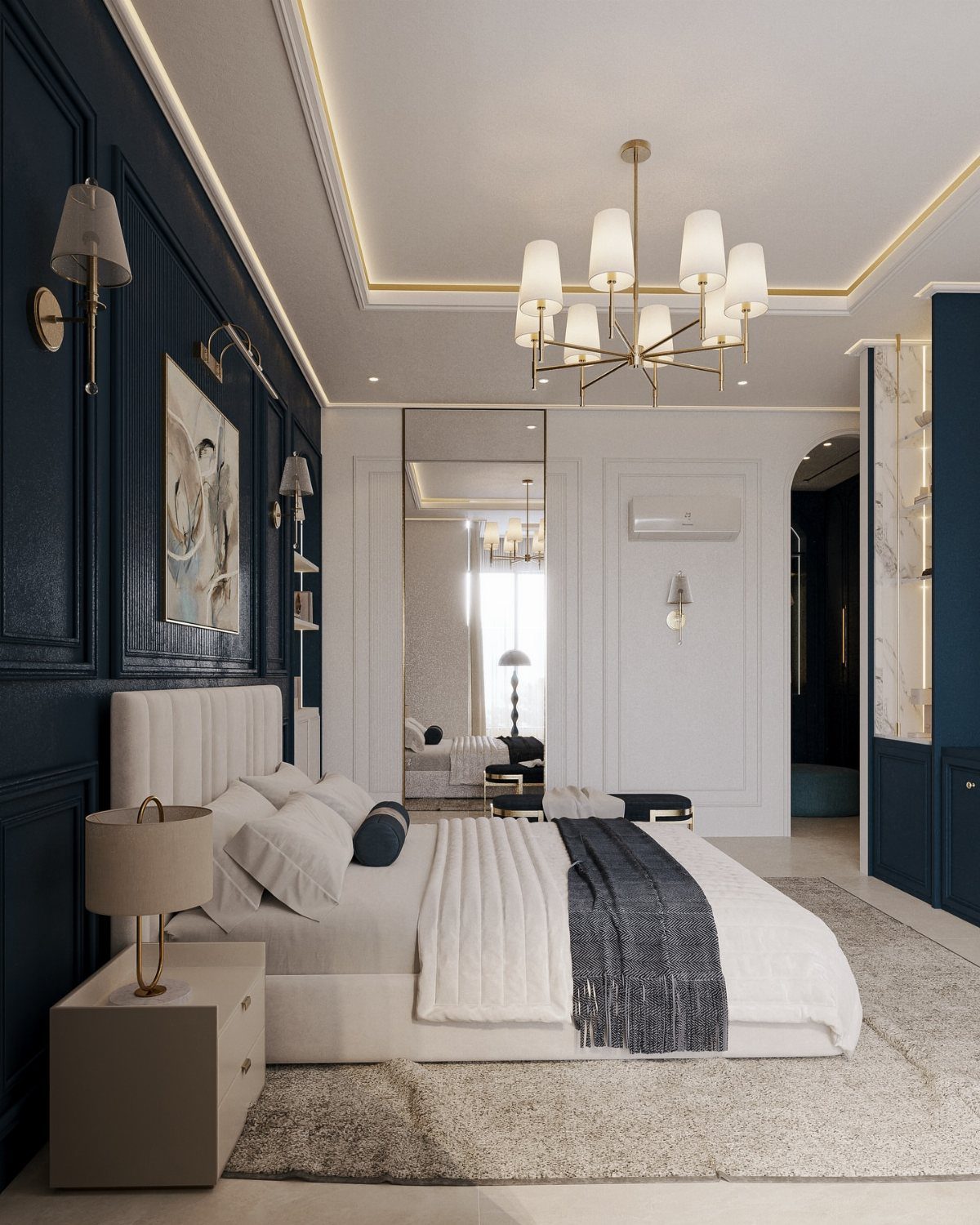
White bedding and beige furniture give a dark blue-and-black bedroom enough breathing room to feel balanced instead of closed in. The lighter pieces reflect whatever natural light the room gets, which matters when you’re working with a palette this saturated.
In this setup, navy blue paneling covers the walls, but the bed stays white and the side table or dresser pulls in a soft neutral.
A gold chandelier or brass light fixture adds warmth and keeps the metal finishes from skewing too cool. This approach works especially well in larger bedrooms where you have the wall space to commit to deep color.

Minimalist Chic Style: Our nightstands feature unique waveform panels on the doors, adding simple elegance to your bedroom. The chic design suits different bedroom styles such as modern, bohemian or mid-century

Fluted Nightstand: This black nightstand features a fluted drawer with a sleek golden handle, and a chic walnut finish—adding a modern glam touch while blending form and function seamlessly. It's a stylish touch for your home

【Rich Black Tone & Gold Accents】 Showcasing deep wood tones paired with brushed gold knobs, this black nightstand captures the essence of mid-century modern charm. The textured drawer fronts add visual depth, bringing a warm, vintage-inspired sophistication to your interior.
5. Immersive Blue Walls
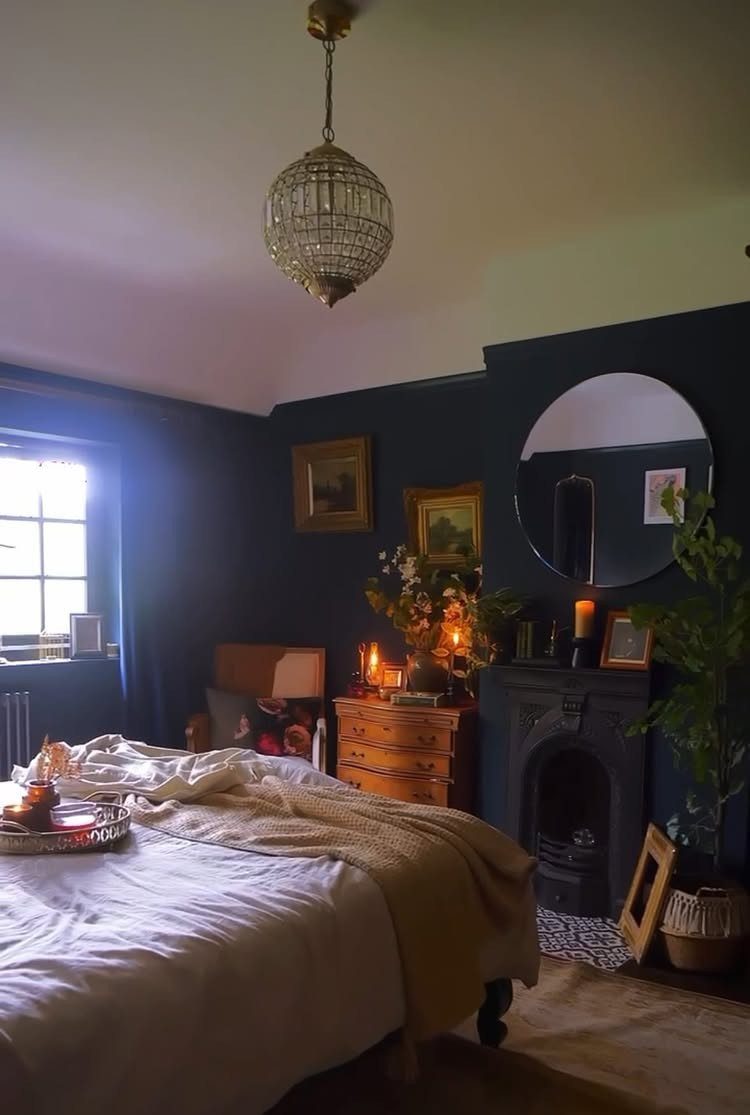
Painting every wall in a saturated navy blue turns the room into an envelope of color, which can feel dramatic or restful depending on how you handle the rest of the space.
White bedding keeps the bed from disappearing into the walls, and wooden furniture adds warmth without introducing a new color.
A black fireplace or black-framed mirror anchors the darker tones, and a crystal chandelier lifts the light without clashing with the palette. If the room has good natural light or warm wood floors, the blue reads richer instead of flat.

【Modern Design】 This single wall lamp compliments the look of almost any indoor or semi-outdoor space, matte black finish decored with brushed gold, the brass interior reflects the light to form an extremely accent contrast. (Attention: Moisture-proof but not waterproof, please keep it away from water)

Stylish Black & Gold Design: This wall sconce showcases a striking mix of black metal and electroplated copper, paired with a textured glass shade that creates a warm, diffused glow when lit. Its mid-century modern shape adds character to hallways, bathrooms, and bedside spaces, making it an eye-catching black and gold sconce that elevates any interior.

Stylish Semi-Flush Mount Ceiling Light: This 3-light ceiling light combines a matte black frame with electroplated brass accents, creating a sophisticated modern farmhouse and industrial look. The semi-flush design keeps the fixture close to the ceiling, making it ideal for rooms with lower ceilings while maintaining an open, airy feel. Perfect for kitchens, bedrooms, hallways, and entryways.
6. Colorful Bedroom Artwork
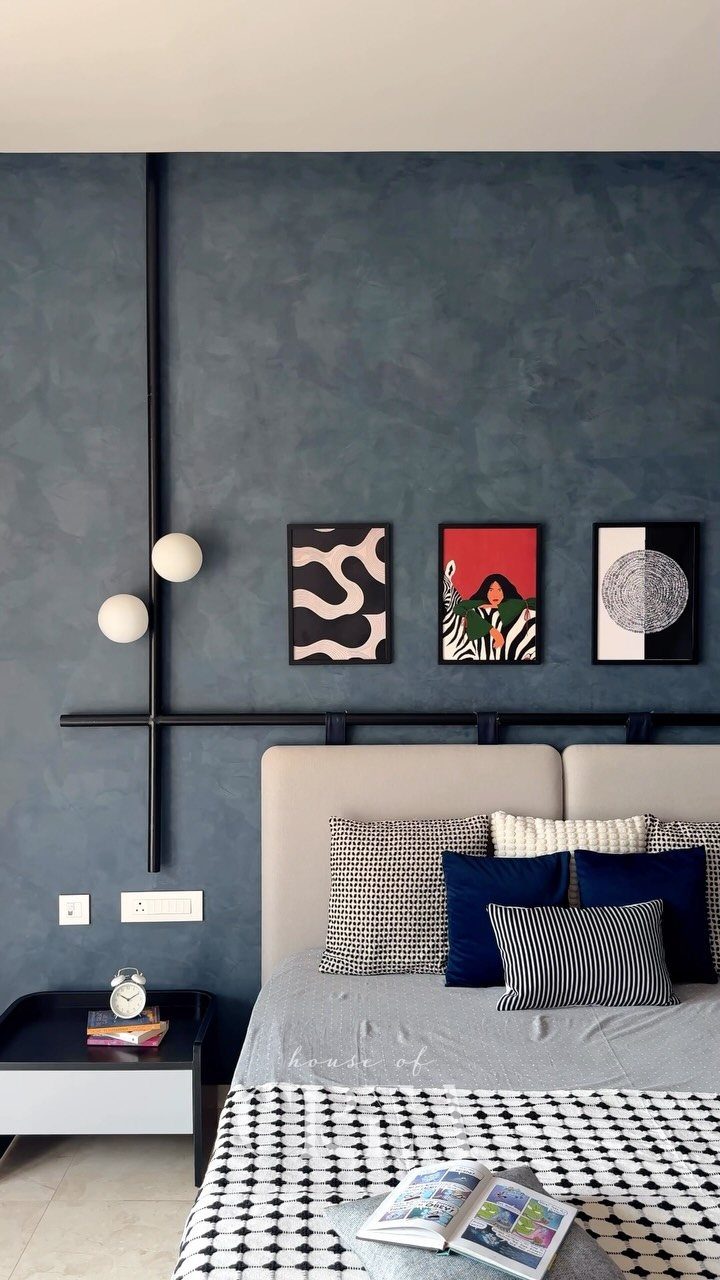
A trio of small, colorful art prints breaks up a dark blue wall and keeps the room from feeling too restrained. Bright colors in framed artwork contrast with saturated blue walls without clashing, especially when the headboard stays neutral.
A few patterned throw pillows pick up tones from the art, which ties the bed into the wall without repeating the same blue everywhere.
This works best when the art has enough color variation to stand out against the backdrop. If the room leans heavily into blue and black, a pop of orange, yellow, or pink in the artwork adds energy.

Black Blue Birthday Decorations: This black blue party decorations set includes a total of 33 items, featuring 16in black HAPPY BIRTHDAY foil balloon (1pc), 10in deep blue and black four-pointed star balloons (2pcs), 12in matte deep blue balloons (6pcs), 12in matte black balloons (8pcs), 12in matte light blue balloons (6pcs), 12in blue confetti balloons (4pcs), 18in deep blue heart foil balloons (2pcs), 18in black star foil balloons (2pcs), along with blue ribbon (1pc) and glue dots (1pc)
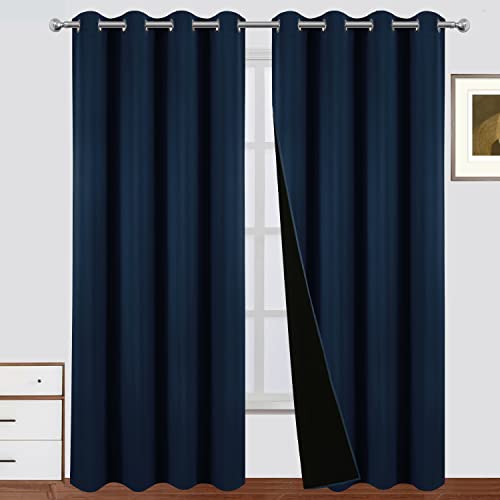
High Quality Blackout Curtains Fabric- Made of polyester fabric, these blackout curtains are soft, smooth, and long-lasting. The premium triple-weave material impede 100% light and UV ray(Darker colors more better). Perfect for bedroom, living room, or nursery.

🏠DETAILS: Size 17.5 X78.8 Inch , total 9.57 sq.ft(44.5cmX2m), Self adhesive (no extra glue needed). Made of durable vinyl, Black floral wallpaper peel and stick, Matte, Waterproof, Removable.
7. Royal-blue Upholstered Bed with Black Lacquer
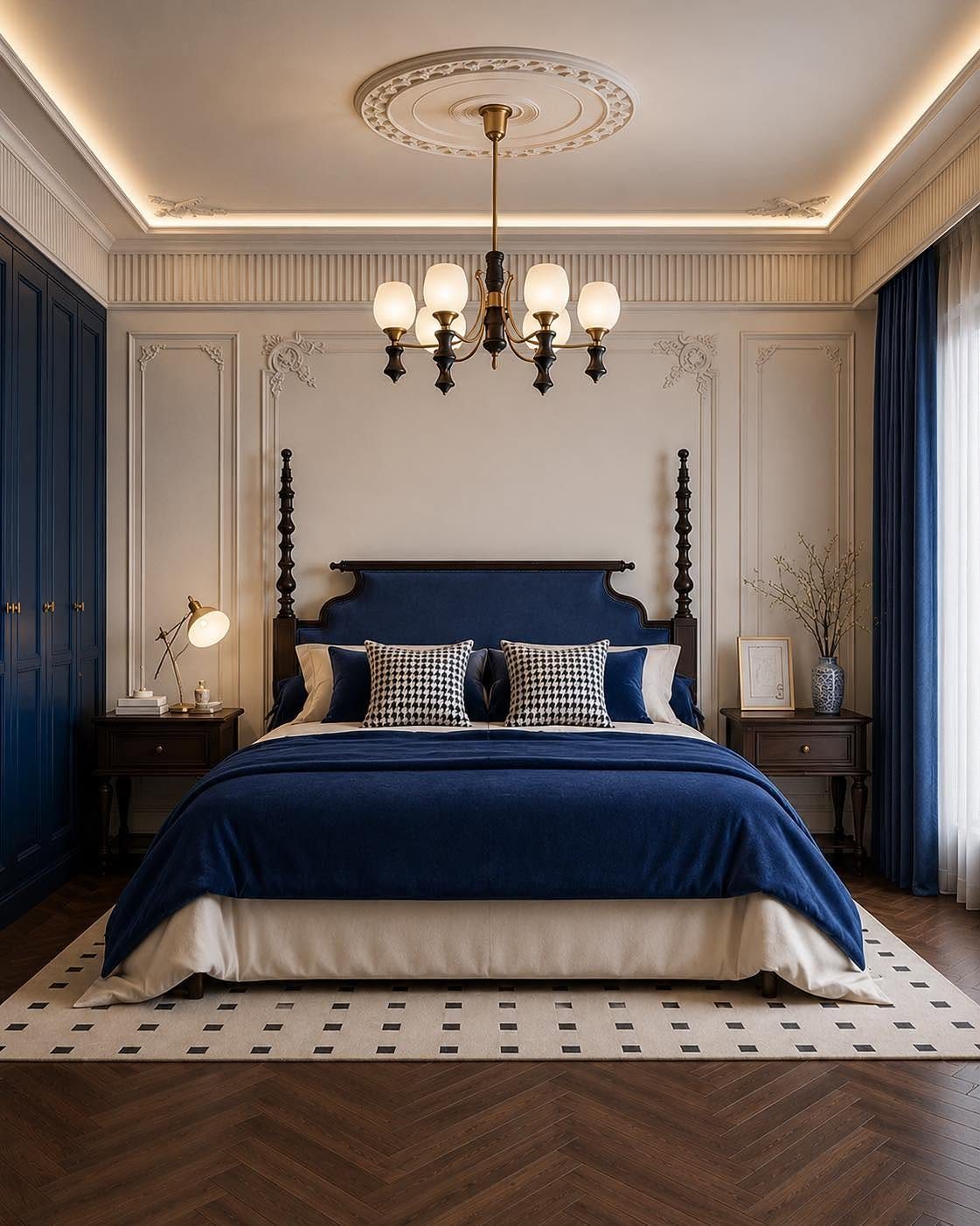
A royal-blue upholstered bed stands out when you set it against black lacquer nightstands.
The glossy finish on the black furniture catches light and keeps the darker pieces from feeling flat, while the saturated blue brings warmth into a palette that could otherwise skew too cold.
Off-white walls and a light wood floor keep the room from feeling too heavy when the bed itself is such a strong focal point.
Gold hardware or a chandelier adds a metal accent that complements both tones without introducing a third color. This setup works well in rooms with high ceilings or architectural detail, where the furniture can hold its own against the scale.

Luxury Sleigh Design: Gracefully curved sides and exquisite tufted detailing give this wingback headboard a sophisticated look. The wingback profile adds visual depth and brings an elevated focal point to your bedroom decor

ELEGANT WINGBACK HEADBOARD: Upgrade your bedroom with this upholstered queen headboard featuring a timeless wingback silhouette, hand-tufted button detailing, and nailhead trim for a sophisticated modern and classic look.

The headboard’s height can be easily adjusted to suit your preferred setup.
8. Blue Neon and Black Nightstands
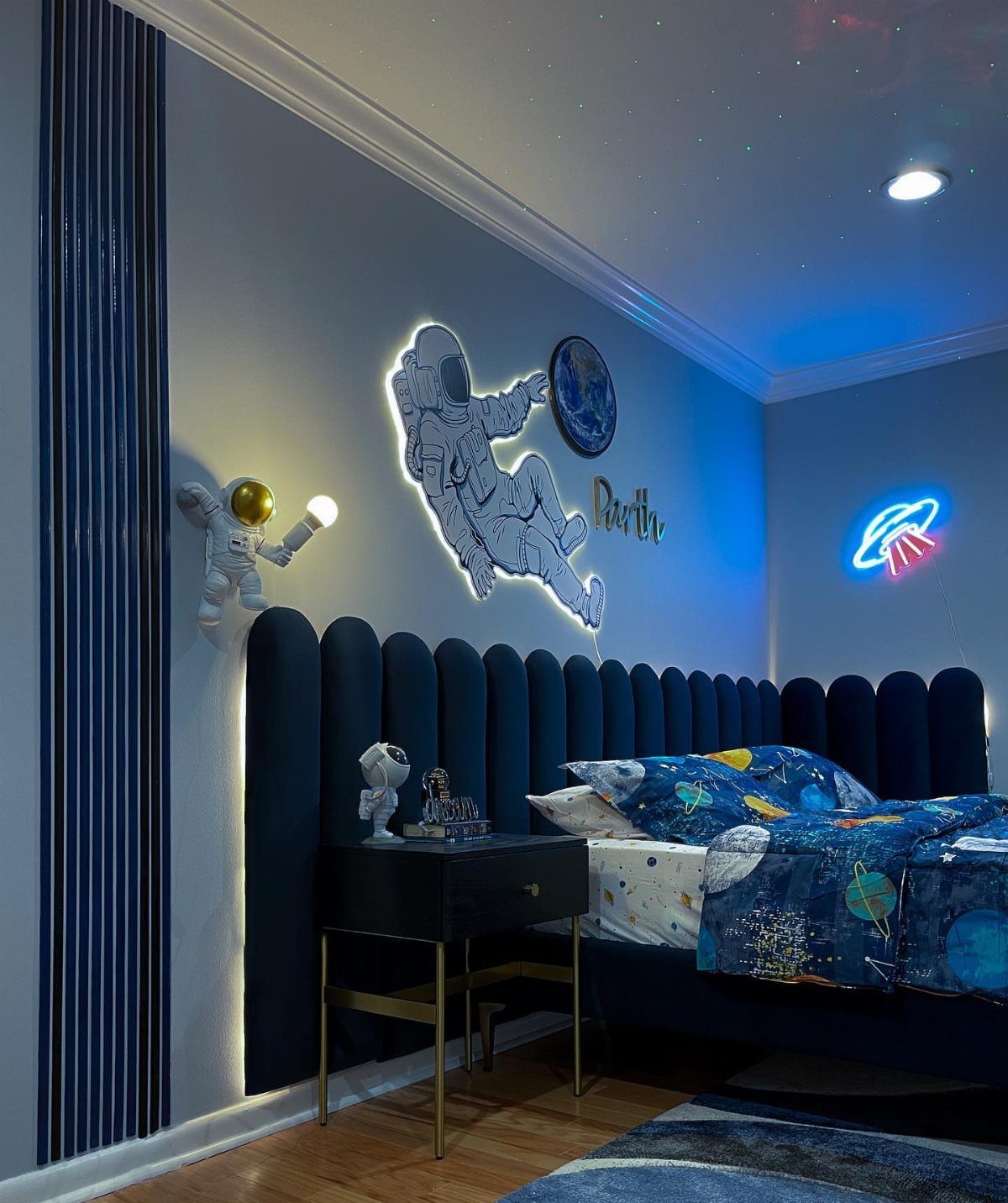
Light blue walls and a navy fluted headboard soften the contrast when you bring in a black nightstand with gold legs.
The gold lifts the black so it doesn’t feel too heavy next to the bed, and the fluted texture adds dimension without needing extra color.
Blue novelty wall lights like neon astronauts or UFOs turn the space into a themed room that still feels put together rather than cluttered.

Size & Structure Single panel 24x36 inches with 1.35-inch depth, stretched canvas mounted in a sleek black floater frame, ready to hang

GALLERY WRAP: Our Gallery Floating Frame Canvas prints are made of high-quality cotton poly blended canvas, printed to perfection, and hand made with vintage solid frame. It comes with included hanging hardware making the print art easy to mount.

Size:12x26inchx2panel, 12x35inchx2panel, all 4 panels.
9. Blue LED Accent Lighting
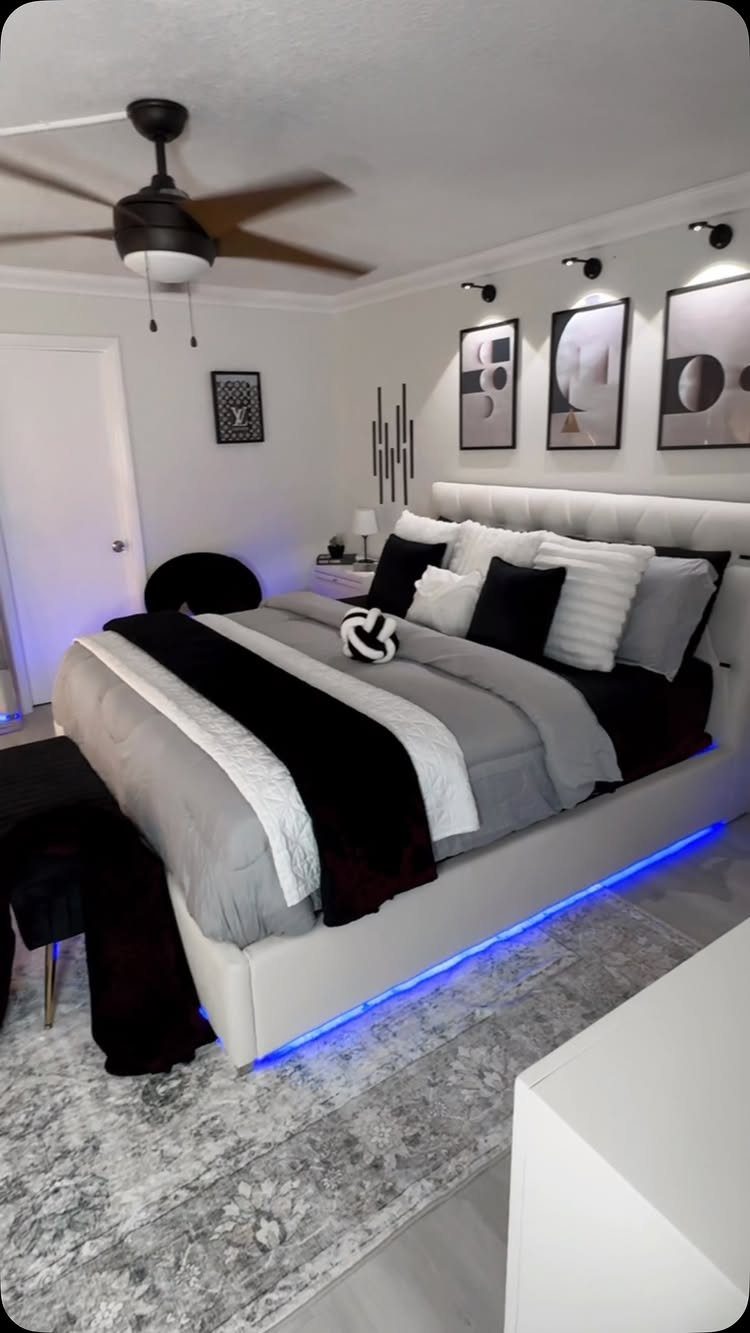
Blue LED strips tucked under the bed frame add a glow that lifts the furniture off the floor and keeps a black-and-grey palette from reading too flat.
The light washes across the floor in a way that feels modern without needing colored walls or bold bedding.
White walls and a simple bed frame let the lighting do the work, and black wall art ties the darker tones together.
If the room skews minimal, this gives you color and interest without committing to paint or patterned textiles. The strips are inexpensive and easy to install, which makes them a low-commitment way to test the palette.

Fluted Modern Design: This nightstand have distinctive waveform fluted panel ,which adding a modern and visually appealing touch to your bedroom decor.The wide metal handles and wooden legs of the bedside table add a modern touch
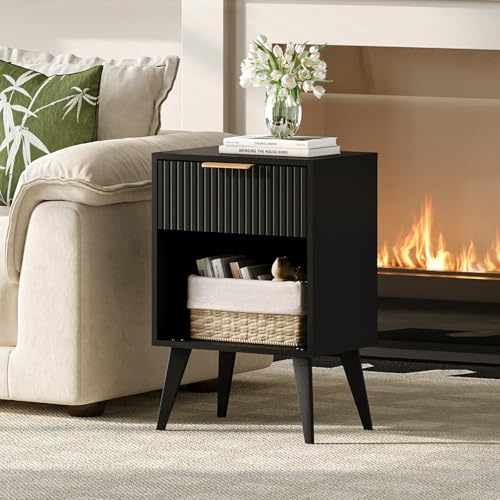
Fluted Modern Design: This fluted nightstand have distinctive waveform fluted panel ,which adding a modern and visually appealing touch to your bedroom decor.The wide metal handles and wooden legs of the bedside table add a modern touch

CLEAN LIFT-TOP PROFILE: This set of 2 night stands features a modern box silhouette with a lift-top compartment and balanced lines that suits bedrooms, guest rooms, apartments, and dorms, making the nightstands both versatile and space-friendly
Balance Darkness with Light
Light bedding offsets dark walls without fighting them. Soft blue or white linens against a black headboard keep the room from closing in, and layered textures like chunky throws or crisp cotton sheets add dimension without introducing more color.
A mirror opposite a window or one lighter wall reflects enough light to keep the space from feeling flat when the room is small.
Matte finishes on deep blue walls absorb light instead of bouncing it around, which can make the walls feel like they recede.
Ambient, task, and accent lighting at different heights prevent any one corner from disappearing into shadow. Warm LEDs around 2700K to 3000K keep the palette from skewing cold.

Distinctive Wine-Glass Silhouette: This wall sconce features a refined wine–shaped seeded glass shade paired with a smooth electroplated copper top and matte black arm. When illuminated, the bubbles in the glass create a warm, sparkling glow that enhances hallways, vanities, and reading corners—an eye-catching black and gold wall sconce for modern homes.

Timeless Elegance: Elevate your space with this stunning chandelier, featuring a sleek black metal frame accented with elegant gold details. The gracefully curved support arms add a touch of sophistication, while transparent glass shade creates a visually open and airy feel, making it an ideal choice for kitchens, dining rooms, foyers, or living spaces.

Premium Lampshade: RORIANO bedroom lamp skillfully incorporates a grid pattern design on the surface of the lampshade, adding a sense of visual hierarchy and making the lamp both exquisite and elegantly simple. The black lampshade emits warm and even light, creating a cozy and inviting lighting atmosphere.
Choose and Test Blue Shades
Blue with enough gray in it holds up better in a bedroom than a bright primary tone, because it reads calmer and pairs more easily with black or charcoal.
Navy, indigo, and muted teal all work, but check the undertone in your room’s light before you commit. A warm blue leans slightly green or gray; a cool one skews purple.
Place large paint samples on the wall and look at them over a few days in morning light, afternoon light, and lamplight.
The color will shift each time, and you want to know what it does before the whole room is painted.
If you’re using more than one shade of blue, range from light to deep and let black define the edges through frames, lamps, or furniture legs. The contrast keeps a monochromatic palette from blurring together.
Plan Lighting and Layout
Furniture placement matters more in a dark room because shadows hide mistakes. Check that walkways stay clear and that you can reach a bedside lamp without leaning over the bed.
Ambient light from a ceiling fixture, task light at the nightstand, and accent light from a wall sconce or floor lamp give you control over how much of the room you light at once.
Warm LEDs between 2700K and 3000K keep the space from feeling clinical, and small reflective accents like brass drawer pulls or a glossy lamp base bounce light without adding a new color.
If you have access to a 3D planner, test the layout and lighting before you buy anything permanent. It catches glare and dead zones early, which saves time when the furniture arrives.
Frequently Asked Questions
Should you paint your bedroom blue?
Blue works well in bedrooms when you pick a shade with enough gray to keep it calm rather than bright.
A matte finish on deeper blues makes walls appear to recede, which can actually open up a small room instead of closing it in.
What colors go with blue in a bedroom?
White, cream, and beige all soften blue and keep the palette from feeling too heavy, especially when you’re working with navy or deeper tones.
Black adds definition through furniture legs, frames, or lamps without competing with the blue. Warm metals like brass or gold lift the contrast and add warmth where blue and black might otherwise skew cool.
Does a blue and black bedroom have the potential to feel overly dark?
It will if the room lacks lighter finishes and every surface stays matte.
Which shades of blue pair best with black?
Navy, indigo, and muted teal hold up better than bright primary blues because they read calmer and pair more easily with black or charcoal.
Blues with enough gray in them work in bedrooms where you want the space to feel restful rather than energetic.
Test large paint samples in your room’s light over a few days to see how the undertone shifts before you commit to the whole wall.
Can I incorporate patterns without making the space feel cluttered?
Limit patterns to 1 wall or 2 to 3 elements like a wallpapered accent wall, patterned pillows, and a checkered bed skirt.
When the pattern stays on the wall behind the bed, keep the bedding simple so the room has a clear focal point. Repeat 1 or 2 colors across the patterned pieces so they tie together instead of competing.
What fabrics work best with a black and blue theme?
Matte linens and textured cotton keep the bed from looking too slick, while a velvet headboard or throw adds richness without needing extra color.
Mixing matte and subtle sheen, like pairing cotton sheets with a silky pillowcase, gives you contrast in texture that keeps a dark palette from reading flat. Performance fabrics simplify maintenance if you’re worried about keeping white or light bedding clean.