
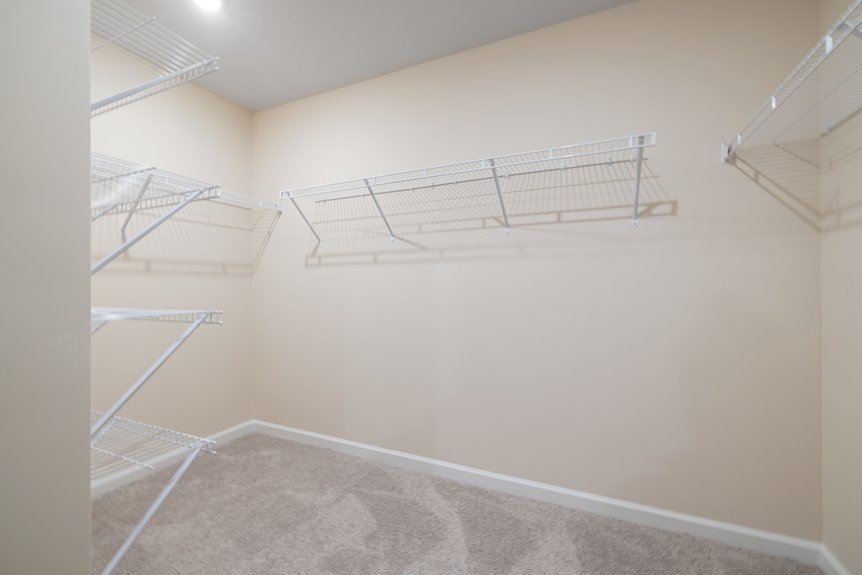
I anchor my closet design to an 84-inch top shelf for seasonal or rarely used items, then build downward based on what I wear daily. I keep rods at 66–72 inches for adults, drop them to 30–48 inches for kids, and maintain 2 inches of clearance above each rod for smooth hanger access.
I zone my space into upper (above 72 inches), middle (36–72 inches), and lower (below 36 inches) sections, placing frequently used items within easy reach. The rest of my system adapts from these core measurements.
Start With the 84-Inch Top Shelf Standard
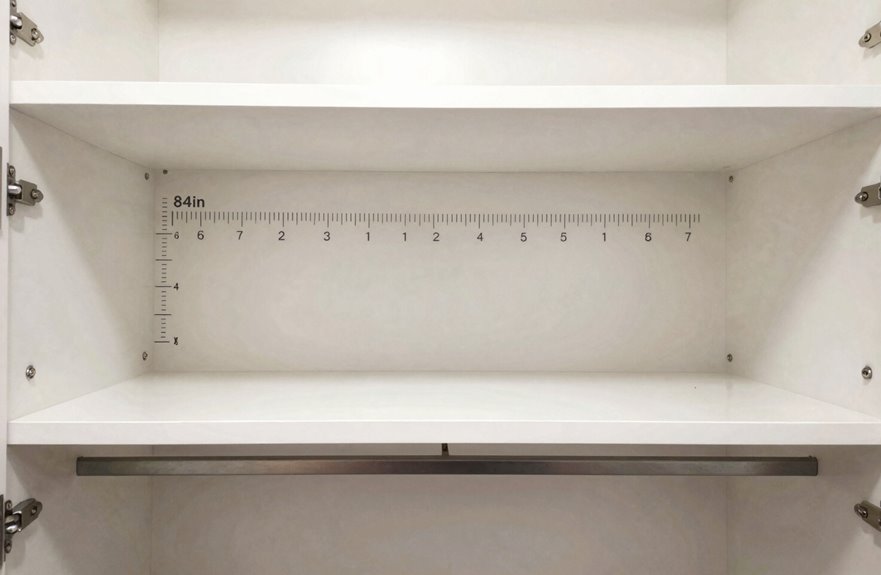
Where should you begin when planning closet storage? Start with the 84-inch top shelf standard. This closet shelving height sits at roughly seven feet, providing standard storage for items you don’t access daily.
Before drilling anything, measure the ceiling height to ensure your top shelf actually fits. It’s crucial to avoid planning an 84-inch shelf only to encounter unexpected molding.
Adjust for your body to create a functional space. If you’re shorter, lower the shelf to 78–80 inches for a reach-adjusted height that works. Taller individuals can opt for 88–90 inches. Easy access shelving is about creating a space that suits your needs. Your closet should accommodate you, not a generic standard.

WOOD CLOSET SHELF: Add on shelf for SuiteSymphony custom closet system or use on its own

SPACE-SAVING HORIZONTAL FIT: This clothing closet storage unit uses a low, rectangular 6-cube layout that fits neatly in bedroom, closet, or laundry room, making organization easier without taking over floor space. The closet organizers and storage design keeps items spread across a horizontal profile so it works especially well for small space setups

Expandable: 40.5” - 73” L x 12' D x 10.5’ H – White - Closet Rod with Hanging Shelf - Installs Between 2 Side Walls in Minutes Without Cutting or Complicated Measuring
Know Your Closet Type Before Setting Any Heights
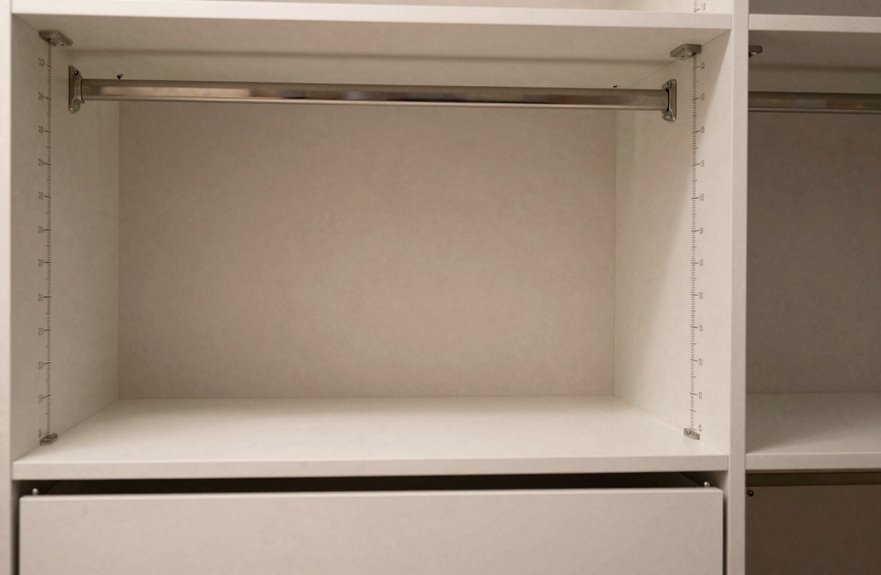
I can’t apply the 84-inch standard blindly because each closet type demands its own approach. Reach-in closets require me to maximize vertical space with a high shelf, while walk-ins allow me to zone areas for long hanging and folded items. Wardrobes present a challenge with their fixed heights, so I must plan around the specific interior dimensions I have.

ClosetMaid Support for SuperSlide Hanging Bar

YOUR ITEMS, YOUR WOOD – YOU SUPPLY IT: Supply 3/4" thick wood (e.g., 1x4 to 1x10 pine or plywood, sold separately) for custom-fit shelves that match your items.

WALL CLIP SET: You will receive 24 / 48 pieces of wire shelf clips, 24 / 48 screws and 24 / 48 expansion tubes, a total of 72 / 144 pieces with a storage box. The quantity is enough for you to use and replace, or share with your mates
Reach-In Closet Requirements
Why start with measurements without considering what you’re actually working with? A reach-in closet requires smart vertical space management since the depth is typically limited to 24–30 inches. Shelf depth is crucial; stick to 12–16 inches so you can reach what you store.
For rod height, position the lower rod around 66 inches, with a top shelf height near 84 inches to maximize vertical space. When adding shelving above rods, maintain at least 2 inches of clearance above the rod to avoid interference with your hangers. For folded items, start shelving around 42 inches with 12–15 inches between tiers. These are flexible guidelines; adjust based on your height. Together, they can transform cramped reach-ins into functional spaces you will use.
Walk-In Closet Zoning
How do you turn a walk-in closet from a catch-all dumping ground into a functional space? Walk-in zoning makes all the difference. I start by mapping three zones: upper above 72 inches, middle at 36–72 inches, and lower below 36 inches.
I place my top shelf at 84 inches for seasonal items, keeping rod height at 66 inches with 2 inches of clearance above. For double hanging, I stack rods at 40 and 80 inches to maximize hanging space. My mid-level shelves begin around 42 inches with 12–15 inch spacing for folded items.
Adjustable shelving is essential because needs change over time. Lower zones are ideal for footwear storage. This zoning approach transforms my walk-in into an organized system where everything has a designated place.
Wardrobe Constraints Consideration
What distinguishes your closet setup determines every measurement you’ll make. I’ve learned that wardrobe constraints are opportunities to create a space that fits your life.
Your closet rod heights depend entirely on your garment collection. I position single rods at 66 inches for dresses and coats, while double-rod systems place the upper at 80 inches and lower at 40 inches, maximizing hanging space for shirts and pants. Long garments need roughly 70 inches to clear the floor.
Shelf heights vary by closet type. Reach-ins favor 84-inch top shelves, utilizing vertical space, while walk-ins balance zones around 80 to 84 inches. I ensure at least 2 inches of clearance above the rod for smooth hanger removal.
Adjustable shelving transforms rigid storage height into flexible solutions. Whether organizing a compact wardrobe or spacious armoire, adaptable systems accommodate your changing needs.
Reach-In Closet Shelving: Prioritize Vertical Space
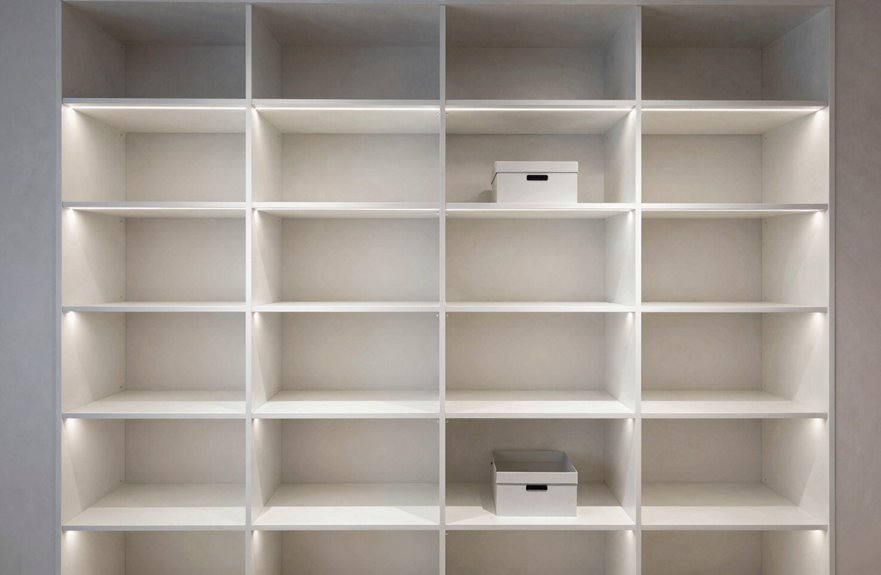
Where should you focus your attention when organizing a reach-in closet? It’s essential to master vertical space. In my reach-in closet, I set the top shelf height around 84 inches, position a single rod height near 66 inches for hanging clothes, and start folded-clothes shelves at roughly 42 inches. I place closet shelving just 2 inches above the rod so hangers slide smoothly. I keep shelf depth between 12–16 inches and rely on a modular system that adapts to changes.
I organize three zones: above 72 inches for seasonal storage, 36–72 inches for daily wear, and below 36 inches for shoes and bins. My shoe shelving starts 6–7 inches up with 7–10 inch spacing.
Build upward, not outward; your walls hold the solution. Adjust as life changes; flexibility keeps you organized. Every inch belongs to you when you plan with intention.

Stepless Adjustment Closet Rod: The upgraded Supforce closet rod features the stepless adjustment design, allows you to precisely adjust according to your closet's specific size; Without any size gaps, No manual cutting is required.

Instantly Double Your Storage: Transform unused vertical space into a second tier to maximize capacity in small closets, dorms, and apartments

Instantly Double Your Storage: Transform unused vertical space into a second tier to maximize capacity in small closets, dorms, and apartments
Walk-In Closet Zoning: Heights by Function and Frequency
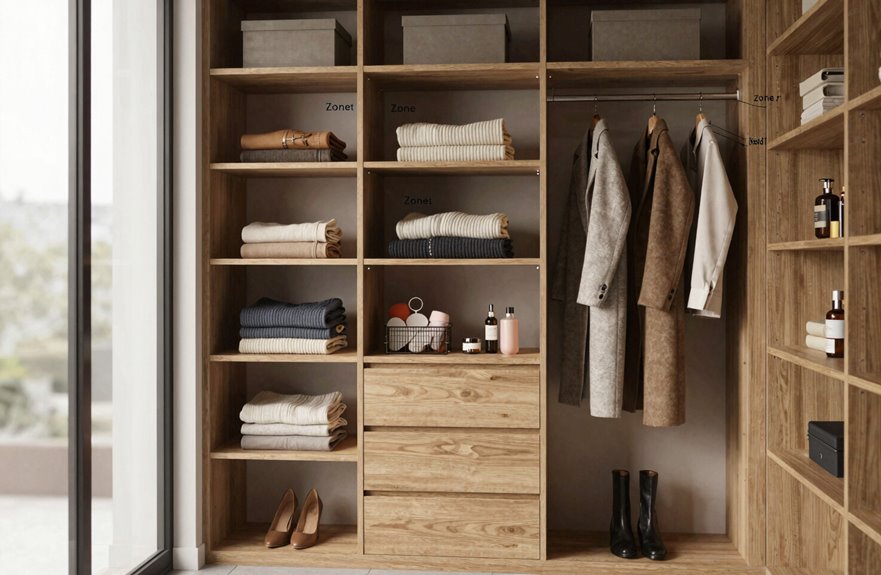
Why settle for a walk-in closet that merely stores clothes when I can build one that works seamlessly with my daily routine?
I will start walk-in closet zoning by dividing my space into three clear bands. My middle zone, between 36 and 72 inches, holds everyday pieces I frequently access. I set closet rod heights at 40 and 80 inches on double-rod walls for shirts and pants, while reserving a single rod near 70 inches for longer coats and dresses.
My upper shelf sits at 84 inches with 12 inches of clearance, ideal for seasonal storage that I rarely need to reach. Below 36 inches, my lower zone keeps shoes and bins easily accessible. I am choosing adjustable systems so I can shift shelf height as my wardrobe changes, ensuring every inch has a purpose in my morning routine.

Massive 59" Family-Sized Capacity Rods – Say goodbye to cramped closets! While ordinary hanging rods stop at a flimsy 39", our 4 ultra-long expandable rods stretch to a staggering 59". Plus a extra middle short rod (5 RODS TOTAL!). This open wardrobe offers monstrous space for heavy winter coats, long dresses, and your entire family's seasonal gear. (Pro tip: Keep an 8" overlap for rock-solid, wobble-free stability!)

【Expandable Unique Design】Our closet shelf can extend its length from 16.81 inches to 28.74 inches, making it suitable for different usage scenarios. You can adjust the shelf width to fit your space and maximize storage. Neatly organize the cluttered items in your closet, such as off-season quilts, shoeboxes, and other storage containers.

Simply Modern, Seamless Fit: The CUSTOS Collection pairs crisp right‑angled lines with handy open storage to create a minimalist look that fits easily into your home. Complete your space with matching storage furniture for a cohesive look
Set Rod Height to Your Longest Garment
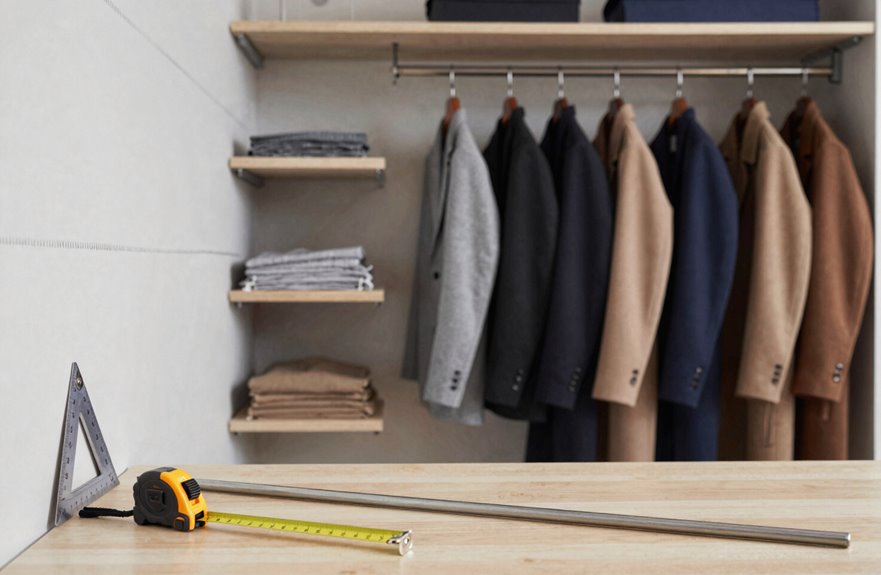
I start by measuring my longest coat or dress to determine where to place the rod, since hanging it at 70–72 inches keeps everything off the floor and wrinkle-free. If I’m working with a double-rod system, I’ll set the upper rod around 80 inches and the lower at 40 inches to separate long and short items efficiently. For reach-in closets, I balance that 66-inch standard height against my actual garment lengths to ensure nothing bunches or drags.

IMPORTANT: PLEASE READ BEFORE PURCHASING - These wire shelf dividers are 16 inches wide x 12 inches high and are designed specifically for 16-inch deep wire shelving. Be sure to measure your shelves before ordering to ensure a proper fit.

IMPORTANT: PLEASE READ BEFORE PURCHASING - These wire shelf dividers are 16 inches wide x 12 inches high and are designed specifically for 16-inch deep wire shelving. Be sure to measure your shelves before ordering to ensure a proper fit.

MAXIMIZE VERTICAL SPACE: When you can't expand outward, build upward! These wire shelf dividers for closet organization let you stack clothes, shoes, bags, and closet organizers and storage items efficiently. Suitable for sweater organizers, purse organizers, and bag divider organizers
Standard Rod Placement
How do you avoid dresses pooling on the floor or pants dragging in your closet? I measure my garment length first, then set my closet rod height accordingly.
For single rods, I mount at 66 inches to the center, which works well for long coats and dresses. When using a double-rod system, I place the upper rod height around 80 inches and the lower rod height near 40 inches. This arrangement creates efficient zones for shirts above and pants below. If I’m adding shelving above the rod, I ensure at least 2 inches of clearance for easy access. This process involves careful planning to create a functional space.
- Measure twice, hang once; your tallest piece dictates all.
- Give your clothes breathing room so they last longer.
- Build systems that enhance your daily routine.
Double Rod Options
Single rods work well for long coats and dresses, but most of us own far more shirts and pants that don’t need that much vertical space. Double rods are essential for smart closet organization.
I position my upper rod at about 80 inches and my lower rod around 40 inches from the floor. This setup doubles my hanging space while keeping everything accessible. I set my shelf height at approximately 84 inches above the floor, just above the upper rod.
When planning hanging height, I ensure my longest garments still get 70–72 inches of garment clearance so nothing drags. I leave at least two inches above each rod for smooth retrieval.
For reach-in closets, this 40/80-inch double rod configuration transforms wasted vertical space into usable storage.
Long Item Clearance
Where do your longest coats and dresses need to hang? I recommend hanging mine at 70–72 inches for proper long item clearance. Your closet rod height should align with your longest garment hang height to prevent floor-dragging. For shelf height spacing above, I always allow a minimum clearance of 2 inches above the rod to keep everything moving freely.
I choose 66 inches for single-rod systems when I want versatility with floor space below. I reserve the upper rod at 70–72 inches in my double-rod configuration for coats and gowns. I measure twice, as respecting what you own is essential.
Whether you are refining a single-rod system or optimizing a double-rod configuration, honoring your longest pieces helps create a closet that fits your life.
Double-Rod Systems: Shelving Heights Above and Below
When designing a double-rod closet system, I anchor my measurements around two critical heights: the upper rod at 80 inches and the lower rod at 40 inches. This double-rod setup creates two efficient hanging zones that maximize closet height without wasting space.
I position the upper rod for shirts and blouses, while the lower rod accommodates pants and longer pieces. For proper garment length clearance, I ensure at least 70 inches for floor-length items. My shelf placement follows naturally with a top shelf at 84 inches, and mid-level shelving between 42 and 72 inches fills the gap. I always leave 2 inches above the upper rod for hanger clearance. This configuration transforms your hanging space into an organized system where everything has its place.

Expandable: 28” - 48” L x 12' D x 10.5’ H – White - Closet Rod with Hanging Shelf - Installs Between 2 Side Walls in Minutes Without Cutting or Complicated Measuring

Expandable: 63.3” - 118” L x 12' D x 10.5’ H – White - Closet Rod with Hanging Shelf - Installs Between 2 Side Walls in Minutes Without Cutting or Complicated Measuring

DOES THIS FIT MY SPACE?: Fits any closet or wall with 6.5-8 ft. of horizontal space.
Adjust All Heights for Who Uses the Closet
Standard measurements work well as a starting point, but I always adjust them to fit the users of the closet. I set rod height at 66 inches for adults or drop it to 30–48 inches for kids. Adjustable shelves allow me to modify shelf spacing as needs change, ensuring user access is intuitive. I place frequently used items between 36 and 72 inches so everything is within reach.
- Your closet heights should accommodate every family member.
- Adjustable shelves adapt over time, creating a space that evolves with your life.
- Accessibility in design ensures everyone feels included, regardless of height or mobility.
For mixed garment storage, I combine single rods and double rods. I limit reachable shelf height to 54 inches for true accessibility and leave 2 inches above rods for smooth access.

High-quality Material: Quality steel construction ensures durability and long-lasting use with a sleek white finish for a modern and versatile look

【Triangle & Standard 90°Bending】The closet rod brackets with triangle structure, enhance load-bearing capacity and stability, bright powder coating, bring a new visual experience, Standard 90°ensure items stay level and don't tip over

YOUR ITEMS, YOUR WOOD – YOU SUPPLY IT: Supply 3/4" thick wood (e.g., 1x4 to 1x10 pine or plywood, sold separately) for custom-fit shelves that match your items.
Space Shelves by Item Type, Not Guesswork
How do I keep a closet from becoming a jumbled mess? I stop guessing and start planning by item type.
Smart space planning means matching every shelf height and rod position to what I’m actually storing. I use closet rods at 80 inches for shirts and 40 inches for a second row of folded pants, effectively doubling the hanging space without expanding the footprint. For folded items, I start shelves at 42 inches with 12–15 inch gaps. Shoes sit low at 6–7 inches, while boots need 12–14 inches.
| Item | Shelf Height | Spacing |
|---|---|---|
| Shirts/blouses | 36–40″ hanging | — |
| Dresses/coats | 60–70″ hanging | — |
| Folded clothes | 42″ start | 12–15″ |
| Shoes/boots | 6–14″ | 7–10″ |
I appreciate adjustable shelves for evolving needs. Item-specific storage offers flexibility. By prioritizing accessibility and keeping essentials within 30–48 inches, my closet effectively serves my lifestyle.

【Upgrade Adjustable Width & Height】The width range is from 17 to 29 inches, and the height range is from 14.6 to 37.1 inches. The user-friendly design has six adjustable heights, which can maximize the unused space beneath hanging clothes. Dimensions: 37.1"H x 29"W (Fully Expand)

Heavy Duty Closet Rod - Our closet rods have a superb weight capacity of up to 60 lbs, creating a solid, worry-free storage space for you. The closet hanging rod are made of high quality stainless steel and forged with precision craftsmanship so you don't have to worry about warping or breaking.
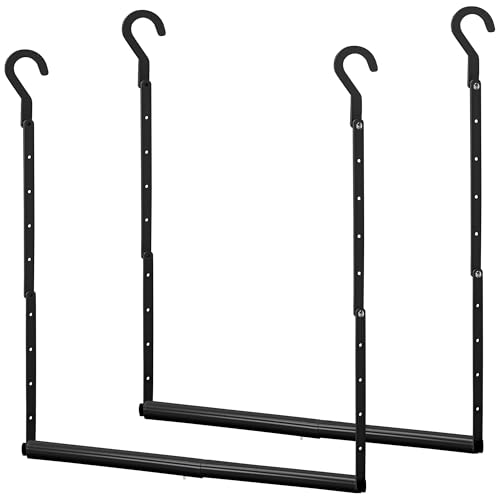
【PATENTED DESIGN: Upgraded Adjustable Width & Height】The width range is from 17.9 to 29.7 inches, and the height range is from 9 to 37.8 inches. The user-friendly design features hand-tightened screws with 9 adjustable height levels, accommodating various storage needs. Upgraded Foldable Design - the upper and lower sections fold to overlap, with holes that align perfectly, making it ideal for small closets. Dimensions: 37.8"H x 29.7"W (Fully Expand)
Lower Closet Shelving Heights for Kids’ Reach
Why should kids struggle with grown-up closet heights? I design spaces where children feel capable and included.
I set lower rod heights between 30–48 inches for true kid-friendly reach. I maintain at least 2 inches of shelving clearance above rods so little hands can grab without frustration. I rely on adjustable shelving because kids grow quickly, and their middle zone, 36–72 inches, needs to evolve with them. I place shoe storage just 6–7 inches off the floor, promoting independence through easy access to their own belongings.
I organize three vertical zones: below 36 inches for daily favorites, 36–72 inches for everyday wear, and above 72 inches for out-of-season items they cannot reach yet.
When kids succeed on their own, they build lasting confidence. Shared spaces become areas where every family member belongs. Small adaptations today prevent daily struggles tomorrow.

MODERN MINIMALIST DESIGN: This 3-tier closet organizer uses a clean open-shelf layout to enhance closet organizers and storage in wardrobe closets, bedrooms, and living spaces, making the closet organizer practical and space-saving

【Sturdy and Durable】The heavy duty hanging closet organizer is made of metal with a smooth powder-coated coating, which not only protects the wall-mounted closet organizer shelves from wear, rust, and corrosion but also keeps your clothes from getting scratched. Each floating shelves can support up to 66 pounds, and the closet hanging rod can securely hold 15-20 items of clothing. Each connection point on the closet shelf organizer is reinforced with metal screws to ensure long-term use.

Five shelves per tower with plastic shelving liners included
Entry and Coat Closet: Taller Rod Exceptions
Where do bulky winter coats go when standard heights won’t cut it? I raise the closet rod height in my coat closet to 66–70 inches, giving those puffy parkas room to breathe without dragging on the floor.
I always add a shelf above the rod at around 80 inches. This upper storage keeps hats, gloves, and scarves within easy reach while preserving that valuable hanging space below. Cramped coats can lead to wrinkled mornings.
I leave at least 2 inches of clearance between the rod and shelf so I can slide hangers smoothly without catching. This small detail enhances usability.

【Space-Saving Deep Wall Shelves】Our stylish 12 inch deep floating shelves (Solid Wood Shelf Size: 16" x 12") look rustic yet modern, are a great addaition if you need extra storage space or if you want to add wall decor – indoor plants, artworks, picture frames etc. These deep wall shelves can free up floor & counter spaces and make places much tidier and neater in your pantry, closet, kitchen, bedroom and laundry room.

Deep Floating Shelves - Measuring 16 inches wide and 12 inches deep, our wall shelves are widened to add additional storage and display space, perfect for use as bookshelves or floating nightstands
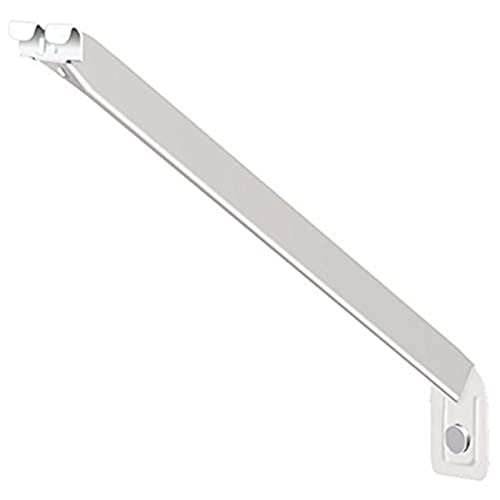
BRACKETS FOR WIRE SHELVES: Support brackets for ClosetMaid wire shelves; Supports front area of shelving for fixed mount installation (additional wall clips for installation sold separately)
Pick Shelving That Grows With Your Wardrobe
I recommend installing adjustable shelf systems so you can move shelves up or down as your wardrobe changes over time. I organize my closet into three flexible storage zones: the upper zone for seasonal items, the middle for everyday wear, and the lower for shoes and bins. This setup keeps everything accessible as my needs evolve. I always leave a couple of inches above rods when adding overhead shelving, which provides room for longer garments and future adjustments.
Adjustable Shelf Systems
Adjustable shelf systems allow you to adapt your wardrobe without extensive renovations. I recommend starting with track systems that support modular shelving, enabling you to adjust shelf spacing as your needs evolve. Most reconfigurable closet designs utilize standard shelf increments, typically 12–16 inches, to accommodate everything from folded sweaters to shoe bins.
When planning adjustable shelving, I begin with a top shelf at 84 inches and mid-level shelves between 42–72 inches, then adjust around the closet rod height as seasons change. Before making any commitments, I test layouts with painter’s tape to visualize the flow.
- Your closet evolves with you.
- Small changes today can prevent costly renovations tomorrow.
- A space that adapts helps you stay organized through every life chapter.
Flexible Storage Zones
Building on adjustable systems, I map storage zones that flex with my wardrobe over time. I use adjustable shelving to create flexible zones that shift as my needs change, moving 42-inch folded-item shelves higher when seasonal storage demands it.
I partition hanging space with mixed closet rods: one around 66 inches for shirts and another at 40 inches for pants. This mixed approach accommodates my growing collection.
I plan three levels of vertical zoning: above 72 inches for rarely used items, 36–72 inches for daily wear, and below 36 inches for shoes and bins. I start my top shelf at 84 inches, space folded-item shelves 12–16 inches apart, and add 6–12 inch shoe shelves at the base.
I choose track systems and modular storage so everything can be reconfigured without remodeling. My closet will adapt as my needs evolve.