
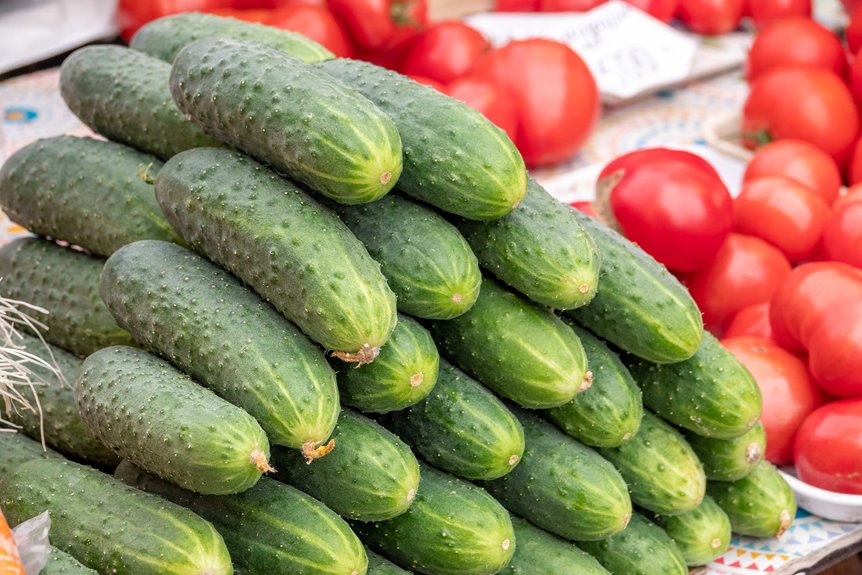
I’ve used tomato cages for cucumbers, and they can work in a pinch, though they are rarely ideal. These vigorous vines tend to outgrow the short, narrow frames designed for bushier tomato plants, often buckling under heavy fruit loads or tipping over entirely. You’ll encounter cramped foliage, poor airflow, and fruits snagging on wire sides. If you find yourself using cages, I will show you how to improve their effectiveness and what better options are available.
Why Tomato Cages Usually Fail Cucumbers
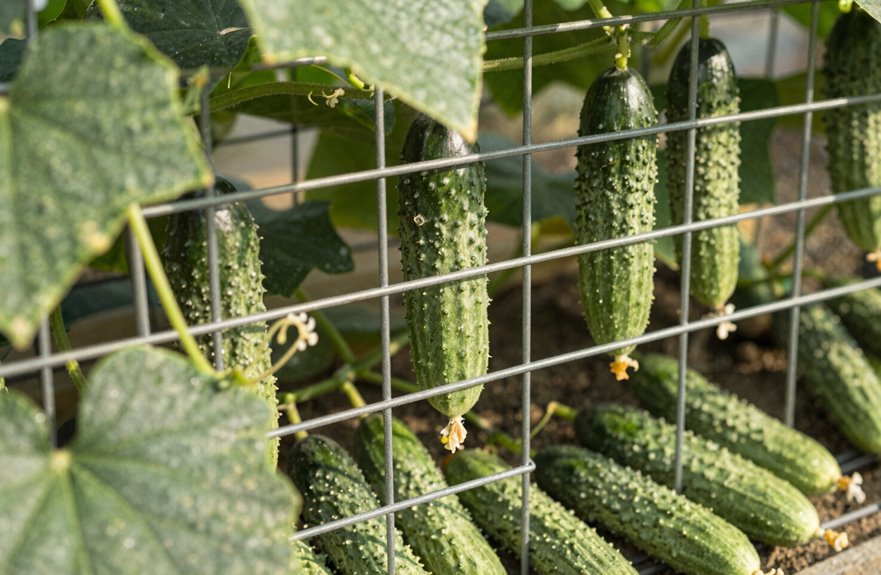
While I understand the appeal of repurposing garden equipment, I have found that tomato cages typically fall short for cucumbers. Many of us have tried it, hoping to save space and money, but cucumber vines often outgrow these structures.
I have seen my tomato cages buckle under the weight of developing fruit. They lack the height and stability that vigorous cucumber vines require. When I attempted to force my plants upward, the cages became top-heavy and wobbled.
The restricted space is also problematic. Thick foliage crowds inside the wire, blocking airflow and trapping moisture. Fruits snag on the sides instead of hanging freely.
For true success, nothing replaces a proper vertical trellis. Most cucumber varieties need five to six feet of climbing room, which is far beyond what standard tomato cages provide.

Support Strong Growth - Unique net designed, intertwined to support strong growth of plants. 10x10cm mesh allows you to hold plants tight, avoid tangled and dropped. In the meantime, you can also harvest some beautiful plants and a joyful time.

【Extra-Large Height & Space for Climbing Plants】Standing at 65 inches tall—3 inches higher than standard versions—this trellis provides generous vertical space for vigorous climbers. The 51×17.7-inch frame with dense netting ensures even plant distribution and maximum sunlight exposure, effectively improving fruit yield and quality.
How Tall Your Cucumber Support Actually Needs to Be
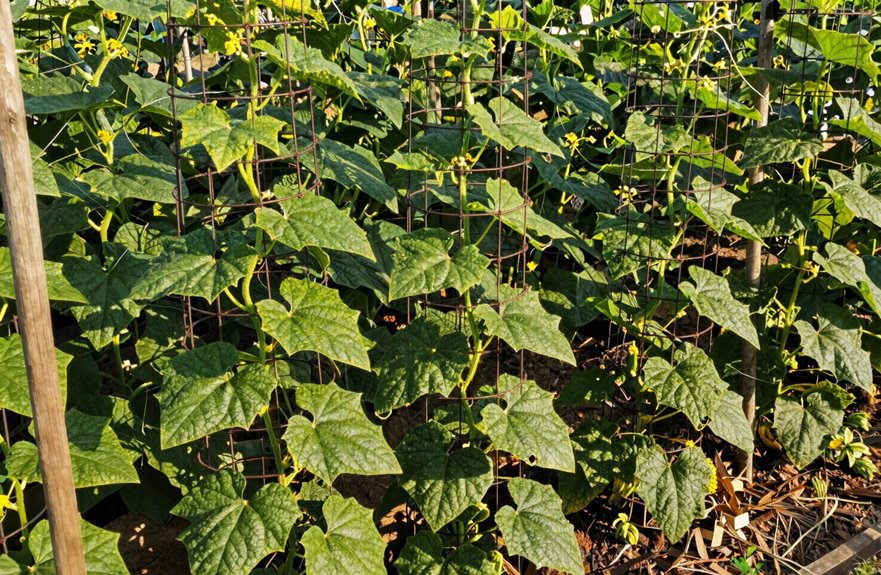
I grow most cucumber varieties upright, and I’ve found they need at least five to six feet of vertical support to keep fruit clean and plants healthy. Standard tomato cages often fall short, so I look for taller cages or reinforce them with stakes and braces as the vines get heavy. Understanding these minimum height requirements and growth habits helps me choose supports that won’t collapse under the plant’s weight or limit its growth potential.

Trellis Netting Polyester Nylon: Our trellis netting is made of durable polyester nylon materials,strong and durable, not easy to break, reusable,can support extremely heavy crop loads, protect plants from damage, able to grow vertically

【Easy to Use】 The trellis netting whole size is 5 x 30 ft with 6 inch square mesh, white color, can be easily cut into the size you desire; Simply wrap and tie the netting around any stable structure or support.

✅ Heavy-Duty Elastic Build (3mm Dia): Crafted with 3mm ultra-durable elastic thread inside a tough plastic cover. Unlike brittle nets, it expands with plant growth, preventing stem cutting while supporting heavy fruits like watermelons and tomatoes.
Minimum Height Requirements
Just how high should you build your cucumber support? When I grow cucumbers, five to six feet is the ideal height for robust vertical growth. Most standard tomato cages are too low for indeterminate vines that want to climb.
When growing cucumbers, I prefer sturdy options. A tall trellis allows vines to climb naturally and keeps fruit hanging straight without bending. I’ve found that fence-post-mounted trellises or sturdy bamboo structures reaching that 5–6 foot mark work far better than undersized cages.
Always plan for two cucumbers per plant and reinforce accordingly. Investing in the right height pays off when those heavy fruits develop, and it helps prevent the need to prop up collapsing support mid-season.
Recommended Support Options
So what’s the best way to support climbing cucumbers? Most varieties need a trellis between five and six feet tall to thrive. Standard tomato cages often fall short for full-size, indeterminate cucumbers; they are better suited for compact bush varieties in containers.
If you want to use cages, a sturdier approach is advisable. Pair a tall stake with a larger or dual-cage setup to prevent top-heavy tipping. You can also secure two cages together—one inverted atop the other—to create a taller and more stable structure.
For fence-line growing, consider using four-to-five-inch square hardware cloth mounted on posts or a robust bamboo trellis. Both options provide the height and rigidity cucumbers need and enhance the aesthetic of your gardening space.
Growth Habit Considerations
Understanding your cucumber’s growth habit shapes every support decision you’ll make. Most varieties need five to six feet of vertical space to thrive, and indeterminate types will quickly outgrow standard tomato cages. My vines once toppled over, heavy with fruit and nowhere to climb.
You’ll want something tall and sturdy from the start. Train those vines upward early, and you’ll harvest straighter cucumbers with far less hassle. Many of us stack cages or invert them to reach that crucial height; it’s a simple hack that keeps our plants secure when the weight piles on. Don’t let your cucumbers sprawl on inadequate support; height is essential for a successful garden.
Vertical Support in Containers vs. Garden Beds
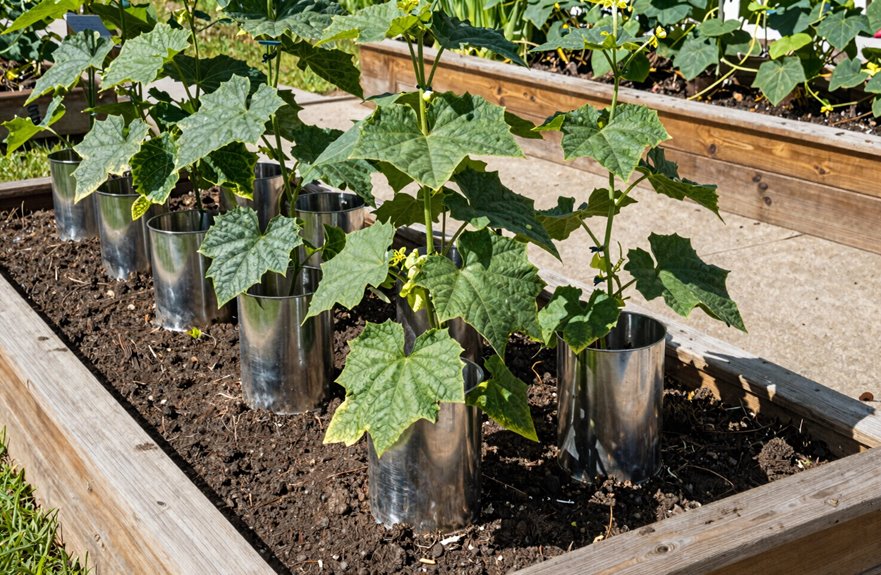
Wherever I grow cucumbers—whether in a patio pot or a raised bed—vertical support significantly contributes to keeping vines healthy and productive.
In containers, I place the cage close to the plant’s roots and weave the vines around the bars, guiding them upward as they reach for sunlight. Large cages work best in this setting; standard tomato cages often lead to struggles with floppy, overgrown vines that escape their confines.
In garden beds, I have more room to spread out, yet I still rely on sturdy, oversized cages to contain the vigorous growth. I regularly secure and adjust everything as fruits plump up and vines climb higher.
Providing cucumbers with adequate vertical support is essential for achieving a bountiful harvest.

【New generation Plant Support Cage】Different from other tomato trellis, LOMNYIY tomato support cage have the newest plug-in connection, and unique double-layer metal tube built-in interface design to stay together tighter and more stable. And the poles are very hard with a metal core, yet are coated entirely in plastic to keep them from rusting, and the heat dissipation is good. It means strong durable performance can hold up in the wind with heavy tomato plants in them.

【Rust-Proof Sturdy Tomato Cages】Built with heavy-duty thickened metal steel core (not solid metal ) and protective plastic coating. The plastic coating resists rust and prevents overheating, protecting climbing vines from scorching summer sun. Our metal square tomato stakes combine high strength and stability with a sleek, practical design, delivering long-lasting durability to support your plants.

Sturdy and Rust-Resistant: The tomato cage features a thick steel core with a weatherproof plastic coating for long-lasting. Reinforced connectors enhance stability. The green coating blends into your garden, providing strong and aesthetic plant support
How to Keep Tomato Cages From Tipping Over (If You Must Try)
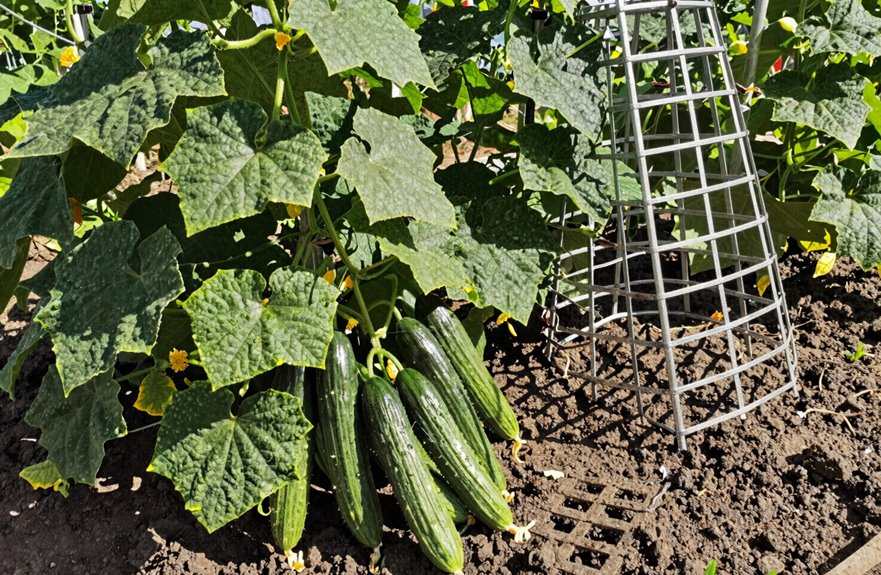
Keeping a tomato cage upright for cucumbers requires some creative reinforcement. Here are three approaches that have worked well: staking the cage deeply, using tie-downs or guy lines for extra anchoring, and even stacking two cages together for improved stability. Each method addresses the top-heavy issue differently, allowing you to combine them based on your setup needs.

STURDY PLANTS SUPPORT - Strong metal garden plants support stakes. Help plants grow straight and healthy. Prevent the plant from falling or breaking due to due to bad weather or heavy flowers and fruits. It also can be used as flower fence for any needs.
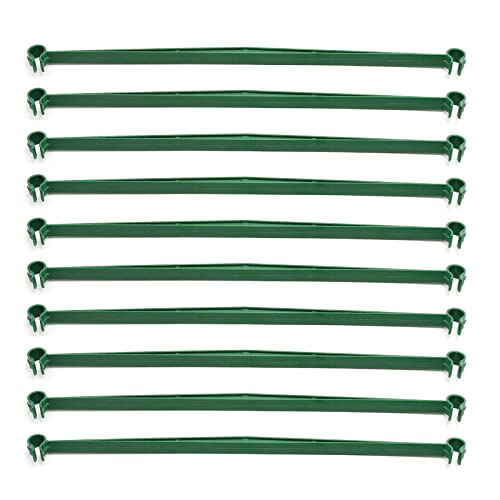
Expandable Stake Arms: Tomato cage connectors support clips are made of sturdy plastic material, strong and lightweight

【Premium Quality】:Bamboo stakes is exceptionally strong and durable,High-quality bamboo sticks are carefully selected and hand-made with a smooth surface with no visible cracks or blemishes. This helps to reduce damage to plants and makes them easy to insert into the soil.The bamboo garden stakes are fumigated twice to ensure that they can withstand the weight and wind and rain during the planting process. plant stakes are not easy to break or rot, have good quality, and have a long lifespan.
Staking The Cage
Why let a top-heavy cucumber vine send your cage crashing into the dirt? Driving a tall stake deep into the ground transforms a wobbly cage into a stable home for climbing vines.
I position my stake right alongside the cage, allowing it to act as a rigid anchor that keeps everything upright when wind hits or fruit loads become heavy. Sometimes, I pair two cages together with a stake running between them; bread ties work well to secure them into one sturdy tower.
When I place cages near delicate cucumber roots, that extra support prevents any shifting or toppling that could disturb the plant. I also add cross-bracing or additional ties to maintain vertical growth and eliminate the risk of collapse entirely.
Tie-Down Methods
Once I’ve got that stake in place, I move on to locking everything down so nothing budges. I grab zip ties or bread ties—whatever I have handy—and fasten the cage to the stake at two or three points. You’ll feel the difference immediately; that wobble disappears.
I position my cage close to the plant’s base and weave vines through the sides to ensure even weight distribution. No more top-heavy disasters. When winds pick up or fruit loads down my vines, I add guy lines or extra stakes for backup reinforcement. A few minutes of tie-down work now prevents the need for rescue missions later. Your future self will appreciate the effort.
Double Cage Setup
Sometimes one cage just isn’t enough. Doubling up keeps my cucumber vines from toppling everything over when they get heavy with fruit.
I plant the first cage in the ground normally, then flip a second cage upside down with the tines pointing up, stacking it on top. Bread ties work perfectly to fasten them together. This creates a taller, sturdier tower that distributes weight better as my plants grow.
The extra height allows my cucumbers to climb without flopping, and the combined structure resists tipping better than a single wobbly cage. For extra security, I sometimes drive a tall stake into the ground right beside the setup and anchor everything to it.
It’s a simple hack that helps maintain stability in the garden.
The Dual-Cage Method for Extra Height
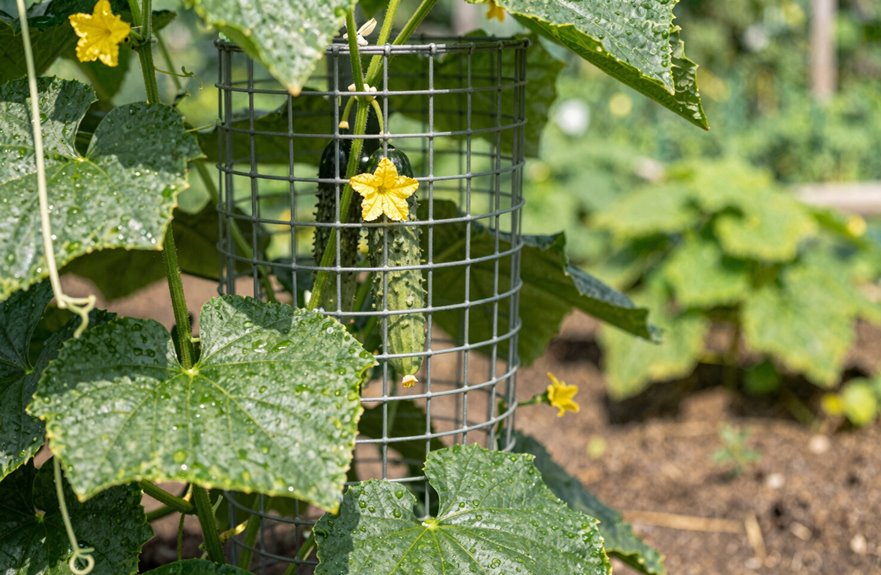
How do you keep cucumber vines from outgrowing a standard tomato cage? The dual-cage method effectively addresses this issue when gardening alongside others who seek optimal results from simple tools.
Start by driving one cage into the ground normally, then invert a second cage on top with its tines pointing upward. Secure them together with bread ties to create a taller structure that allows your vines to climb without collapsing under the weight of heavy fruit.
This setup maximizes vertical space and prevents top-heaviness as cucumbers develop. When standard cages are insufficient for mature vines, this method provides the extra height and stability needed for healthy growth. It’s a practical solution that benefits both plants and the gardening community.

Flexible Wall-Mounted Trellises Set of 2 lattice trellises designed for mounting on fences, patios, or walls—perfect for vertical gardening and adding style to indoor or outdoor spaces.
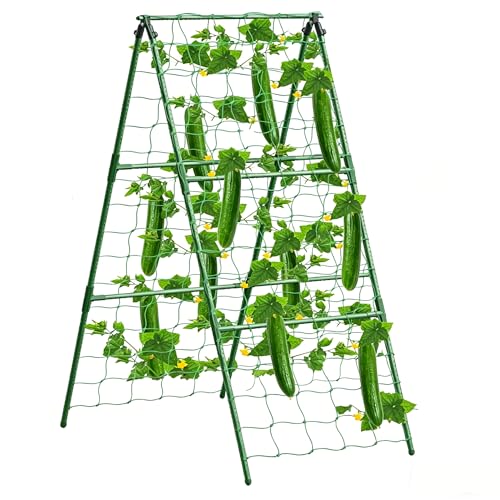
【Package included】:This Trellis for Climbing Plants Outdoor comes complete with everything you need to get started: 17pcs metal stakes, 8pcs T shape connect pipe, 2 A-shaped connectors, and a 0.9x1.8meter plant net.

【Multi-Function】 Tall Tomato Cage-Each tomato cage can be adjusted from 16inches to 47 inches in height,suit for different growth stages of plants, offering versatile supports for a wide variety of tomato plants, ensuring they grow tall and strong.
Better Alternatives: Trellises That Outperform Tomato Cages
Why settle for cramped cages when a proper trellis can completely transform your cucumber harvest? Giving my vines room to stretch skyward not only boosts my garden’s productivity but also fosters a deeper connection with fellow growers who have discovered this approach.
Our community swears by:
- Tall wooden or bamboo frameworks. I build mine 5 to 6 feet high, allowing my indeterminate varieties to reach their potential without toppling over.
- Hardware cloth on fence posts. That 4 to 5 inch grid pattern lets me weave vines effortlessly, keeping every cucumber straight and supported.
- Reassessed spacing and height. When I abandoned undersized cages for larger structures, my yields surged alongside my confidence as a grower.

Support Strong Growth - Unique net designed, intertwined to support strong growth of plants. 10x10cm mesh allows you to hold plants tight, avoid tangled and dropped. In the meantime, you can also harvest some beautiful plants and a joyful time.
Support Strong Growth - Unique net designed, intertwined to support strong growth of plants. 10x10cm mesh allows you to hold plants tight, avoid tangled and dropped. In the meantime, you can also harvest some beautiful plants and a joyful time.

Garden beds are not included with your purchase of the arched trellis, please go to our store page and choose garden bed & arched trellis bundle to make your gardening more successful.
What to Do With Tomato Cages Instead
If you’ve already got tomato cages sitting in your shed, consider using them instead of replacing them. I position mine closer to cucumber plant roots and wind vines around the sides for sturdy support. I prefer large or tall cages since cucumbers grow vertically and become top-heavy quickly. Sometimes I use a dual-cage method, securing two cages per plant with bread ties to create a taller, sturdier structure that can handle the weight. Pairing cages with stakes helps keep everything upright when the fruit load increases. When cucumber season ends, I repurpose those cages in my flower beds, supporting perennials and climbers that need assistance standing tall.

PRODUCT SIZE - Trellis netting 5Ft *15 Ft, 3.5 inch square mesh, easily cut to desired size to use. Important note: The trellis netting comes in a vacuum sealed bag.

PRODUCT SIZE - Trellis netting 5Ft*15 Ft, 6 inch square mesh, easily cut to desired size to use. Important note: The trellis netting comes in a vacuum sealed bag.

Vegetable Trellis that Assembles in Minutes, No Tools or Frustration – Say goodbye to complicated setups. Our U-shape trellis includes easy-connect joints and step-by-step instructions for fast, hassle-free assembly