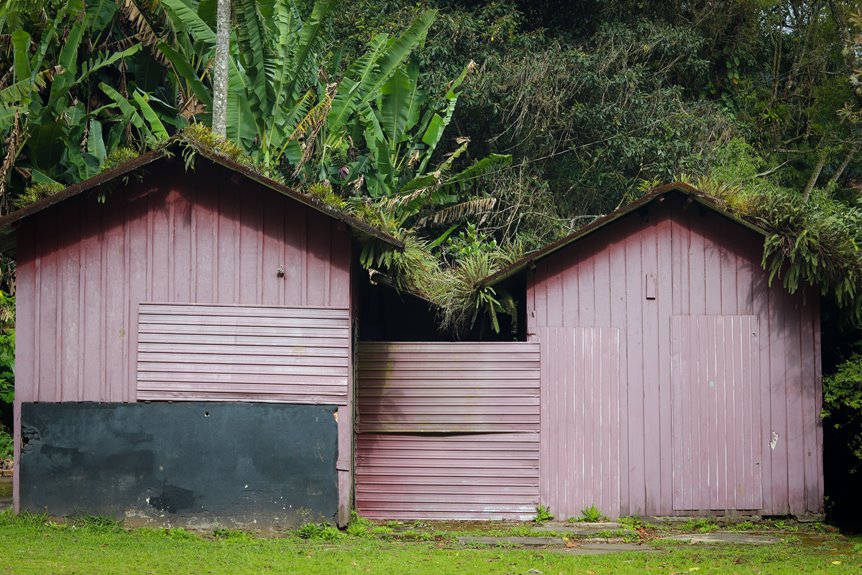
I’ve compared plastic and wood sheds many times, and whether plastic is better depends entirely on your priorities. Plastic wins on cost, maintenance, and flexibility; it starts at just a few hundred dollars, needs only occasional washing, and moves easily when your yard changes. Wood demands double the upfront investment and regular sealing, but it may outlast plastic by a decade or more while allowing for the addition of shelves, workbenches, and deadbolt security. I will walk you through which material best suits your specific situation.
Which Shed Costs Less: Plastic or Wood?
When considering backyard storage options, cost is a primary factor. Many people seek practical solutions that fit their budget.
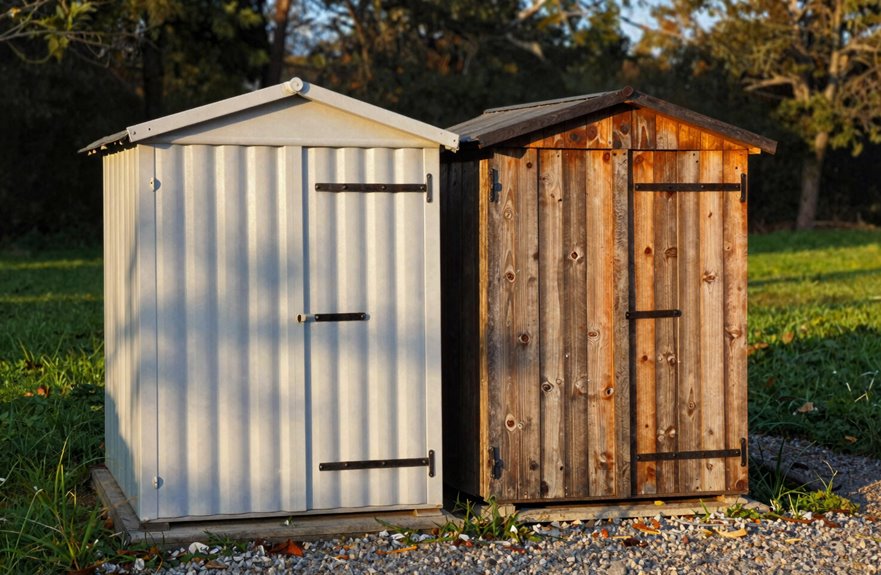
Plastic sheds typically start at a few hundred dollars, making them affordable for most. In contrast, wooden sheds often cost roughly double, which can strain finances. This price difference is not limited to the initial purchase; ongoing maintenance costs also play a role. Wood requires painting and sealing over time, leading to additional expenses that can be burdensome.
I briefly considered aluminum, but plastic offers a balance of value and functionality. It provides quality storage without the high cost associated with wood.

KEEP LONG-HANDLED TOOLS UPRIGHT AND EASY TO REACH. This vertical resin storage shed or tall outdoor storage cabinet fits long-handled tools, patio umbrellas, and gardening supplies, so yard gear stays organized and off the ground.
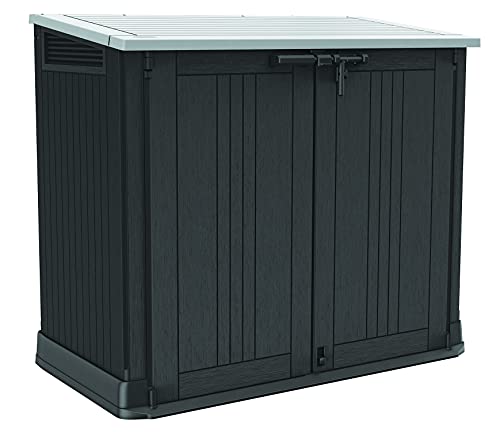
COMPACT OUTDOOR STORAGE SOLUTION – Holds up to two 32-gallon trash cans while organizing garden tools, pool floats, patio accessories, and backyard essentials.

VERSATILE STORAGE OPTIONS: With external dimensions measuring 31.8" L * 55.3" W * 74.4”H, this garden tool storage comes in a multitude of sizes, colors, and shapes to choose from; Perfect for outdoor backyards, gardens, courtyards, and utility rooms; Additionally, it can serve as a cozy and secure shelter for pets
Do Plastic Sheds Really Need Less Maintenance?
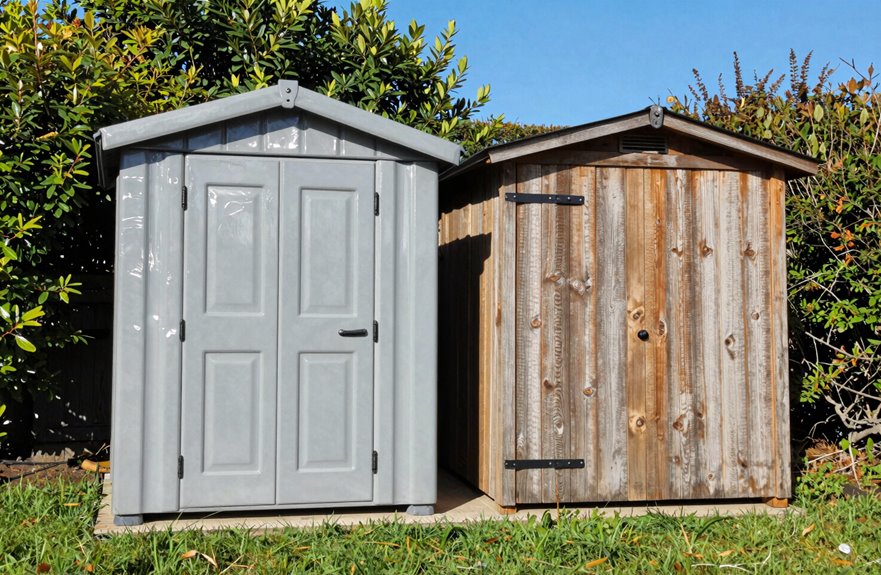
How much time do you want to spend maintaining a shed each year? You’d likely prefer to enjoy your weekends rather than scrape paint or replace rotting boards.
Plastic sheds offer significant advantages over wood when it comes to upkeep:
| Your Maintenance Reality | What You’re Free to Do Instead |
|---|---|
| Wipe or hose off dirt, no painting or sealing required | Host backyard gatherings with neighbors |
| No concerns about rot or moisture damage | Join community garden projects |
| Built-in UV protection and weather resistance | Simply relax and belong |
Plastic sheds provide effective weather resistance without demanding your weekends. Maintenance tasks associated with wood, like fighting rot or budgeting for stains and sealants, are not a worry. Just ensure proper anchoring for wind stability, and you have a smart, low-maintenance solution for your outdoor space.

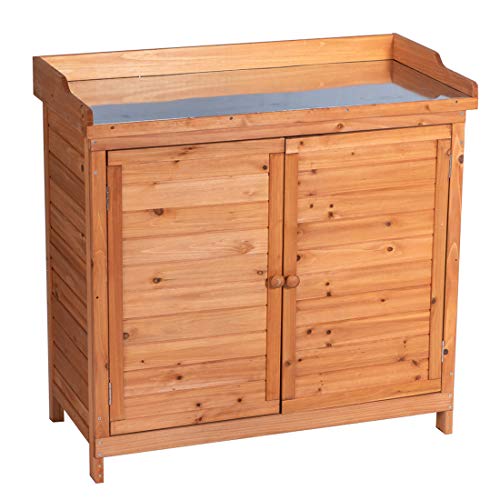
【Multi-functional Gardening Workbench and Storage Cabinet】 This multi-functional gardening workbench, combining storage and functionality, will completely transform your gardening experience. Its spacious interior work surface measures 35.3 inches x 16 inches, providing a dedicated gardening workspace for repotting and seed management, keeping your tools within easy reach and enhancing your gardening enjoyment.
Which Material Lasts Longer: and in What Conditions?
Why invest in a shed that won’t stand the test of time? I’ve weighed the longevity of both options.
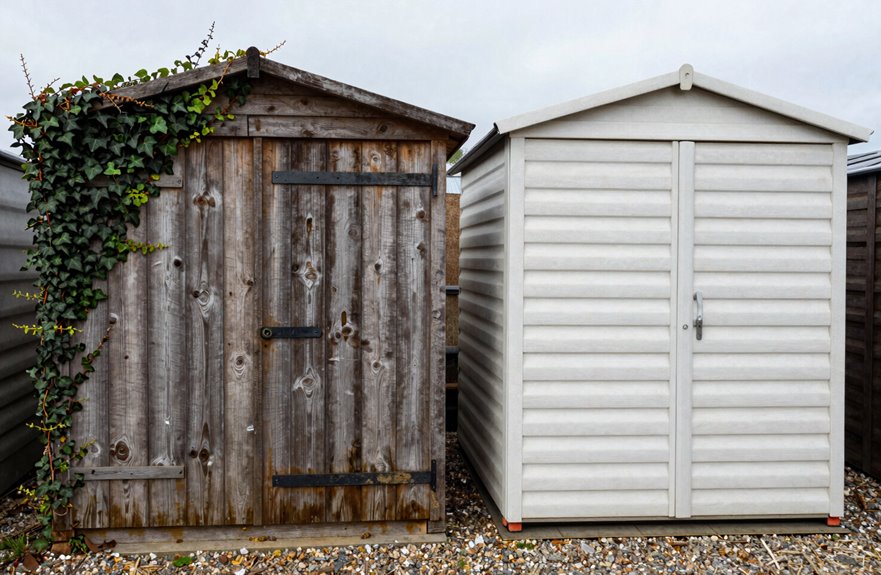
Plastic typically delivers 10 to 15 years or more with minimal fuss. High-quality resin can last even longer, especially when reinforced with steel. It won’t rot, warp, or crack from moisture. DecoCoat finishes also protect against UV fading, making plastic ideal for damp or humid climates where maintenance is infrequent.
Wood can last 20 to 30 years or more, but this requires dedication. Regular sealing, painting, and inspections are essential. If neglected, factors like moisture, pests, and weather can significantly reduce its lifespan.

【Premium Materials Selection】: This outdoor shed is crafted from superior and resilient galvanized steel with waterproof, durable rust resistant and UV-resistant properties and an easy-to-clean surface. Our shed ensures reliable all-weather protection, enduring even under the most challenging conditions and year-round use


【Premium Materials Selection】: This outdoor shed is crafted from superior and resilient galvanized steel with waterproof, durable rust resistant and UV-resistant properties and an easy-to-clean surface. Our shed ensures reliable all-weather protection, enduring even under the most challenging conditions and year-round use
Can Plastic Sheds Match Wood’s Strength and Security?
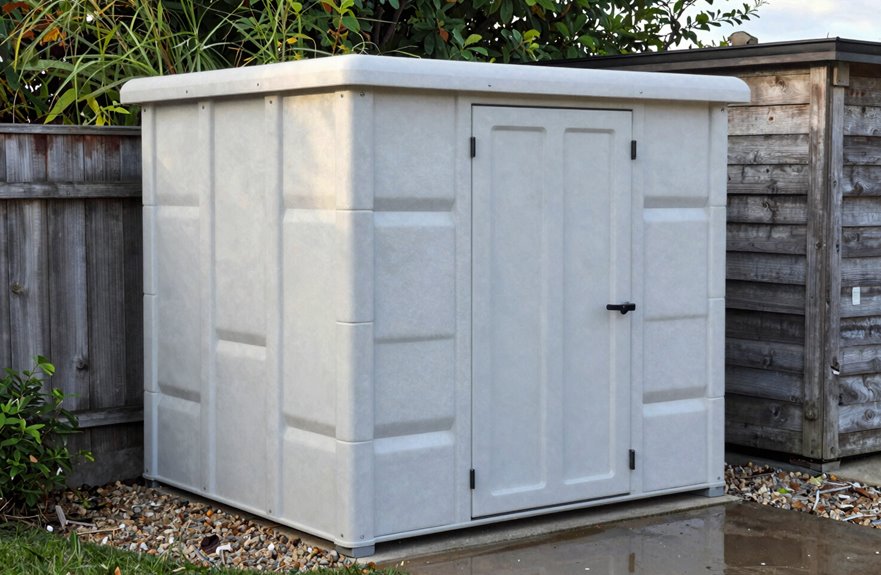
I won’t claim plastic sheds match wood’s brute strength, but the comparison isn’t as straightforward as it seems. You’ll notice their lighter frames struggle against high winds unless they’re anchored properly, and their built-in latches won’t stop a determined intruder like solid wood construction can. These limitations create trade-offs between portability and protection that warrant closer examination.

100 Pack: With 100 zip ties in each package, you don't have to worry about running out of in the middle of your project.
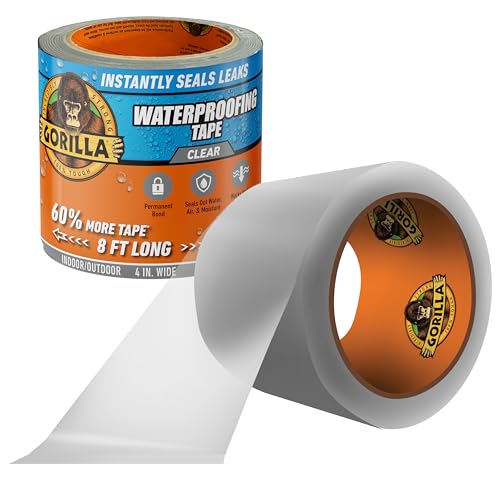
Permanent seal: This Gorilla tape creates a permanent bond that instantly seals out air, water, and moisture

Guided Video Assembly: Step-by-step video ensures easy setup for your outdoor shed with floor included. Takes 2-3 people & 3-5 hrs. CRUCIAL: Build on a completely level surface (concrete/deck) for perfect hole alignment. Pre-sort parts & use a power drill for best results
Wind Resistance Weakness
Where does plastic falter when the wind picks up? Wind resistance is a significant concern with plastic sheds. Their lightweight design, while convenient, creates vulnerability when gusts hit hard. Without proper anchoring, they can easily lift or shift, which raises concerns about stored belongings.
Wood sheds offer superior sturdiness against nature’s forces. Their heavier framing keeps them planted even in storms. This difference is palpable.
However, I won’t dismiss plastic entirely. With robust anchoring, plastic sheds can achieve respectable wind resistance. It requires extra effort—ground anchors, tie-downs, or a concrete base—but matching wood’s stability is achievable.
Ultimately, I choose based on local conditions. In high-wind regions, wood’s built-in strength provides greater security.
Security Limitations Compared
How secure can a plastic shed really be? Many people ask this question, and I’ve learned some key points about keeping your belongings safe.
Plastic sheds can achieve decent security through proper anchoring and quality locking hardware. Anchored units often withstand tampering more effectively than unanchored ones, which is important when you want to protect your property.
That said, wood has inherent strength advantages. Its weight alone can deter thieves, and wooden frames support sturdier doors and stronger deadbolts without flexing. I’ve observed that plastic latches can wear down over time, leading to vulnerabilities.
For a plastic shed to match wood’s level of protection, significant investment in anchoring systems and upgraded locking mechanisms is necessary. Most people prefer security that is effective from the start rather than a project requiring ongoing enhancements.
Customization Challenges Exist
Beyond security, why should I confine myself to a shed that lacks true customization? Plastic options fall short when I desire something personal. I want shelves that fit my tools, windows positioned for optimal light, and space that adapts as my projects evolve. Wood provides that freedom; I can cut, paint, and rebuild according to my needs.
Plastic sheds limit my creativity. Their fixed walls resist modifications, and the interior layouts remain rigid. I cannot easily add a workbench or reposition storage without contending with the structure. Even DecoCoat finishes replicate wood’s warmth without offering genuine flexibility.
When I invest in my space, I am creating more than just storage; I am establishing my corner of the world. Wood supports my vision in a way that plastic simply cannot.
What Customizations Only Work With Wood?
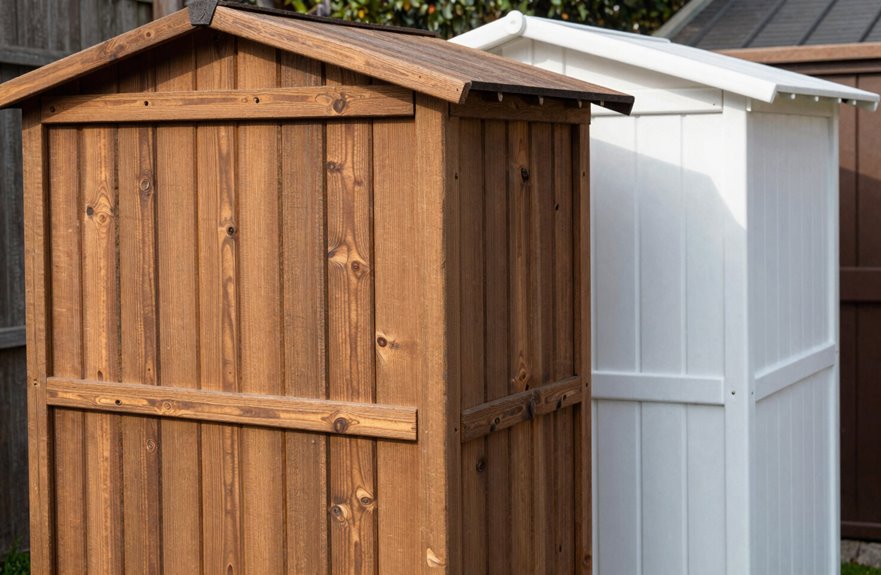
Why settle for a box when you can build what you need? Wood invites you into a community of makers who refuse to compromise.
With wood, I craft interior amenities that transform a shed into my workshop, studio, or retreat. I mount pegboards where tools belong, build workbenches at my height, and add shelving that carries real weight. Customization runs deep; I partition spaces flexibly, install proper lighting, and create living areas that plastic simply can’t support.
Exterior expression matters too. I choose board-and-batten, shingles, or shake siding, then paint or stain to match my home’s character. Windows, porches, and shutters add architectural personality that enhances my home.
| Wood Advantage | What I Gain | Why It Matters |
|---|---|---|
| Interior amenities | Shelving, benches, pegboards | My space works with me |
| Exterior styles | Siding, paint, stain options | I belong in my neighborhood |
| Architectural touches | Windows, porches, shutters | My shed reflects my identity |
Targeted repairs keep my creation evolving. I replace what’s worn and upgrade what I wish; I never need to replace the whole structure. Wood grows alongside me.

【Sliding Manual Closing】Sliding bolt gate latch is designed to offer simple but solid security for inward and outward swinging gates and doors, Manual Closing Mechanism.classical black can match any back yard decor.

[Important Shipping Information]The Panovue Outdoor Steel Storage Shed with Frame Floor is shipped in 4 separate packages (3 for the shed and 1 for the frame floor), which may not arrive simultaneously. If you encounter any missing packages, please contact us for assistance.

【Premium Quality Material】The flip latch lock constructed from hi-q solid Stainless Steel, ensuring quality and longevity, Strong and durable shed latch, not easy to rust and oxidation.
Plastic or Wood: Which Shed Fits Your Situation?
Where do I need this shed to fit into my life? That question shapes everything.
Your shed isn’t just storage—it’s where your life expands.
Plastic sheds and wood sheds cater to different needs. If I want an affordable, hassle-free storage solution that I can reposition as my needs change, plastic sheds are the answer. They are lightweight and low-maintenance, ideal for busy lifestyles.
On the other hand, if I’m creating something permanent—my workshop, my retreat, my signature space—wood sheds provide the sturdy presence I seek. I can customize shelves, windows, and interiors to reflect my identity.
Each choice brings its own considerations. My plastic shed requires anchoring, while my wood shed stands firm and secure.
Both options are valid. The right fit depends on the direction I’m moving toward.

【Durable Resin Shed with Two Exterior Looks】 Built from low-maintenance resin panels, this plastic outdoor shed is made for everyday backyard storage through changing seasons. The surface helps resist rain, UV exposure, rust, rot, cracking and fading, while the reversible panel design lets you choose between two different exterior appearances to better match your outdoor setting
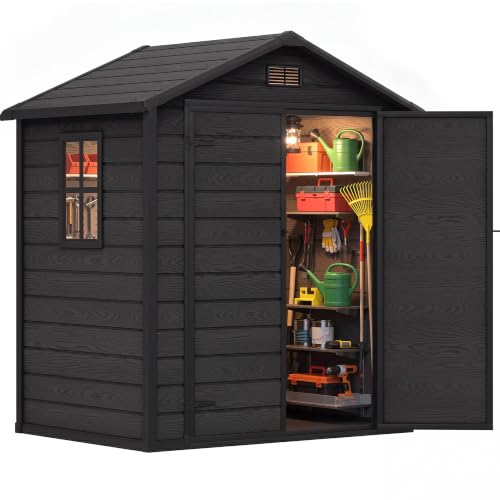
Versatile Storage Space: The bike storage shed measures 48.6" L * 67.1" W * 81.1" H externally, this 6x5 feet resin outdoor shed is available in a variety of sizes, colors, and shapes; Ideal for storing garden tools, lawn equipment, bicycles, patio furniture, and other sundry items; It can also serve as a cozy shelter for pets or a greenhouse for nurturing plants
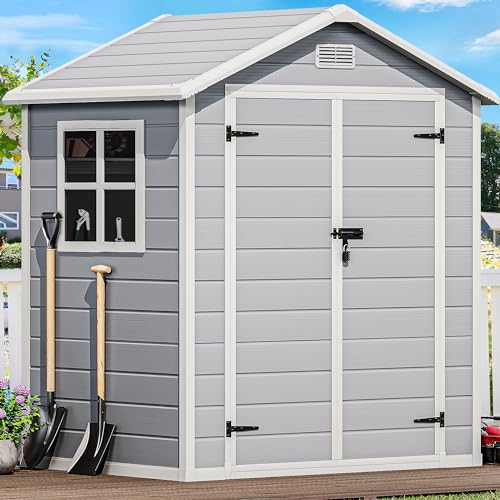
Versatile Storage Space: The bike storage shed measures 48.6" L * 67.1" W * 81.1" H externally, this 6x4.4 feet resin outdoor shed is available in a variety of sizes, colors, and shapes; Ideal for storing garden tools, lawn equipment, bicycles, patio furniture, and other sundry items; It can also serve as a cozy shelter for pets or a greenhouse for nurturing plants
Choose Plastic for Portability and Low Cost
How can I keep costs down and flexibility high? Plastic sheds provide the essential features I need without straining my budget or limiting my options.
Here’s why they work for people like us:
| Feature | Benefit |
|---|---|
| Starting cost | Just a few hundred dollars |
| Weight | Lightweight for easy handling |
| Upkeep | Simple wash; no painting needed |
| Durability | Resists rot and termites |
| Weather protection | Keeps gear dry, UV-protected |
The portability allows me to reposition the shed as my yard changes. I avoid a permanent footprint. The cost remains low because I eliminate sealing, staining, and repairs. For quick, flexible storage that fits my budget and lifestyle, plastic sheds are a practical choice.
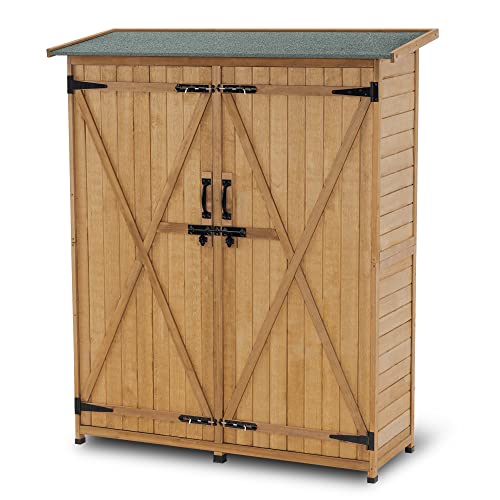
Spacious Wood Shed for Organized Storage: This large wood shed is perfect for concealing messy garden tools, pool equipment, chemicals, and more; Its size makes it an ideal addition to your garden, patio, deck, or porch; Dimensions: 49.8" (L) x 17.3" (W) x 63.8" (H), offering plenty of storage space without overwhelming your outdoor area


[Security and Durability] The whole storage shed is a steel frame structure, the metal garden storage shed adopts electro-galvanized steel process and paint treatment, which is suitable for various climates, without worrying about the metal rusting, the all-metal storage shed will not be deformed by the sun, and has excellent moisture-proof ,UV resistant performance.
Choose Wood for Permanent, Secure Storage
What if I need something that lasts decades and can withstand harsh weather? I choose wood. Wood sheds deliver unmatched durability, with 20–25 years of solid performance and heavy construction that withstands strong winds. I am not just storing tools; I am creating a permanent extension of my home.
Wood offers customization that allows me to make it truly mine. I can add shelving, windows, and paint colors that match my exterior, even incorporating workspace potential with a concrete foundation. This shed will reflect my identity.
I will maintain it, but I am investing in longevity and value that appreciates over time. Each modification I make enhances my return. For secure, lasting storage rooted in my property, wood is the superior choice.

Rough Cut Texture: Low maintenance polyethylene plastic with a wood grain texture. Easy to clean, never needs to be painted, and more durable than wood alternative.
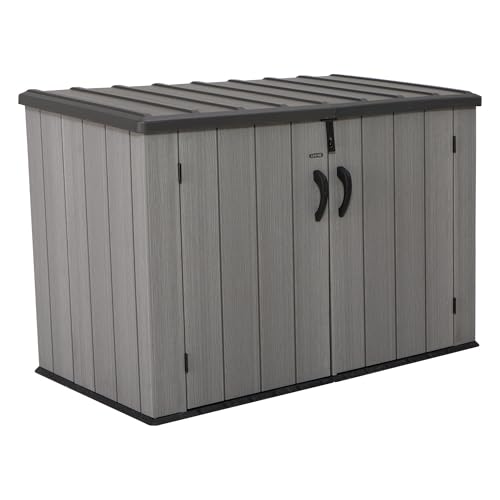
Enhanced Strength: Dual-wall HDPE panels and steel supports ensure long-lasting durability and security.

REACH STORED GEAR THROUGH A SLIDING LID. This large horizontal outdoor storage shed with floor has a resin lid that slides open for quick, hassle-free access to bicycles, lawn mowers, patio storage, and other backyard essentials at a moment's notice.