
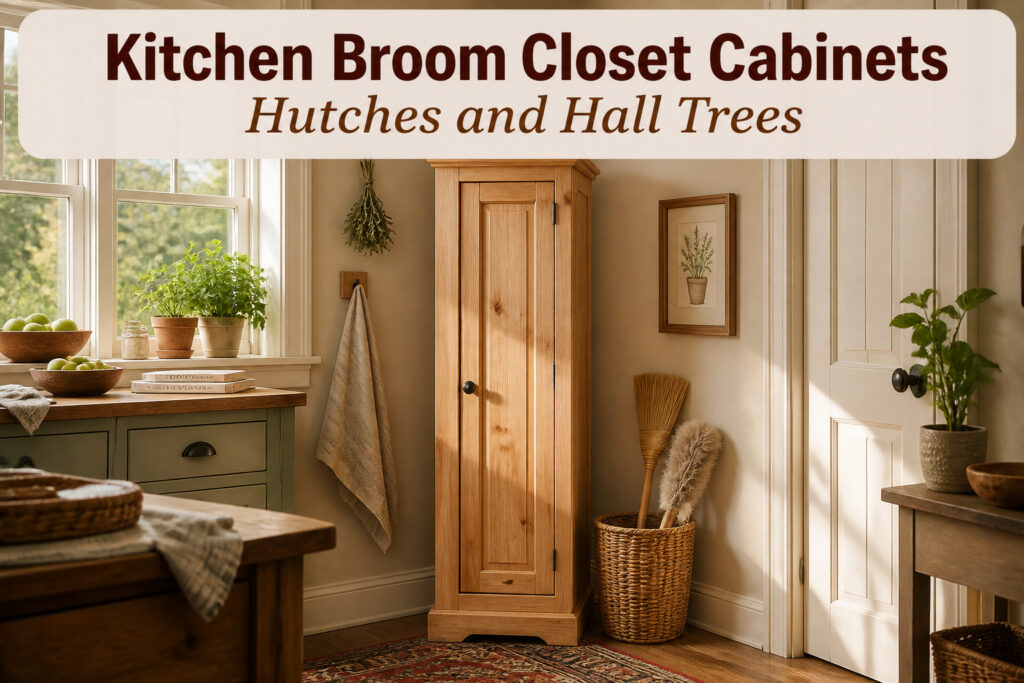
A kitchen broom closet is a narrow, freestanding cabinet that stores cleaning tools without requiring a built-in wall cavity. The catch is depth: at 11.75 inches outside and 9 inches of usable interior space, a standard upright vacuum will not fit, so the buyer needs to plan for a stick vacuum or a collapsed canister hose. The American Pine version runs $515.99 shipped, solid knotty pine with a door hinge that flips either way.
American Pine Broom Closet
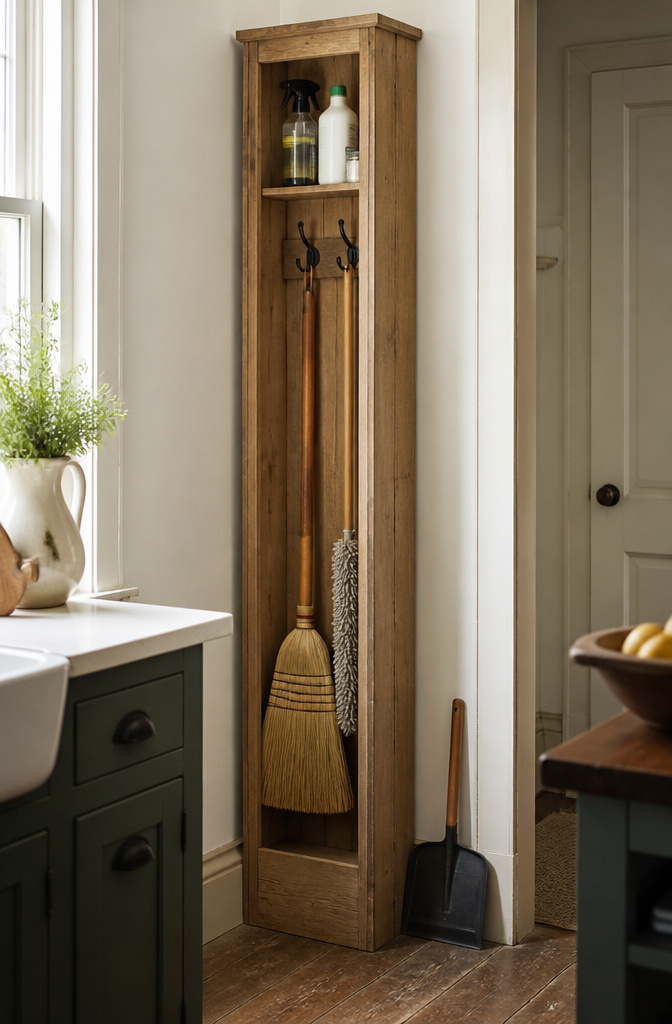
A kitchen broom closet only works if the vacuum actually fits. The American Pine Broom Closet runs 14 inches wide by 11.75 inches deep, with interior clearance trimmed to 12.5 inches by 9 inches once the walls are in. That 9-inch depth is the real limit: a standard upright vacuum needs about 12 inches front-to-back, so this cabinet suits a stick vacuum, a dustpan and broom pair, or a collapsed canister hose.
The 70-inch height splits into a 9-inch top cubby and a 57.25-inch main opening. Cleaning bottles store upright in the cubby; the hooks below it hold the broom and a microfiber mop without tangling heads. Three metal hooks come standard, and the door hinge can flip to either side depending on which wall you place it against.
Two finishes change the look more than expected. The OLD FINISH wears a single coat of flat paint with distressed edges, which reads as found-furniture in a rental with older trim. The SOLID FINISH gets two coats, no distressing, and looks intentional beside painted cabinets. Both show knotty pine grain through the flat paint; this is not veneer, and the knots stay visible.
At $515.99 with shipping inside a week, it sits in the range of a solid wood piece rather than a laminate flat-pack. Minor assembly is required, instructions included. Wall studs matter: the cabinet needs securing, and if you order multiples, the maker will pre-drill side holes so units line up flush.
Custom Kitchen Hutch With Broom Closet
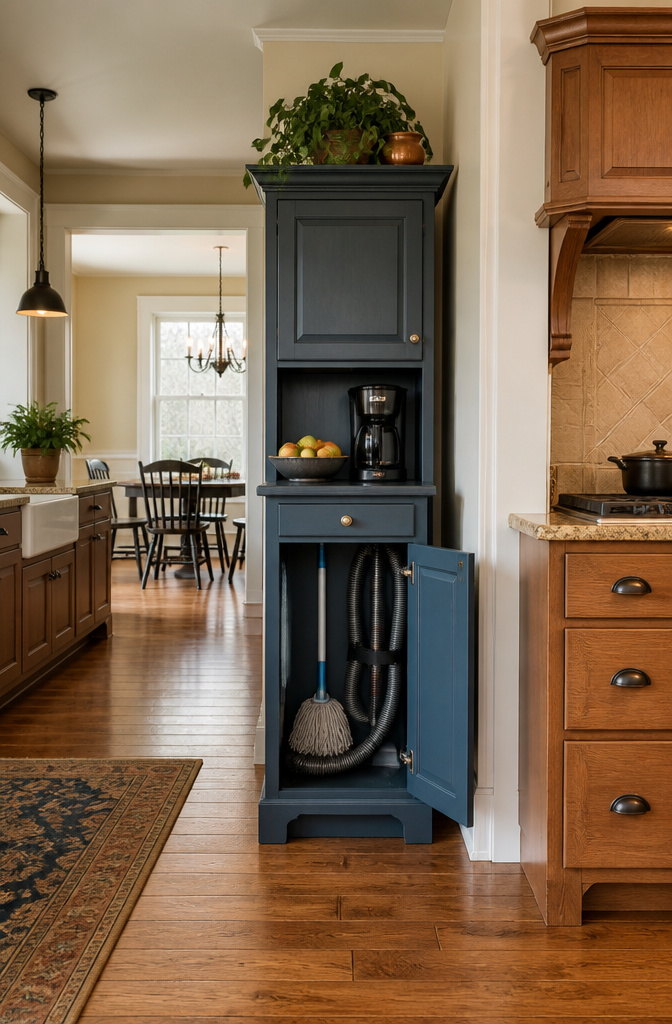
A 34" W x 11.75" D x 70" H hutch with a built-in broom closet changes what a narrow kitchen can hold. That depth gives you real counter space on top, enough for a coffee maker or a bowl of fruit, while the cabinet below still swallows mops, the vacuum hose, and the bag of dog food that used to live on the floor. The height lands at a useful midpoint: tall enough for long-handled tools without the stretch of a full ceiling cabinet, short enough that the top surface stays within reach for everyday use.
The unit comes in Old Williamsburg Blue as shown, but the builder takes custom orders on dimensions and features. Want it two inches shallower to clear a swinging door? Need the broom compartment on the left instead of the right? That is where this option departs from the stock cabinets that force you to plan around them. For a kitchen where every inch of wall was claimed years ago, being able to specify the footprint matters more than having it arrive tomorrow.
American Pine Hall Tree
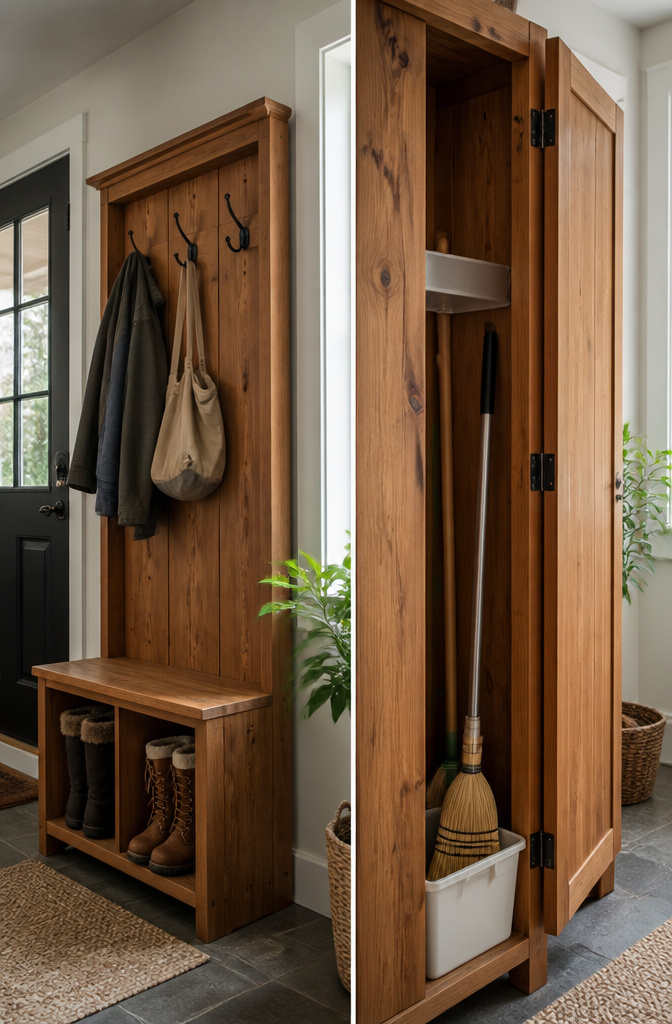
The same footprint that works for a broom closet, 14" W x 11.75" D x 70" H, can handle morning traffic instead of cleaning supplies. An American pine hall tree with that exact footprint gives you three metal locker hooks beneath the top cubby, a middle opening tall enough for coats at 44.75", and an 11.75" bottom cubby for shoes. The interior clearance runs 12.5" W x 9.75" D, which is tight for a winter parka but fine for bags and everyday jackets.
Two versions float around at slightly different prices. One lists at $449.99, the other at $515.99. The dimensions match, so the gap seems to come from door configuration or finish, not from breathing room inside. Either way, the depth stays under a foot, which matters more than the width in a narrow entry. You can slide this behind a front door that swings inward and still have the traffic path open.
The cubby heights are fixed, so boots taller than about 11" will need to lie flat or stay on the floor. For renters who cannot build in mudroom lockers, this is the standing compromise: all vertical storage, no holes in the wall, and you can take it with you when the lease ends.
American Pine Skinny Shoe Cabinet
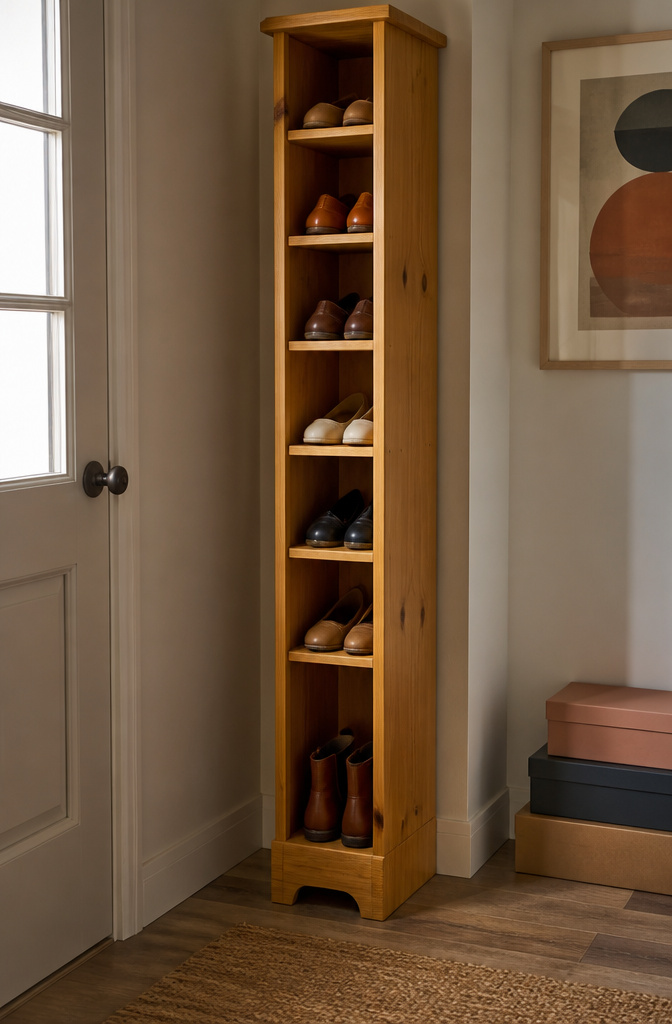
The same fourteen-inch width and seventy-inch height that works for brooms and mops can just as easily hold shoes when the interior gets carved into cubbies instead of a single tall shaft. The American Pine Skinny Shoe Cabinet keeps the identical footprint, 14 inches wide by 11.75 inches deep, but splits that vertical space into a 14.5-inch bottom cubby and smaller stacked compartments above it. That bottom bay sits eight inches high, enough for ankle boots or men’s sneakers, while the upper slots handle flats and loafers.
Door hinges can swing from either side, which matters more than it sounds in a narrow galley or a tight corner beside the fridge. The interior clearance runs 12.5 inches wide by 9 inches deep, so bulkier athletic shoes may need to face sideways or go in toe-first. At $537.99, the price lands slightly above its hall-tree sibling, though both share the same solid-pine construction and handmade joints. For a kitchen that doubles as a mudroom entrance, the shoe version trades the hooks and hat shelf of a hall tree for something that actually contains the clutter rather than stacking it.
Wood Mudroom Storage Locker
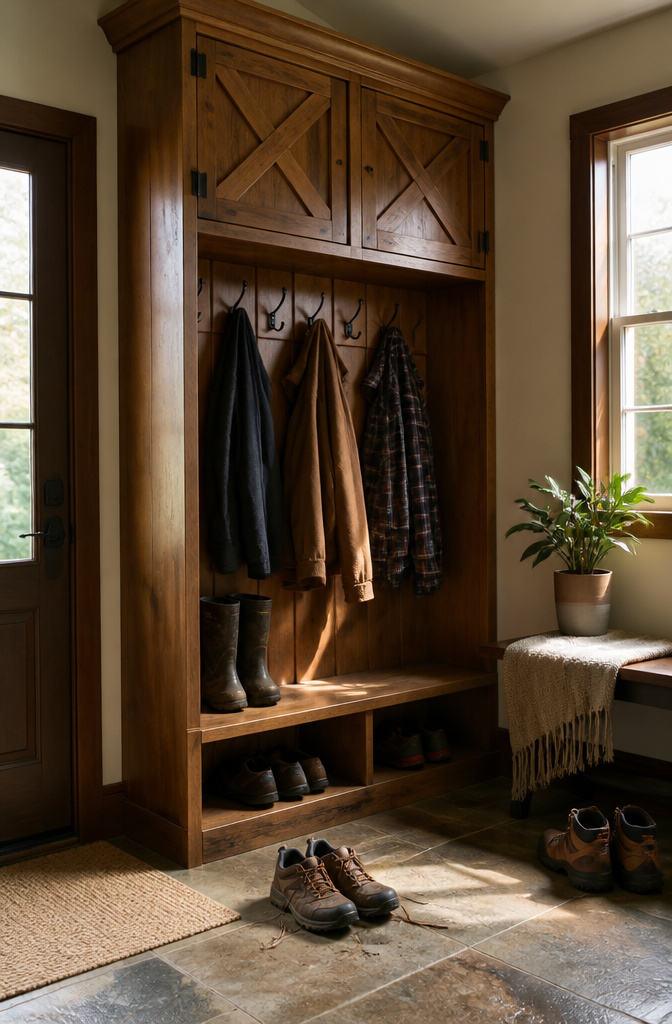
Knotty pine with its raised grain and amber tone reads differently in a mudroom than it does beside a refrigerator. The same 16-inch depth and 72-inch height that keeps a broom closet narrow enough for a kitchen corner works here as a single locker for coats and boots, but the builder leans into the rustic harder: V-groove back panels, barn-style crossbuck doors, iron hooks set into a shelf that runs the full width.
I have seen this unit sold as unfinished stock and as a factory-distressed "barnwood" finish. The unfinished version is the honest bargain. Knotty pine takes stain unevenly by nature, and that blotchy quality, which you would fight in a kitchen hutch, is exactly what sells the mudroom look. Two coats of amber shellac and the knots pop like they have been there fifty years.
The catch is moisture. A kitchen broom closet stays dry; a mudroom locker sits where wet boots drip and snow melts. The same plywood shelf that holds a mop bucket in the kitchen will swell at the edges here unless you seal the underside. A quick brush of polyurethane on the bottom face of every horizontal surface, before assembly, takes ten minutes and saves the piece.
Wall mounting matters more in a mudroom, too. Kids throw bags against the doors. The unit needs a cleat or a bracket into studs, not just the light-duty Z-bar that works in a kitchen alcove.
Dimensions That Fit Tight Kitchens
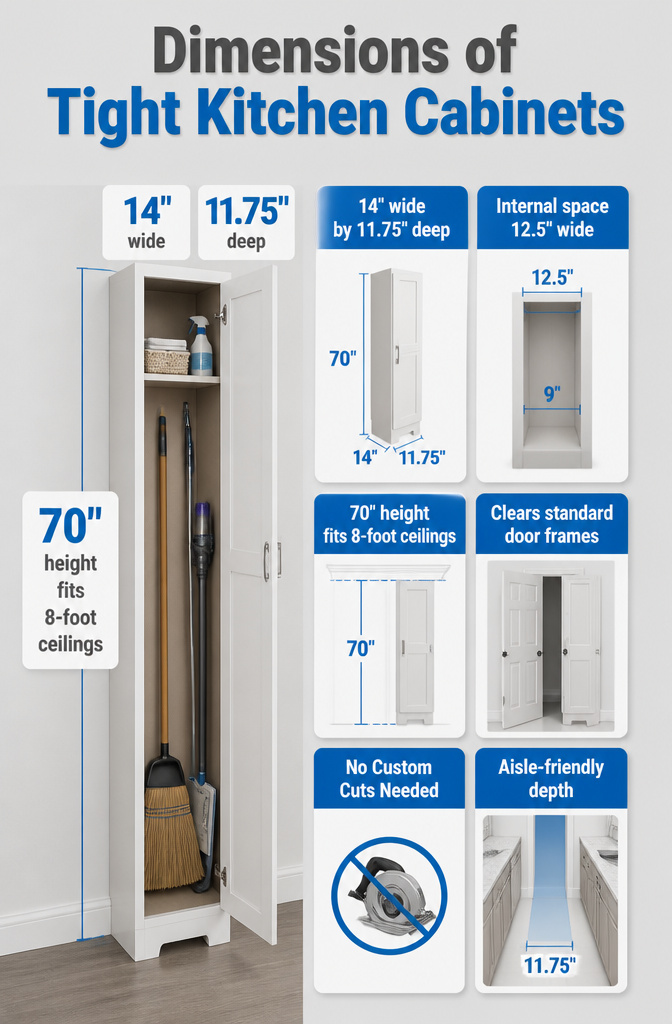
A 14" wide by 11.75" deep by 70" high exterior footprint is what lets these cabinets slide into spots that eat up no usable kitchen space. The 11.75" depth matters most in galley kitchens, where every inch of aisle counts; anything deeper and the cabinet starts to commandeer the walkway, or it bumps the door swing when you tuck it behind an entry. At that depth it also clears most standard door frames and baseboard registers without custom cuts.
Inside, the working space drops to 12.5" wide by 9" deep, which still swallows a full broom handle and the dustpan clipped to it. The 70" height lines up with 8-foot ceilings without crowding the crown molding, and it matches the longest standard brooms at about 55–60 inches; you want that top cubby sitting above the handle, not forcing you to angle the broom into a diagonal that wastes the whole cavity. The middle opening runs 44.75" tall, so shorter tools like a Swiffer or a compact vacuum stand there without fighting the shelf above.
Knotty Pine and What the Finish Hides
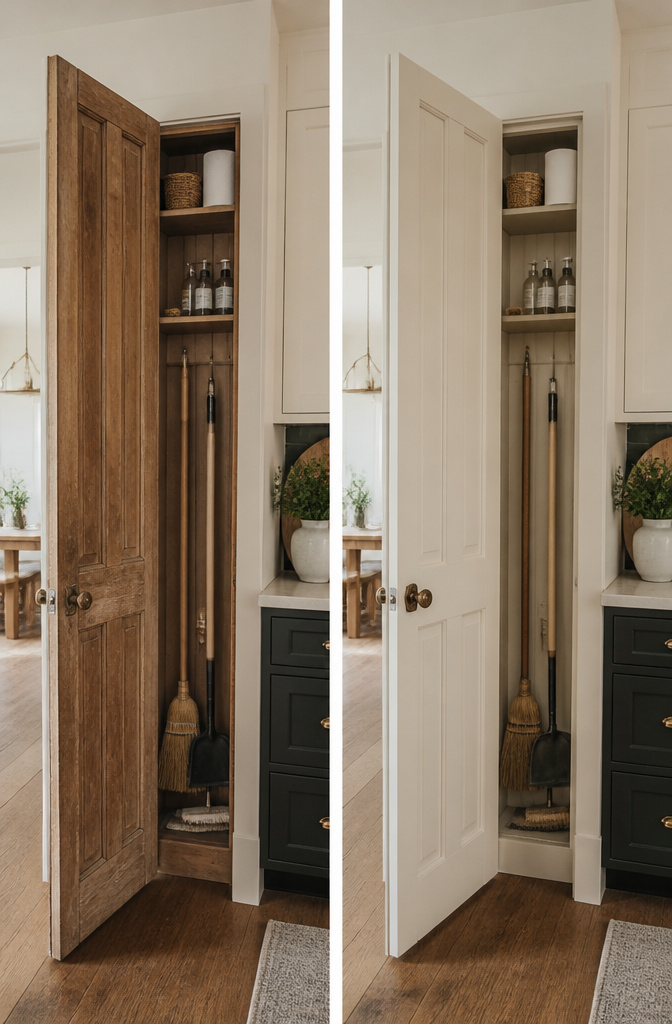
Knotty pine boards show every whorl and pitch pocket, and that is the point. The knots are tight and sound, left visible because the wood is meant to read as something cut from a forest rather than filtered through a factory. Two finish options steer how that character reads in a room. The old finish gets a single coat, distressed by hand so the grain catches light unevenly and a dent from a vacuum hose or a broom handle just adds to the story. The solid finish takes two coats, still letting the knots show through but with a smoother surface that wipes clean faster after a splash of mop water or coffee grounds. Either way, the wood keeps moving. Pine is not highly processed, so humidity swells the boards slightly in summer and shrinks them in dry winter heat. A door that sticks in August may rattle by February. That is the trade you make for wood that still breathes. I would not put knotty pine in a kitchen that sees serious grease, but for a broom closet that stores cleaning gear and the odd bulk pack of paper towels, the single-coat old finish hides the small scars of daily use better than the cleaner solid finish ever could.
Assembly and Wall Mounting
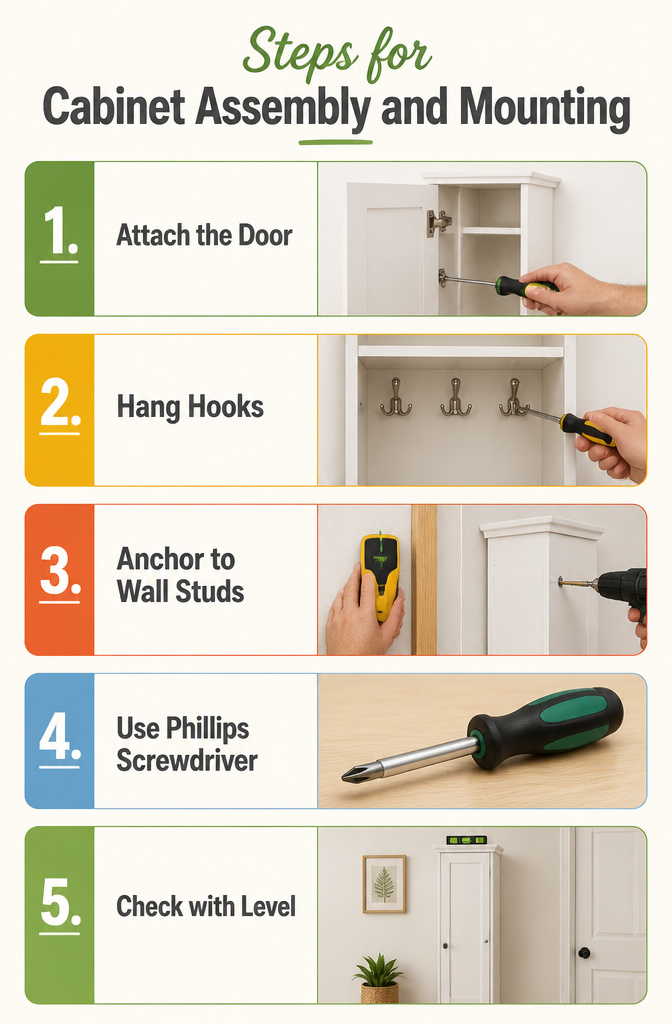
Minor assembly on a narrow cabinet like this means attaching the door and hanging the hooks, not building panels from scratch. The instructions walk through hinge placement left or right, and the three metal hooks below the top cubby. A Phillips screwdriver handles most of it, though a drill with a driver bit speeds up the hook screws.
The cabinet needs anchoring to wall studs if you plan to load the 57¼-inch main opening with brooms or a full dustpan. At 70 inches tall and only 11¾ inches deep, the thing can tip forward once weight climbs past the base. Two screws into studs, one high and one low, turn a wobbly freestanding box into usable storage. A stud finder saves the guesswork, and a level keeps the door from swinging on its own.
What a Broom Closet Actually Costs
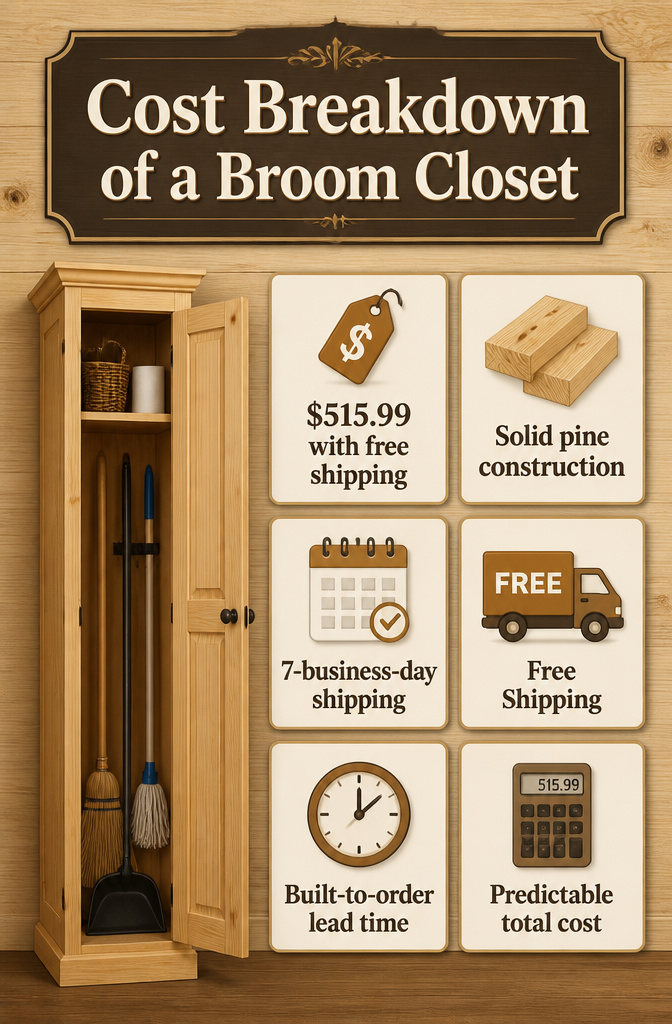
At $515.99 with free shipping, the American Pine Broom Closet sits in a middle pocket of the market, not entry-level flat-pack but well below custom built-in pricing. That number buys solid pine construction and a built-to-order lead time, which is where project planners need to pay attention. The seven-business-day shipping window sounds short on paper, but it means the cabinet won’t arrive the weekend you order it. If you’re tearing out an old closet or prepping a rental turnover, that week-plus-transit gap is dead time in your schedule. I have learned to order storage pieces before I demo the space they are meant to fill, not after. The free shipping keeps the total predictable, at least; no freight surprises on a piece this size. For someone spending a few hundred on a kitchen refresh and doing the install themselves, that price lands where the math still works without requiring a payment plan.
Frequently Asked Questions
What is a broom closet?
A kitchen broom closet is a tall, narrow cabinet built to store cleaning supplies and tools in a compact footprint. The American Pine model measures 14 inches wide by 11.75 inches deep by 70 inches high inside, with a main opening tall enough for brooms and a top cubby for bottles. It keeps mops, vacuums, and dustpans off the floor and out of the kitchen walkway.
How much does a broom closet cost?
The American Pine Broom Closet costs $515.99 with free shipping, placing it in the middle of the market between flat-pack laminate and custom built-ins. That price buys solid knotty pine construction, a choice of two finishes, and a roughly seven-business-day lead time before transit. Ordering before you demo your old storage is the safer move, since it will not arrive the same weekend you place the order.
What materials are broom closets made from?
These cabinets are built from solid knotty pine, not veneer or laminate, with the grain and knots left visible through the paint. The wood swells slightly in humid summer months and shrinks in dry winter heat, so doors may stick or rattle with the seasons. Two finish options, old and solid, both show the pine character; one coat with hand distressing for a found-furniture look, or two coats for a cleaner surface that wipes up faster after splashes.